
Knee osteotomy
Knee osteotomy involves realigning the leg to redistribute load across the knee joint, relieve pain and delay the need for a knee replacement. By correcting the axis of the limb, it can delay or even avoid the need for a knee replacement, while restoring better joint function and a satisfying quality of life.
This surgery is primarily recommended for active patients who have localised cartilage wear (early to moderate knee osteoarthritis) combined with malalignment (bow legs or knock knees), and for whom a joint replacement is not yet desirable.
For your osteotomies around the knee, International Elite Care connects you with leading orthopaedic surgeons renowned for their expertise and high surgical volume. You benefit from personalised care before, during and after your procedure, in facilities recognised for the highest medical standards.
Osteotomy knee surgery: indications and candidacy
Osteotomy knee surgery is recommended when pain and functional impairment are caused by localised joint wear combined with malalignment of the lower limb.
It is mainly intended for patients who would benefit from preserving their natural joint and postponing replacement surgery.
An osteotomy of the knee may be considered in the following situations:
- Early to moderate knee osteoarthritis
- Knee malalignment: bow legs (varus) or knock knees (valgus)
- Persistent pain despite conservative treatment (medication, injections, physiotherapy)
- Active patients wishing to maintain their professional, sporting or leisure activities
- Generally under 60 years of age, with good bone quality
- No widespread osteoarthritis or severe knee stiffness
- Post-traumatic sequelae
This procedure is particularly relevant for patients for whom a knee replacement would be premature, but whose pain is already affecting their quality of life.
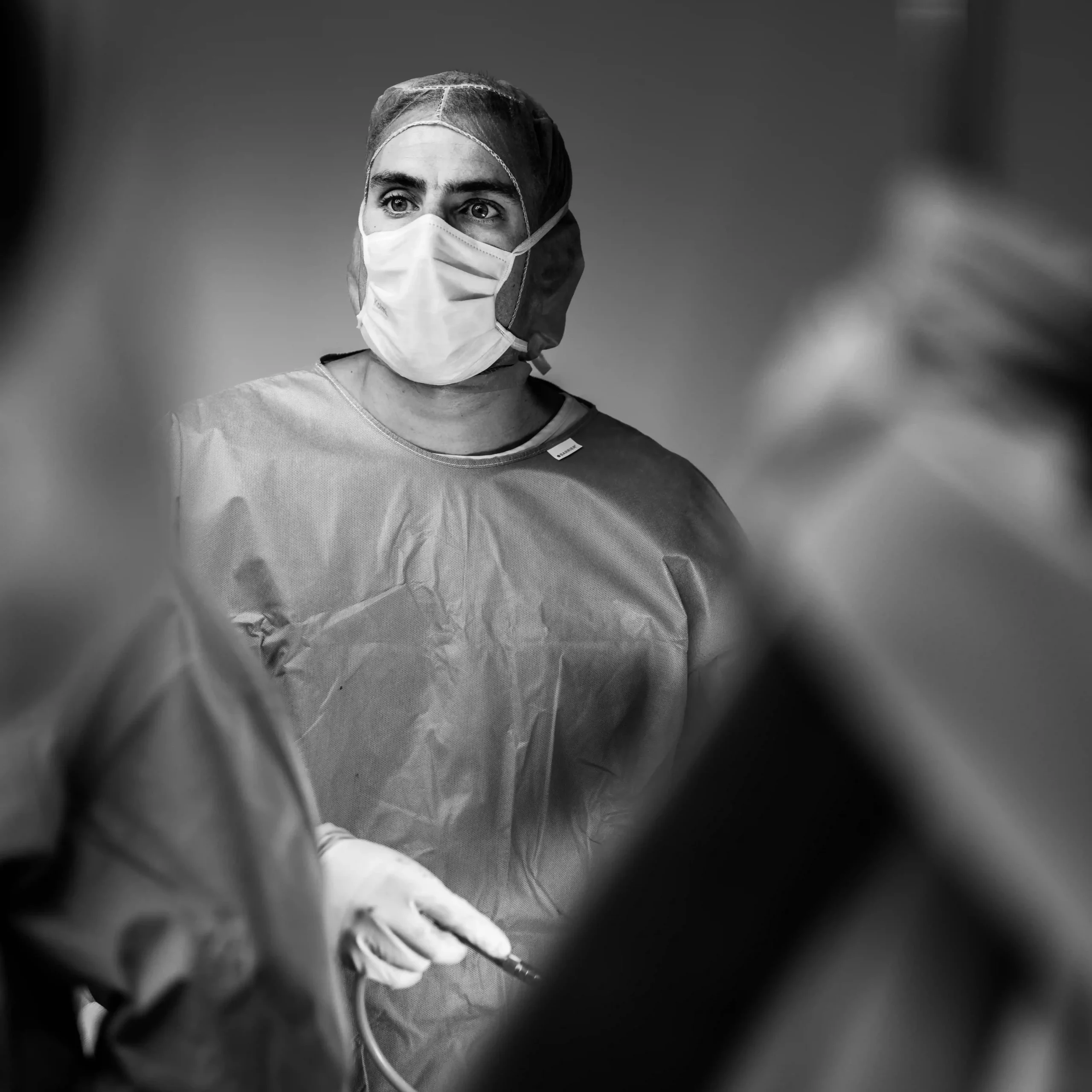
Osteotomy of the knee: how the procedure works
Osteotomy of the knee follows a precise, individualised protocol. The aim is to achieve a reliable and lasting correction of the leg axis.
Before the procedure, you undergo a thorough assessment that includes:
- Specific X-rays to analyse the alignment of the knee
- A CT scan or MRI in some cases
- A specialist consultation
This stage allows your surgeon to plan the bone correction with precision, tailored to your anatomy and lifestyle.
The operation is carried out under general anaesthesia or spinal anaesthesia (numbing the lower body), depending on the anaesthetist’s recommendation.
Once the patient is positioned for optimal safety, the surgeon makes a targeted incision around the knee, most commonly on the tibia (tibial osteotomy) and more rarely on the femur.
The bone is cut in a controlled manner, then the leg axis is corrected with precision. The new position is secured with a plate and screws designed to stay in place long-term. In some cases, a bone graft may be used.
Once the correction has been verified, the tissues are carefully closed. The average duration of the procedure is approximately 45 minutes.
After surgery, the patient is monitored in the recovery room and then transferred to their room in a high-end medical environment, depending on the country and facility chosen.
Osteotomy of the knee surgery: recovery and postoperative care
After osteotomy of the knee surgery, recovery becomes the central focus. Rehabilitation is an integral part of the healing process. The goal is to support a gradual, lasting return to everyday activities with reliable and comfortable knee mobility.
In the days following the operation:
- Hospital stay is generally 1 to 2 days, depending on the country and clinical progress
- Pain is well managed through tailored analgesic protocols
- The knee is closely monitored (swelling, wound healing, range of motion)
Getting up and walking is usually encouraged within the first few days, with crutches and under medical supervision. Weight-bearing is typically partial at first, to protect the bone correction.
Knee mobility is increased gradually, sometimes with the help of a brace or specific exercises. These are adjusted case by case, depending on the osteotomy of the knee procedure performed and the quality of the bone.
Rehabilitation and return to sporting activities
Rehabilitation and results go hand in hand. Shortly after the operation, rehabilitation begins promptly with:
- Joint mobility exercises
- Progressive muscle strengthening
- Improvements in stability and walking pattern
Rehabilitation continues over several weeks to several months, depending on the patient’s goals (daily life, sport, professional demands).
Low-impact sports such as cycling and swimming can usually be resumed after a few months. Activities that place greater demands on the knee require a longer timeframe, determined by the specialist knee surgeon.
Regular follow-up appointments are arranged to monitor bone healing and the functional progress of the knee. For international patients, part of this follow-up can be managed remotely, with imaging reviews, progress reports and coordination with local physiotherapists.
Knee osteotomy success rate and expected outcomes
The knee osteotomy success rate depends on careful patient selection and commitment to the recovery programme. The two central objectives are improving quality of life and preserving the natural knee joint. Other expected outcomes include:
- Reduced pain, both during activity and at rest
- Smoother, more comfortable walking
- Greater knee stability
- A gradual, supervised return to physical activities
Under optimal conditions, outcomes remain stable for many years. However, the procedure does not rule out a future knee replacement should the condition continue to progress.
At International Elite Care, expected results are discussed openly and on an individual basis, taking into account age, activity level, cartilage condition and the patient’s expectations. Every patient is matched with the most experienced surgeon to maximise the quality of their outcome.
Your questions about knee osteotomy, answered
How do I know if this procedure is right for me?
Every knee is different, which is why an osteotomy knee surgery is only recommended when the expected benefits are clearly identified. At International Elite Care, your case is reviewed by a specialist surgeon for fully coordinated, personalised care. A teleconsultation allows us to assess your situation quickly, with no obligation.
How long does a knee osteotomy last?
When performed at the right time and with the correct indication, a knee osteotomy can provide lasting pain relief and delay the need for a replacement by several years. The longevity of results depends on factors such as the degree of cartilage wear, body weight, activity level and adherence to the rehabilitation programme. Your surgeon will discuss realistic expectations with you before the procedure.
Is knee osteotomy a reliable alternative to replacement?
Yes, when the indications are appropriate. Osteotomy knee surgery is an effective solution for many patients who wish to preserve their natural knee. When carried out at the right stage, it can relieve pain on a long-term basis and postpone joint replacement surgery, sometimes by many years.
What is the knee osteotomy recovery time if I travel from abroad?
The knee osteotomy recovery time and length of stay depend on the country, the type of osteotomy and your postoperative progress. As a general guide, you should plan for one to two weeks on site, including the procedure, hospital stay and initial check-ups. The International Elite Care team supports you with every aspect of your trip, from accommodation to medical follow-up.
Is follow-up care provided after I return to my home country?
Absolutely. Follow-up care is a core part of your treatment pathway. After you return home, communication can continue remotely, with the sharing of medical reports, imaging and coordination with your local physiotherapy team. This continuity of care ensures a smooth, well-supported recovery.
How can I be matched with the right surgeon and move forward quickly?
By contacting International Elite Care, you are directly matched with the most qualified and available surgeon for your situation. The team coordinates every medical and logistical step to minimise waiting times, while ensuring the highest standards of care and safety.
Surgeon performing the procedure


Full support
Take advantage of our all-in-one service: insurance, travel, post-operative follow-up, etc.
Ready to start your care journey?