
Arthrolysis knee surgery
Arthrolysis knee surgery is a procedure designed to restore knee mobility by removing the fibrous tissue and adhesions responsible for stiffness.
These fibrous tissues most commonly develop after trauma, a surgical procedure (replacement, ligament reconstruction, fracture fixation) or a prolonged period of immobilisation. They prevent the normal gliding of the joint structures and cause painful knee stiffness that can be highly debilitating in daily life.
Depending on the clinical situation, arthrolysis may be carried out arthroscopically (a minimally invasive technique) or, more rarely, through open surgery when the adhesions are complex or extensive. Arthroscopy is preferred whenever the situation allows, as it limits tissue disruption and simplifies recovery.
At International Elite Care, this procedure is performed by expert knee surgeons selected for their high level of experience and their advanced command of minimally invasive techniques.
Appropriate indications for arthrolysis of knee
Arthrolysis of knee is indicated in patients who present persistent and often painful joint stiffness that significantly limits function and affects quality of life. These symptoms may persist despite conservative treatments such as physiotherapy, injections and anti-inflammatory medication.
L’arthrolyse arthroscopique du genou Arthroscopic arthrolysis of knee for stiffness is commonly considered in the following cases:
- After total or partial knee replacement
- After cruciate ligament surgery
- After an osteotomy
- After complex meniscal surgery
- Following a knee fracture (patella, distal femur, proximal tibia)
- After a condition requiring prolonged immobilisation (contusion, infection)
Arthrolysis is not recommended when pain occurs in isolation without any genuine limitation of mobility. Untreated osteoarthritis, uncorrected joint instability and an infected knee are also contraindications.
Before considering an arthrolysis knee procedure, it is essential to ensure that arthrogenic muscle inhibition (AMI) has been properly addressed and that muscular control of the knee has been recovered.
AMI is a reflex inhibition of the quadriceps triggered by pain, inflammation or joint trauma. This inhibition prevents effective muscle contraction and can sustain the feeling of stiffness or locking in the knee.
In many cases, targeted rehabilitation aimed at restoring quadriceps activation and neuromuscular control can already produce a significant improvement in mobility. Arthrolysis is therefore only considered when the joint limitation persists despite satisfactory muscular recovery and a well-conducted rehabilitation programme.
Arthrolysis is not recommended when pain occurs in isolation without any genuine limitation of mobility.
The following situations also constitute contraindications:
- Untreated knee osteoarthritis
- Uncorrected joint instability
- An infected knee
To ensure relevant, effective and safe care, the indication for arthrolysis always relies on a precise clinical assessment carried out by a surgeon who specialises in knee surgery. This assessment is supplemented by imaging studies (MRI, CT scan or X-rays).
Arthrolysis knee after anterior cruciate ligament (ACL) reconstruction
Arthrolysis knee surgery may be required after anterior cruciate ligament (ACL) reconstruction. Some patients develop a loss of knee extension, also known as an extension deficit. This means they are unable to straighten the knee fully, which can lead to difficulty walking, muscular fatigue and, at times, pain.
In certain cases, this limitation is caused by the formation of fibrous tissue within the joint, sometimes referred to as a cyclops lesion, which mechanically blocks knee extension.
When appropriate rehabilitation and muscular recovery fail to correct this block, a targeted arthroscopic arthrolysis may be considered.
The procedure involves removing the fibrous tissue responsible for the impingement in order to restore full knee extension.
This indication must be established with care, after verifying several elements:
- A stable, well-positioned ACL graft
- Sufficient muscular function
- The absence of any other mechanical cause of limitation
When performed early and combined with intensive rehabilitation, arthrolysis after ACL surgery generally allows the patient to regain knee extension and improve joint function.
Arthrolysis procedure knee after total knee replacement: a technical challenge mastered by our surgeons
Arthrolysis procedure knee surgery after total knee replacement is a particular case, as it involves a knee that has already been operated on and contains an implant, which demands additional precautions.
In this context, stiffness is most often caused by the formation of fibrous tissue around the prosthesis. The goal of surgical arthrolysis after total knee replacement is not to modify or replace the implant, but to restore mobility by treating these adhesions, provided that the prosthesis is correctly positioned, stable and free from infection.
This indication requires a rigorous, specialist assessment, including:
- A thorough clinical evaluation, ensuring that the muscles around the knee are functioning adequately to move the knee once it has been freed
- Precise radiological assessment
- Formal exclusion of infection or any mechanical issue with the prosthesis
When the conditions are met, arthrolysis after total knee replacement can sometimes be performed arthroscopically. Depending on the situation, a different surgical approach may be necessary to achieve a satisfactory functional result, always within a safe framework.
At International Elite Care, this type of care is entrusted to surgeons who are experts in knee surgery and in arthrolysis after knee replacement, accustomed to managing complex situations. The care pathway is tailored to this particular challenge, with closely supervised rehabilitation.
How arthroscopic arthrolysis knee surgery is performed
Arthroscopic arthrolysis knee surgery is a high-precision intervention designed to preserve the operated tissues as much as possible. Its aim is to restore knee mobility while keeping post-operative effects to a minimum.
Before the surgical procedure, the patient has a specialist consultation with their assigned surgeon. At International Elite Care, this appointment can take place remotely via teleconsultation, which simplifies the process and makes the care pathway easier for international patients.
This step makes it possible to analyse the stiffness and its origin precisely, to confirm the surgical indication and to establish a personalised care plan including post-operative rehabilitation.
Before scheduling an arthrolysis, it is essential to verify that the muscular function of the knee has been adequately recovered, particularly quadriceps activation.
After trauma or surgery, some patients experience a reflex muscle inhibition known as AMI (arthrogenic muscle inhibition). This prevents the quadriceps from contracting effectively and can create the impression of persistent stiffness.
In these cases, specific rehabilitation aimed at restoring muscular activation and neuromuscular control is required before considering arthrolysis. The procedure is generally indicated only when mobility remains limited despite satisfactory muscular recovery.
The patient is positioned in the operating theatre in a way that allows optimal control of knee mobility throughout the procedure. This set-up facilitates the assessment of range of motion and enables the surgeon to adjust the surgical gesture with precision.
L’arArthroscopic arthrolysis knee technique relies on a minimally invasive approach using a camera and small incisions. Through arthroscopy, the surgeon is able to:
- Visualise the areas of fibrosis and adhesions precisely
- Divide and release the fibrous tissue responsible for the block
- Progressively restore the range of flexion and extension
- Immediately assess the gain in mobility achieved
In more complex situations, open arthrolysis may be considered in order to treat extensive or extra-articular adhesions.
At the end of the procedure, the surgeon mobilises the knee to verify the quality of the release and the tangible improvement in range of motion. Stability and proper joint function are also confirmed.
Knee arthrolysis takes on average 30 to 90 minutes, depending on the complexity of the stiffness. The hospital stay is generally short, often as a day case or with one to two nights in a specialist facility.
Post-operative care and arthrolysis knee recovery time
Arthrolysis knee recovery time is closely linked to the quality of post-operative rehabilitation. For lasting results and satisfactory mobility after the procedure, appropriate mobilisation of the joint is necessary through safe, supervised exercises.
After knee arthrolysis, rehabilitation typically begins very quickly, sometimes on the day of surgery itself or the following morning. This early mobilisation is essential to prevent adhesions from re-forming and to preserve the gains in mobility obtained during surgery.
Physiotherapy is therefore particularly intensive in the immediate post-operative period, with exercises aimed at progressively mobilising the joint and restoring muscular control of the knee.
On leaving the operating theatre, the knee may present:
- Moderate swelling
- Pain (managed with a pre-planned analgesic protocol)
- A feeling of tension related to the joint being moved again
Walking is usually permitted quickly, with or without support depending on the clinical situation. Weight-bearing is generally possible immediately, unless the surgeon advises otherwise.
A personalised post-operative protocol is put in place to control pain and limit inflammation and swelling. Regular follow-up with the surgical team allows recovery to be monitored, rehabilitation to be adjusted and any potential complications to be prevented.
For international patients, this follow-up can continue after returning home, thanks to remote consultations and coordination with local physiotherapists.
Expected results after knee arthrolysis
The results of knee arthrolysis primarily concern a lasting functional improvement centred on recovering mobility and joint comfort.
The main expected outcome is a significant gain in range of motion (flexion and extension) together with smooth, stable walking. This improvement is often noticeable soon after the procedure and continues to develop over the weeks of rehabilitation.
Furthermore, by releasing the adhesions responsible for the block, arthroscopic knee arthrolysis allows:
- A reduction in feelings of stiffness
- Smoother joint movement
- A more comfortable return to everyday activities
Pain related to stiffness tends to decrease gradually alongside the gain in mobility. These various improvements ultimately make it possible to resume certain physical activities.
It is important to note that these results depend on several factors:
- The initial cause of the stiffness (post-surgical, post-traumatic)
- How long the stiffness has been present before arthrolysis
- The overall condition of the joint
- The quality and consistency of post-operative rehabilitation
- Muscular condition
When rehabilitation is carried out diligently and continued for the recommended duration, the improvements obtained after knee arthrolysis can be long-lasting. An individualised assessment allows realistic goals to be set beforehand.
Our answers to your questions about arthrolysis knee surgery
What is arthrolysis knee surgery? (arthrolysis knee definition)
Understanding the arthrolysis knee definition is a natural starting point. Knee arthrolysis is a surgical procedure aimed at restoring mobility when persistent stiffness limits movement. It involves releasing the adhesions and fibrous tissue responsible for the joint block. Primarily indicated after trauma or surgery, it forms part of a structured care pathway combining a targeted surgical gesture with appropriate rehabilitation.
Is this procedure suitable for my individual case?
Knee stiffness can have varying causes, durations and degrees of severity, which makes every situation unique. That is why International Elite Care offers a thorough, bespoke evaluation. This approach allows us to match you with the most experienced surgeon for your particular situation and to propose an individualised, clear and safe treatment strategy.
Can I travel for surgery with complete peace of mind?
Yes. International Elite Care supports international patients at every stage of their journey. This includes organising remote consultations, guiding you towards recognised healthcare facilities and coordinating logistics before and after the procedure. The aim is to offer you a smooth, reassuring and comfortable experience so that you can focus entirely on your recovery.
Can rehabilitation continue after I return to my home country?
Absolutely. Continuity of care is central to the approach offered by International Elite Care. After knee arthrolysis, rehabilitation begins on site and continues for as long as necessary, wherever you are. Arthroscopic arthrolysis knee recovery time varies from patient to patient, and remote follow-up can be arranged as needed. Coordination between your surgeon and local healthcare professionals is also possible, ensuring optimal recovery after your return home.
Why choose International Elite Care to organise my care pathway?
With International Elite Care, you benefit from direct access to expert surgeons, personalised support, comprehensive management of your care pathway and a dedicated point of contact. This approach gives you access to recognised surgical expertise within a premium setting.
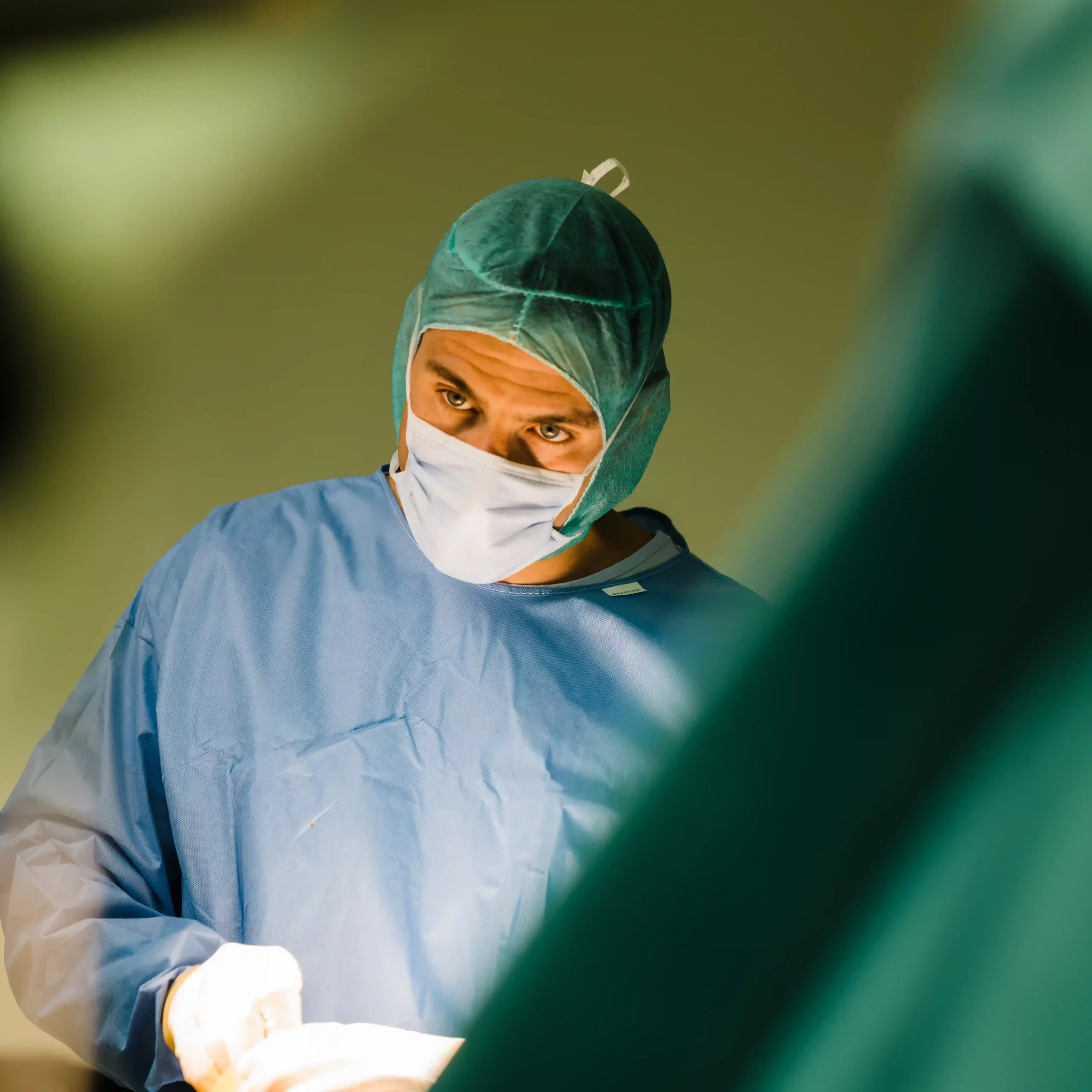
Surgeon performing the procedure


Full support
Take advantage of our all-in-one service: insurance, travel, post-operative follow-up, etc.
Ready to begin your care pathway?
From your country of residence, benefit from a teleconsultation with an expert surgeon and coordinated care in France or Andorra, with every detail of your medical stay carefully organised.