
ACL surgery
ACL surgery is a procedure designed to rebuild a damaged or torn knee ligament, restoring stability and function.
While it most commonly involves the anterior cruciate ligament (ACL), it can also address other ligaments that contribute to joint stability. These structures play an essential role in controlling knee movement, particularly during pivoting, twisting or changes of direction.
During knee surgery, the damaged ligament is replaced with a tendon graft taken from the patient themselves, usually from an area close to the knee. The procedure is carried out arthroscopically, a minimally invasive technique that uses small incisions and a tiny camera. This approach allows for a high degree of precision while keeping post-operative effects to a minimum.
The goal of an ACL reconstruction surgery is to restore joint stability, prevent secondary damage (to the meniscus and cartilage) and allow the patient to return to an active daily life and sporting activities under safe, long-lasting conditions.
Indications for ACL injury operation
ACL injury operation is recommended when a knee ligament rupture causes joint instability and affects the patient’s quality of life. It may involve the anterior cruciate ligament (ACL), but can also concern other ligamentous structures that contribute to knee stability.
It is most commonly recommended in the following situations:
- Knee instability with a sensation of giving way during movement.
- Inability or difficulty returning to sport, particularly pivot-heavy sports (football, skiing, basketball, combat sports, etc.).
- Young or active patients seeking a reliable knee for everyday and sporting activities.
- Failure of non-surgical treatment (rehabilitation alone).
- Persistent and troublesome laxity.
- Prevention of secondary damage (meniscal or cartilage injuries).
ACL reconstruction is also indicated when the ACL tear (lien page LCA genou) is associated with other knee injuries (meniscal or peripheral ligament damage), which can be addressed during the same surgical procedure.
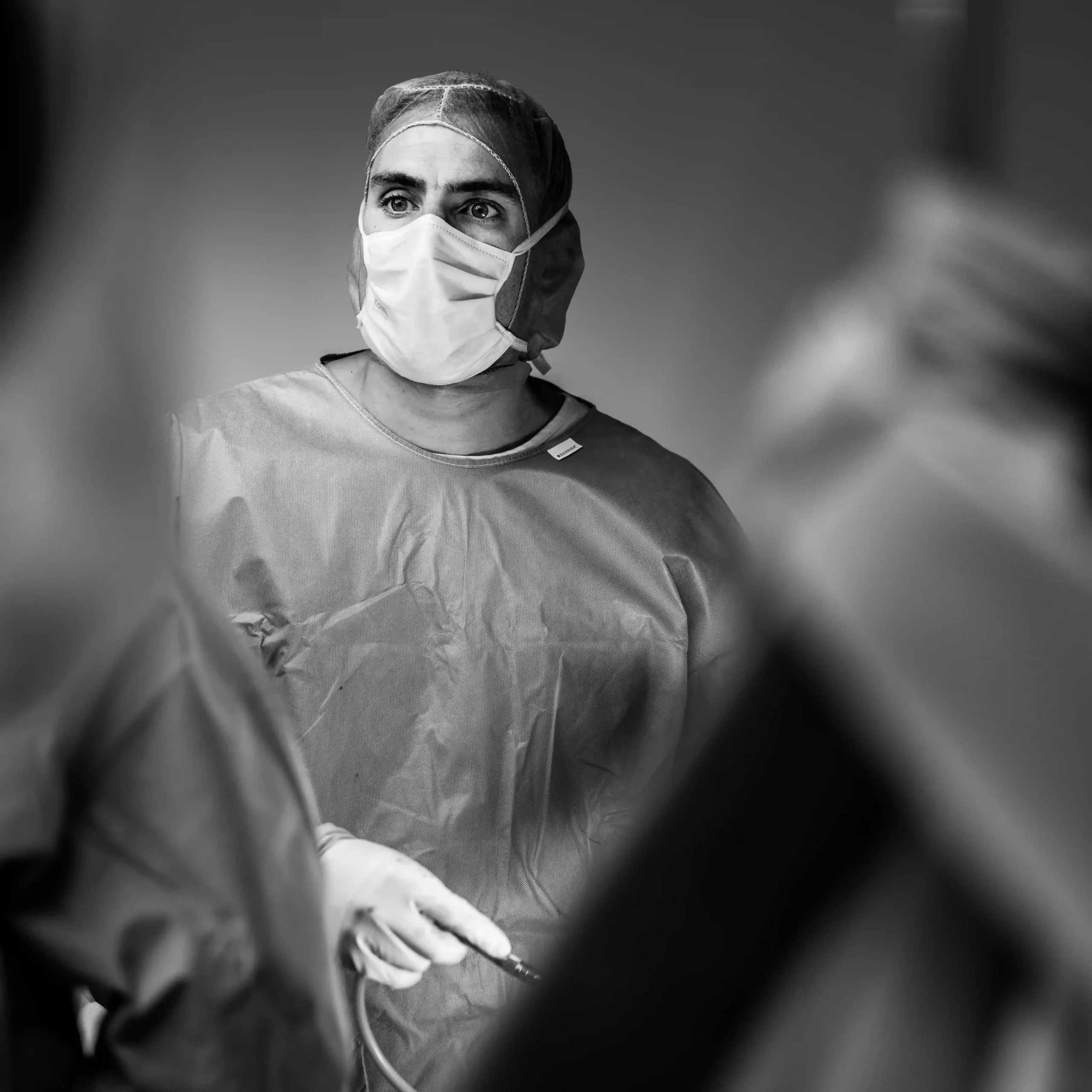
ACL rupture surgery: a safe procedure performed by expert surgeons
ACL rupture surgery is a minimally invasive procedure, most often performed as day surgery (admission and discharge on the same day), under regional or general anaesthesia.
The procedure begins with a thorough arthroscopic examination of the knee joint. A miniaturised camera is inserted through a small incision, allowing the surgeon to visualise the exact condition of the torn ligament and assess all knee structures (menisci, cartilage, peripheral ligaments).
This step is essential for identifying and treating any associated injuries, which are common following an anterior cruciate ligament rupture.
Because a torn ligament cannot heal on its own, it is replaced with a tendon graft harvested from the patient. This graft is usually taken from one or more tendons located near the knee.
Several harvesting and preparation techniques exist, using one or two tendons depending on the case. These techniques allow the reconstruction to be tailored to the patient’s anatomy, level of activity and recovery goals. Here are some examples:
The DIDT ACL reconstruction technique uses two of the patient’s tendons, the semitendinosus and the gracilis, located in the hamstring area. This well-established method provides the knee with reliable stability.
The DT4 ACL reconstruction technique involves harvesting a single tendon, the semitendinosus, which is then folded four times to form a strong graft. In sports surgery, this technique is frequently preferred because it allows for a smoother functional recovery.
The graft is then introduced inside the knee and positioned between two bone tunnels drilled into the femur and tibia, replicating the anatomical path of the anterior cruciate ligament.
It is secured using modern fixation devices (absorbable screws or anchoring systems), providing reliable and immediate stability.
In most cases, an anterolateral reinforcement (at the back and sides of the knee) is also carried out to optimise movement control and further protect the reconstruction.
The procedure takes around 30 minutes on average. The small incisions are closed and a dressing is applied. Patients can usually stand up on the same day, with the support of the medical team and a personalised rehabilitation programme.
ACL surgery recovery time: what to expect after the procedure
ACL surgery recovery time is well managed thanks to modern surgical techniques and a personalised post-operative care plan. Recovery progresses gradually, under the close supervision of the International Elite Care medical team.
The first days after the procedure
In the hours and days following surgery, it is normal to experience:
- moderate pain (usually relieved by prescribed painkillers),
- swelling of the knee as a result of the procedure,
- a feeling of stiffness or tension, particularly around the tendon harvest site.
Walking is usually permitted quickly, sometimes as early as the day after the procedure, with or without partial weight-bearing depending on the specialist knee surgeon’s instructions. Crutches may be used temporarily to help with safe mobility.
Rehabilitation and functional recovery
Rehabilitation is a key part of a successful ACL reconstruction. It often starts within days of the procedure and aims to progressively restore knee mobility, reactivate the muscles (particularly the quadriceps and hamstrings) and rebuild functional stability and confidence in the operated knee.
A temporary sensation of reduced strength or tension in the hamstrings may be felt when these tendons have been used for the graft, particularly following a DIDT or DT4 harvest. These sensations gradually ease with targeted rehabilitation.
Reprise des activités quotidiennes et sportives
Daily activities are resumed progressively over the following weeks. Driving is usually possible after a few weeks, depending on progress. The return to sport is supervised and gradual, often several months after the procedure, depending on the type of sport, the level of demand and individual recovery.
Where necessary, the addition of an anterolateral reinforcement helps to secure the reconstruction and improve outcomes when returning to demanding activities.
Regular follow-up appointments are arranged with the surgeon and the rehabilitation team to adjust the post-operative protocol, assess knee stability and optimise long-term results.
Expected results after ACL tear surgery
ACL tear surgery delivers satisfactory functional outcomes in the vast majority of cases, provided the indication is appropriate and the rehabilitation programme is followed carefully.
The primary objective of the procedure is to re-establish reliable joint stability. Once the graft has healed, the knee regains effective control of its movements, and the giving-way sensations caused by the ACL rupture are eliminated.
Once recovery is under way:
- walking becomes stable and fluid,
- everyday activities are resumed without apprehension,
- pre-operative pain and instability gradually disappear.
The patient regains a fully functional knee, capable of withstanding normal demands without any significant limitation.
For active and sporting patients, ACL reconstruction enables a progressive and supervised return to exercise, including pivot and change-of-direction sports, once recovery criteria have been met.
The timeline varies depending on the sport, the level of demand and the patient’s profile, but the goal is always a safe, confident and lasting return to the desired activity.
An untreated ACL rupture can lead to secondary injuries (meniscal and cartilage damage) and progressive deterioration of the joint. ACL rupture treatment through reconstruction helps to preserve knee structures, reduce the risk of future injuries and limit the onset of early osteoarthritis.
Modern ACL operations performed arthroscopically and tailored to the patient’s anatomy and objectives deliver stable, long-term outcomes with a high level of functional satisfaction.
Medical follow-up and the quality of rehabilitation are key factors in optimising and maintaining these results over time.
Your questions about ACL injury treatment answered
What is ACL surgery and am I a good candidate?
Every situation is different. The decision to operate ACL injuries depends on several factors: your age, activity level, functional expectations and the overall condition of your knee. A specialist consultation, often available via video call, allows your case to be assessed in detail and helps determine whether surgery is the most suitable option.
Is the surgery painful afterwards?
Pain is well controlled today thanks to modern surgical techniques and personalised pain management protocols. It is usually moderate and short-lived, particularly during the first few days. The International Elite Care medical team systematically adjusts treatment to ensure optimal comfort and a smooth recovery, including for patients travelling from abroad.
How long do I need to stay after the operation?
The length of stay depends on your personal situation and the plan agreed upon. In most cases, a few days are sufficient to carry out initial care, check that post-operative progress is on track and begin rehabilitation. International Elite Care assists with planning your medical stay, from accommodation to follow-up, so that your return home takes place under safe conditions. The ACL operation recovery process is carefully monitored throughout.
Can I be accompanied during my care journey?
Yes, you are welcome to bring a companion. International Elite Care takes this into account when organising your stay, including accommodation and transport, in addition to covering all logistical needs. Having someone with you is often reassuring and makes the first days after the procedure easier.
Why choose International Elite Care for ACL knee surgery recovery?
ACL knee surgery recovery is at the heart of the International Elite Care approach. We provide streamlined access to a highly specialised ACL surgeon, rigorous medical coordination and personalised support at every stage. From your first point of contact through to follow-up after you return to your home country, our aim is to guarantee a seamless, reliable and premium care pathway, in complete transparency.
Surgeon performing the procedure


Full support
Take advantage of our all-in-one service: insurance, travel, post-operative follow-up, etc.
Ready to begin your care journey?
From your country of residence, benefit from a teleconsultation with an expert surgeon and coordinated care in France or Andorra, with every detail of your medical stay carefully organised.