
Osteoarthritis of the hip (coxarthrosis)
International Elite Care supports patients with osteoarthritis of the hip through rigorous diagnosis and targeted medical solutions.
Coxarthrosis is a hip joint condition associated with the progressive deterioration of the hip cartilage. Over time, this protective tissue thins, loses its mechanical properties and may disappear partially or completely. The joint then becomes less mobile, leading to pain, stiffness and restricted movement.
Osteoarthritis symptoms in the hip can develop slowly over several years. Whilst age is the main contributing factor, certain factors can accelerate its onset or progression: anatomical abnormalities of the hip, a history of injury, being overweight, or repeated strain on the joint, particularly in certain sports.
Diagnosing osteoarthritis of the hip
To diagnose osteoarthritis of the hip, the hip specialist begins by analysing the symptoms described by the patient, tracking how they have evolved over time and assessing their functional impact. This clinical evaluation is then supported by targeted examinations to characterise the condition.
The progression of osteoarthritis in hips is carefully assessed to determine the most appropriate course of treatment. Confirmation of the diagnosis relies primarily on imaging, including hip radiographs and, in some cases, MRI.
At International Elite Care, every diagnosis is established on an individual basis and can be carried out remotely. The specialist takes into account the level of pain, functional impairment, the patient’s expectations, and their lifestyle, in order to propose a progressive care plan, whether medical or surgical if necessary.
Hip osteoarthritis symptoms and clinical signs
The intensity and progression of hip osteoarthritis symptoms vary from one patient to another. These signs typically appear gradually and worsen over time:
- Mechanical hip pain (often during physical activity),
- Joint stiffness,
- Reduced mobility (bending down, standing up, getting into a car),
- Limping and fatigue when walking,
- Inflammatory flare-ups (occasionally waking the patient at night).
In its early stages, osteoarthritis hip symptoms tend to be mild and intermittent, which can delay diagnosis. Early consultation is recommended, as osteoarthritis managed from the outset can remain stable for several years.
At a more advanced stage, each symptom of osteoarthritis of the hip increases in severity. This can have a significant impact on independence, daily activities, sleep quality and overall wellbeing.
With stage 4 hip osteoarthritis (the most advanced stage), cartilage wear is extensive, sometimes complete. Pain becomes intense and frequent, occasionally present even at rest or during the night. Discomfort and limping become pronounced, markedly affecting quality of life.
Possible complications of hip osteoarthritis
Hip osteoarthritis does not typically cause serious medical complications in itself. However, when the hip becomes painful, patients tend to compensate by altering their gait or posture. This can lead to pain in the back, the knee or the opposite hip, as well as increased fatigue when walking.
Bilateral hip osteoarthritis: when both hips are affected
Bilateral hip osteoarthritis refers to a condition affecting both hips simultaneously. It differs from unilateral forms (affecting only the left or right side) in that symptoms are generally more pronounced, as neither hip can adequately compensate for the other.
A key aspect of this condition is that the treatment of osteoarthritis in the hip must be tailored individually to each side. Each hip may be at a different stage of degeneration and present different patterns of damage. A personalised approach is therefore essential for effective results.
This form of the condition is relatively common. It tends to appear in older individuals and in those who have placed prolonged strain on their joints, whether through physical work or intensive sport.
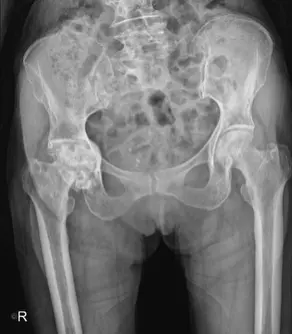
Hip osteoarthritis radiograph
Osteoarthritis of the hip: treatment and surgical options
Managing osteoarthritis in hipsinvolves a graduated approach, carefully adapted to the patient’s individual situation. Non-surgical treatments are favoured while the condition remains moderate. Surgical solutions are considered for more advanced stages.
Non-surgical treatments
These treatments aim to relieve pain, preserve mobility and slow the progression of the condition:
- Medication (analgesics, anti-inflammatory drugs),
- Intra-articular injections (notably corticosteroids or hyaluronic acid),
- Rehabilitation and functional adaptation (physiotherapy).
For hip osteoarthritis, non-surgical treatment focuses on alleviating symptoms and preserving joint function, without repairing the damaged cartilage itself.
Surgical treatment
When the osteoarthritis becomes debilitating, pain persists despite medical treatment, and quality of life is significantly diminished, a surgical approach may be proposed.
The standard procedure in this situation is a total hip replacement. This involves replacing the worn joint surfaces with implants, restoring hip mobility and providing lasting pain relief.
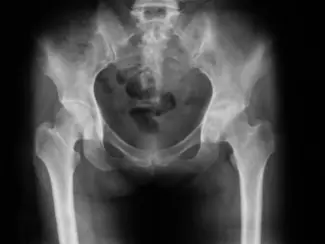
Hip osteoarthritis X-ray
Recovery after hip osteoarthritis treatment
Recovery from hip osteoarthritis varies depending on the treatment approach, the severity of the condition, and the patient’s overall profile. In every case, the goal is to restore a good quality of life and enable a return to everyday activities.
Recovery after non-surgical treatment
When osteoarthritis is managed through medical treatments (medication, injections, rehabilitation), recovery is generally progressive:
- Gradual reduction of pain over the following weeks,
- Improved mobility and joint flexibility,
- Easier walking,
- Adapted return to physical and professional activities.
These treatments help stabilise symptoms but require regular follow-up to adjust the care plan over time.
Recovery after surgical treatment (hip replacement)
In the first few days:
- The patient can begin walking with assistance (stick or crutch) under medical supervision.
- A clear reduction in arthritis-related pain is typically noticed, replaced by temporary post-operative discomfort.
Over the first few weeks, rehabilitation plays a central role. It is supervised by a physiotherapist and focuses on:
- Progressively restoring hip mobility,
- Securing safe movement patterns,
- Improving independence.
Everyday tasks such as standing, walking and dressing become increasingly manageable as recovery progresses.
In the months that follow, the focus shifts to muscle strengthening and the gradual resumption of adapted physical activity. Walking endurance improves, joint comfort increases, and the patient progressively returns to an active life, in line with medical recommendations.
In the majority of cases, patients experience a significant improvement in their quality of life, with lasting reduction, or even complete resolution, of joint pain.
Your questions about hip osteoarthritis, answered
Learn more about hip osteoarthritis and exercise, recovery as well as the support provided by International Elite Care.
Does hip osteoarthritis always require surgery?
No. In many cases, hip osteoarthritis can be effectively managed with non-surgical treatments for several years. Surgery is only considered when pain becomes persistent and daily life is genuinely affected despite well-conducted medical treatment.
How long does a hip osteoarthritis flare-up last?
The duration of a hip osteoarthritis flare-up varies between patients. In general, a painful episode can last from a few days to several weeks.
This depends on several factors:
– The stage of osteoarthritis of the hip,
– The intensity of the inflammation,
– The level of activity during the flare-up.
A flare-up can be shortened through appropriate non-surgical management (rest, analgesics, anti-inflammatory medication, or injection).
Each flare-up can differ. In some patients, symptoms remain mild and intermittent, while in others, episodes become more frequent as the osteoarthritis progresses.
When should I see a hip specialist?
It is advisable to consult a specialist as soon as regular hip pain appears or as soon as your mobility and comfort of life are affected. A specialist assessment allows for a precise evaluation of the situation, even at an early stage, and helps identify the most suitable options.
Can I continue to travel or work with hip osteoarthritis?
Yes, as long as pain and mobility allow. However, untreated hip osteoarthritis can progressively limit movement. Appropriate medical support is therefore recommended.
Is hip replacement reliable in the long term?
Current techniques and the implants used deliver excellent long-term results. When indicated and performed by an experienced surgeon, a hip replacement most often provides lasting pain relief and a significant improvement in mobility.
Can I get a specialist opinion without travelling immediately?
Yes. International Elite Care offers remote pre-operative consultations, allowing you to speak with a hip specialist, have your existing examinations reviewed, and receive a clear initial recommendation before organising any procedure if needed.
How does International Elite Care support international patients?
International Elite Care coordinates the entire care pathway:
– Referral to the most qualified surgeon,
– Organisation of consultations,
– Medical and logistical support,
– Follow-up after return to your home country.
The aim is to provide a smooth, safe and fully personalised experience.
Surgeon performing the procedure


Full support
Take advantage of our all-in-one service: insurance, travel, post-operative follow-up, etc.
Ready to begin your care journey?