
Hip implant revision
International Elite Care coordinates a fully bespoke hip implant revision carried out by expert surgeons, offering a premium level of care.
More technically demanding than a first implantation, replacing a hip prosthesis calls for advanced surgical expertise, thorough preoperative planning and a complete mastery of modern joint reconstruction techniques.
At International Elite Care, this procedure forms part of a tailored care pathway that includes a precise evaluation, state-of-the-art surgical techniques and a rigorous follow-up programme. The goal is to provide you with a reliable, safe treatment that meets the highest Western medical standards.
When is a hip prosthesis revision indicated?
A hip prosthesis revision is recommended when the original implant no longer functions correctly or causes symptoms that affect the patient’s quality of life.
The decision to proceed with revision surgery rests on a thorough medical assessment that considers symptoms, imaging studies and the patient’s overall condition. The main indications include:
- Persistent or worsening pain
- Loosening of the prosthesis (mechanical or septic) of the prosthesis
- Wear of the prosthetic components
- Instability or recurrent dislocations
- Infection of the prosthesis
- Fracture around the implant
- Limb-length discrepancy or functional impairment
Depending on the situation, a worn hip prosthesis replacement may involve different parts of the implant, or the cup (the part of the prosthesis that fits into the acetabulum to accommodate the head of the femur) or the femoral stem (the part that fits into the femur).
When the acetabulum is replaced as part of a hip replacement, it is actually the cup that is replaced. The acetabulum, which is the natural bony socket in the pelvis, can, however, be reconstructed when the bone is damaged (due to wear and tear, bone loss or infection).
Replacing a hip prosthesis: how the procedure works
The replacement of a hip prosthesis by our experts is entirely personalised according to your situation and the type of complication involved.
In the case of a second hip implant revision, the operation is often more complex because it involves a hip that has already been operated on more than once.
That said, this situation is far from exceptional when managed by experienced surgeons such as the practitioners at International Elite Care. Equally, a third hip revision can be performed safely. A carefully planned intervention delivers satisfying results while minimising the risk of complications.
Preparing for the procedure
Before surgery, a comprehensive assessment is carried out, including imaging studies, blood tests and a detailed analysis of the existing prosthesis. This phase determines the most appropriate surgical strategy, whether a partial or complete hip prosthesis replacement is required.
For international patients, this stage can begin with a remote consultation, making it easier to organise the medical stay and plan the procedure.
The hip implant revision procedure
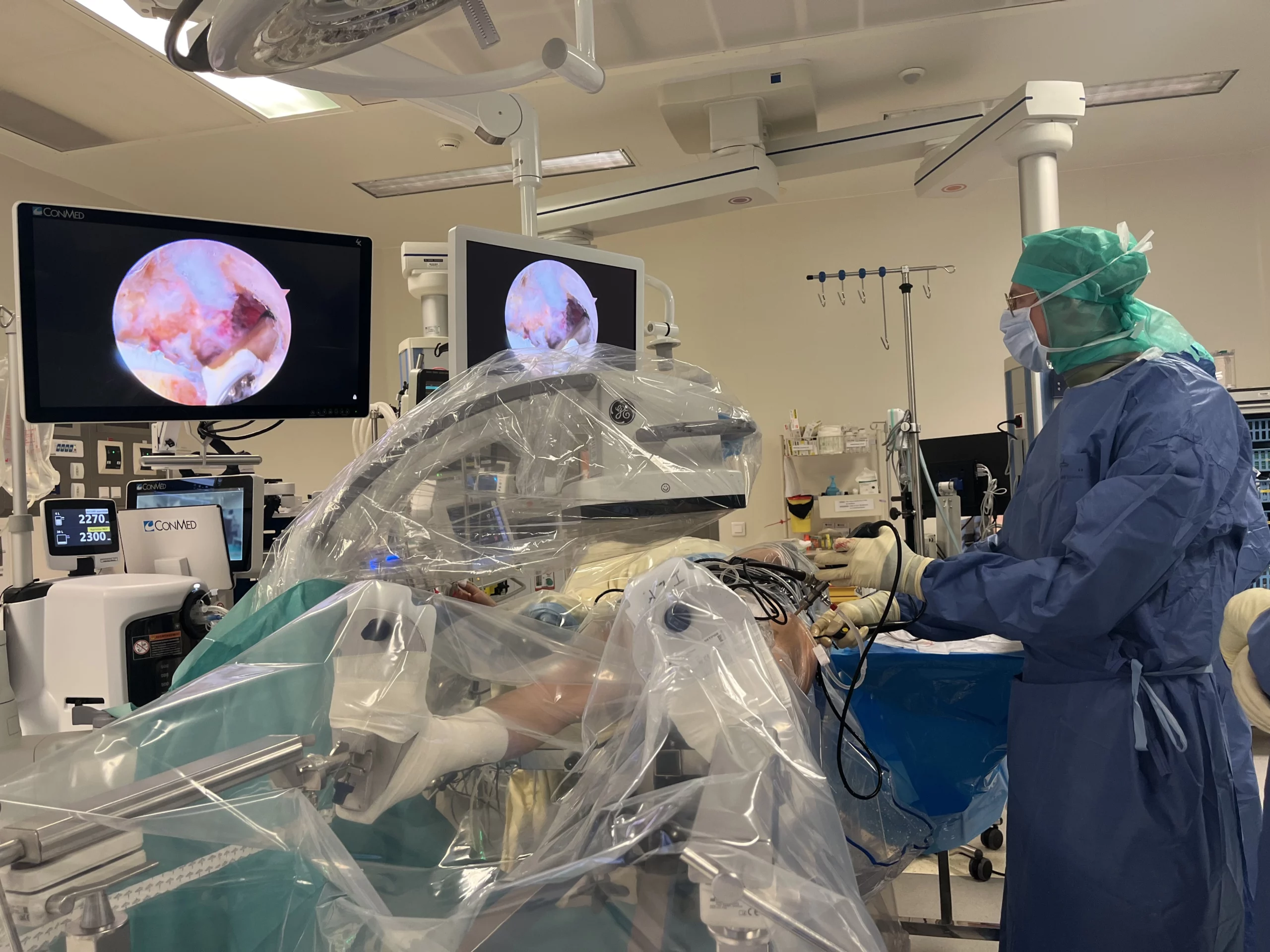
The surgeon specialising in hip treatments [Lien vers la page =Hip Treatments] accesses the joint through an appropriate approach. The failed prosthetic components are removed with precision, preserving as much surrounding tissue, muscle and bone as possible.
Depending on the condition of the bone and nearby structures, the surgeon fits a new, custom-selected prosthesis, sometimes combined with bone reconstruction techniques. This is particularly relevant in cases of hip implant revision with bone grafting.
If the original prosthesis is made of ceramic, the surgeon ensures no fragments remain before placing the new implant, in order to protect its longevity. A ceramic hip prosthesis replacement requires extra precautions from the surgeon, but for the patient, the care pathway remains the same.
Before closure, the hip’s mobility and stability are carefully verified. The tissues are then closed methodically to support optimal recovery.
Recovery after a total hip prosthesis revision
Recovery after a total hip prosthesis revision is closely supervised to ensure a progressive, safe and comfortable return to daily life. The post-operative course may vary depending on the complexity of the procedure, the initial state of the hip and the patient’s profile.
Following surgery, the patient is cared for in a secure medical environment with attentive monitoring of pain, mobility and general condition. Walking after a total hip prosthesis replacement is generally supervised by a specialist team from the very first days.
The length of hospital stay is adapted to each situation and typically lasts a few days.
Progressive return to mobility
Walking resumes quickly, under the supervision of the medical team and physiotherapists. Depending on the type of reconstruction performed, partial or full weight-bearing may be authorised, sometimes with the aid of crutches or a walking frame.
Movements are progressively reintroduced, following specific instructions to protect the new prosthesis. A bespoke rehabilitation programme is put in place to:
- restore hip mobility,
- strengthen the surrounding muscles,
- improve stability and confidence during walking.
The rehabilitation period after a hip prosthesis replacement typically lasts between six weeks and three months.
Wound care, healing and complication prevention
Preventive measures are implemented to limit the risk of complications after a hip implant revision.
Thromboembolic complications refer to the formation of blood clots, most commonly in the legs, which can impair circulation. They are prevented through appropriate treatment and early mobilisation of the hip.
Infectious complications describe an infection that may develop around the wound or the prosthesis. These remain rare and are addressed through rigorous prevention, including hygiene measures, local wound care and, where necessary, antibiotic treatment.
In every case, the patient receives clear guidance on positions to avoid, lifestyle habits to maintain and recommended daily movements during the recovery period.
Returning home and remote follow-up
For international patients, the return to the home country is planned in advance and fully secured. A structured, digitally supported post-operative follow-up programme maintains a close link with the medical team, monitors recovery progress and provides prompt answers to any questions.
Expected outcomes after hip revision surgery
The primary objective of hip revision surgery is to restore lasting hip function and significantly improve the patient’s quality of life. Results depend on the initial situation, the type of revision performed and the patient’s commitment to rehabilitation, but they are most often satisfying when the procedure is carried out by expert surgeons.
- Significant reduction in pain (or complete resolution)
- Restoration of hip stability
- Improved mobility and walking ability
- Lasting functional recovery with adapted physical activities
- Overall improvement in quality of life
- Long-term durability of the new prosthesis
Your questions about hip revision surgery, answered
Find everything you need to know about hip surgery with prosthesis revision.
How do I know whether a hip implant revision is truly necessary in my case?
The decision to perform a revision always rests on a thorough medical evaluation. It takes into account your symptoms, the level of discomfort you experience day to day, imaging results and your overall health. At International Elite Care, this assessment can begin remotely, allowing us to determine whether a revision is warranted or whether another option may be considered. The aim is to recommend the most appropriate solution for your situation.
Is a hip implant revision more complex than a first operation?
Yes, this procedure is generally more technically demanding than a primary hip replacement because it must adapt to a previously operated site. This is precisely why it is entrusted to experienced surgeons who are accustomed to complex revisions. Their expertise helps optimise both the safety of the procedure and the quality of the functional outcome.
What tangible benefits can I expect after the procedure?
Patients primarily benefit from a lasting reduction in pain, improved hip stability and greater comfort in everyday activities. The goal is to regain smoother mobility and an enjoyable quality of life, taking your personal situation and expectations into account.
How long should I plan to stay on site for the surgery and initial follow-up?
The length of stay is generally a few days and is adapted to each patient depending on the complexity of the revision. This time on site covers the procedure, post-operative monitoring and the initial phases of recovery. For international patients, everything is organised in advance so that the stay is seamless, safe and compatible with a comfortable return home.
Can a companion accompany me during my care pathway?
Yes, having a companion by your side is entirely possible and often encouraged. International Elite Care can help arrange accommodation and logistics so that your companion can stay with you in a comfortable and reassuring setting.
What happens once I have returned to my home country?
The medical follow-up provided by International Elite Care continues even after your return. A structured post-operative support programme is put in place to monitor your recovery, answer your questions and ensure continuity of care.
Is the new prosthesis durable over time?
The implants used during revision procedures are selected for their reliability and longevity. Their lifespan depends on several factors, including your lifestyle and ongoing medical monitoring, but current techniques aim for lasting results designed to accompany the patient over the long term.
Why choose International Elite Care for this type of procedure?
Beyond surgery itself, International Elite Care offers streamlined access to expert surgeons, meticulous medical coordination and comprehensive support designed for discerning international patients. This approach allows you to experience your care pathway with peace of mind, within a premium, bespoke setting.
How do I start my care pathway?
The first step is to get in touch with the International Elite Care team. From there, you will be directed towards the most qualified and available surgeon for your condition. This initial contact allows you to obtain an informed opinion before making any decision, with no obligation.
Surgeon performing the procedure


Full support
Take advantage of our all-in-one service: insurance, travel, post-operative follow-up, etc.
Ready to begin your journey?
Contact our team to explore your options and receive expert guidance tailored to your needs.