
Hip arthroplasty
Discover expert hip arthroplasty with tailored care. Explore your treatment pathway and take the next step today.
Hip arthroplasty involves partially or completely replacing a hip joint with an artificial joint.
The natural joint is replaced with a prosthesis made from highly durable, biocompatible materials designed to provide smooth, long-lasting movement. Current techniques allow for reliable and precise surgery. Functional recovery is generally rapid, provided that post-operative care and follow-up are properly managed.
Today, hip arthroplasty surgery is a well-established hip operation (lien vers la page Patho) performed by specialist surgeons, such as those working with International Elite Care. It can provide proven long-term results when carried out in optimal treatment and care conditions.
Hip arthroplasty total: what are the indications?
When considering hip arthroplasty total replacement may be recommended if the joint has been damaged and pain or reduced mobility significantly affects everyday life, despite appropriate medical treatment.
- Advanced hip osteoarthritis (coxarthrosis).
- Persistent, disabling hip pain.
- Significant loss of mobility, making everyday activities difficult.
- Reduced quality of life and a limitation of usual activities.
- Specific conditions, such as femoral head osteonecrosis, post-traumatic damage or inflammatory diseases.
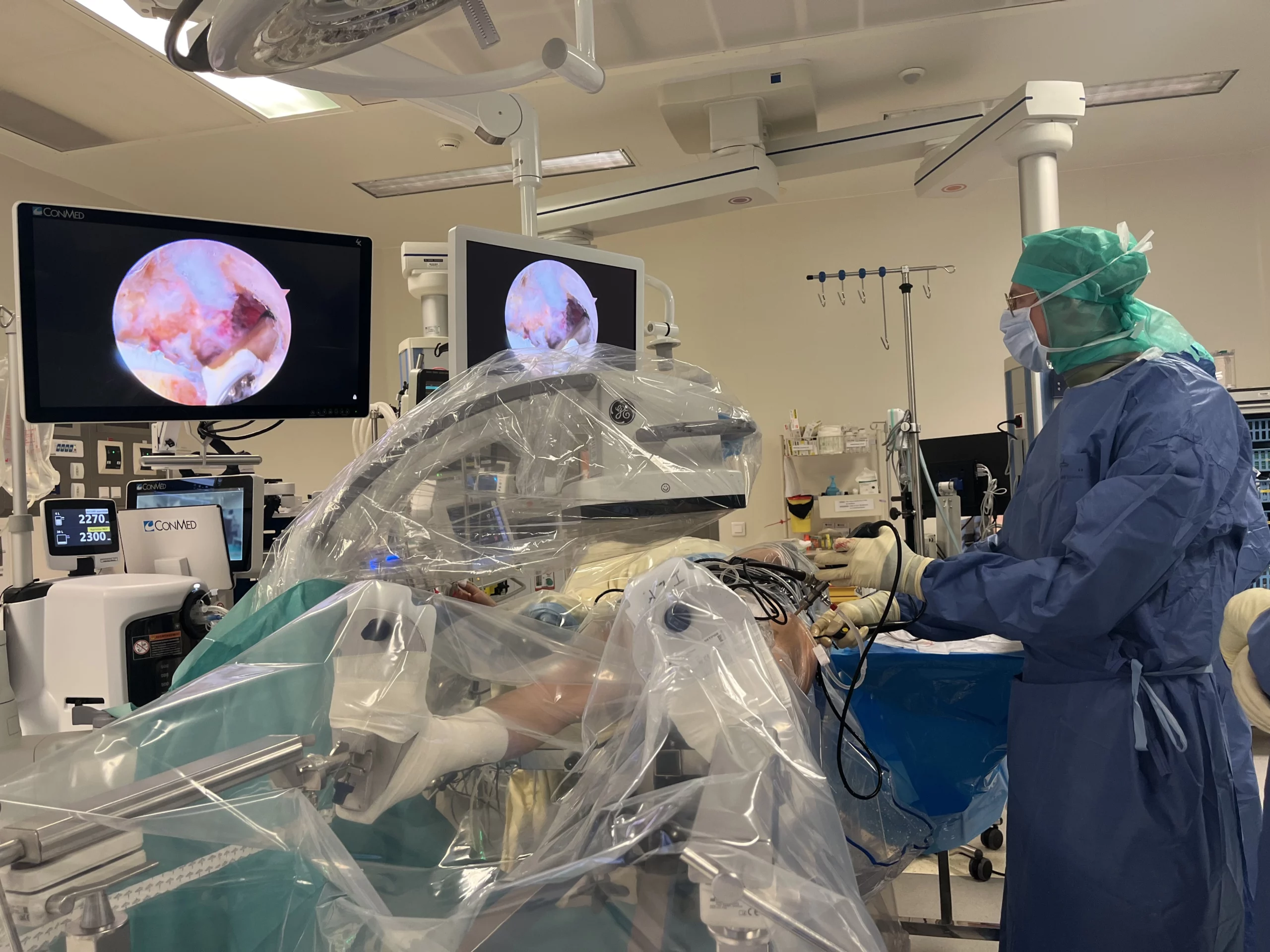
The decision to perform a total hip replacement arthroplasty is always based on an individual assessment. This assessment considers the patient’s age, activity level, functional expectations and overall state of health. The procedure may be carried out following chronic conditions (osteoarthritis) or trauma. It is therefore possible to perform a hip replacement following a hip fracture. Every patient is unique, and the surgeon tailors the treatment accordingly.
This is why the decision to proceed with surgery is made jointly by the patient and the surgeon, following a comprehensive clinical and radiological assessment, often supplemented by a pre-operative consultation. With International Elite Care, this consultation can take place remotely, particularly for international patients.
How is total hip arthroplasty performed?
Partial hip arthroplasty, also known as hemiarthroplasty, replaces part of the femur without altering the acetabulum. This procedure has the same overall objectives as total hip arthroplasty, which replaces both the femoral head and the acetabulum.
Treatment of the underlying hip condition is therefore similar in both situations. However, partial hip arthroplasty is less common. The choice mainly depends on the precise location of the damage, the condition of the cartilage and the patient’s functional profile.
Hip arthroplasty is a precise, well-established surgical procedure performed by a surgeon specialising in hip treatment.
Before surgery, a comprehensive assessment is carried out to confirm the hip arthroplasty’s indication and plan the procedure according to the patient’s needs. Total hip arthroplasty can be performed through a posterior approach (at the back of the hip), or an anterior hip arthroplasty (through the front of the hip) can be carried out. Both provide very good results.
The procedure is performed under general or spinal anaesthesia (anaesthesia of the lower body), depending on the patient’s profile and the chosen approach. The options are discussed beforehand with the anaesthetist to ensure the patient’s comfort and safety.
The surgeon accesses the hip joint through a precise incision.
The damaged joint surfaces are removed and replaced with a hip prosthesis consisting of several components (a femoral stem, a prosthetic head and an acetabular cup) selected according to the patient’s anatomy and lifestyle.
Modern and minimally invasive techniques aim to provide:
- maximum preservation of surrounding tissues,
- excellent joint stability,
- precise positioning of the prosthesis for smooth, natural movement.
The procedure generally takes around one hour, although this may vary depending on the complexity of the case.
After surgery, the patient is transferred to the recovery room for close medical monitoring. Pain management is anticipated and tailored to promote optimal comfort from the first few hours.
In most cases, weight-bearing and walking are resumed quickly, on the day of surgery or the following day, with support from the rehabilitation team.
Partial hip arthroplasty recovery and post-operative care
The post-operative care following hemiarthroplasty (or partial hip arthroplasty) is now well established, thanks to modern surgical techniques, advanced pain management and closely supervised rehabilitation.
The recovery process following partial hip arthroplasty is similar to that following total hip arthroplasty. From the patient’s perspective, the recovery experience is often similar.
After surgery, care follows a gradual pathway designed to support safe and comfortable functional recovery.
After surgery, the patient stays in a private room at a clinic or partner healthcare facility. The hospital stay generally lasts 1 to 3 days, depending on the patient’s health, pre-operative independence and arrangements for returning to their accommodation.
Pain is anticipated and controlled with appropriate medication, allowing the joint to be mobilised relatively early.
The patient is generally allowed to place their foot on the floor and bear weight through the operated hip soon after surgery, under the supervision of a physiotherapist. Walking begins with an aid such as a (walking stick or crutches), then gradually progresses towards independent walking over the following weeks.
A personalised rehabilitation programme is established to:
- restore hip mobility,
- strengthen the muscles,
- improve balance and stability,
- make everyday movements safer.
At International Elite Care, this rehabilitation can begin locally and then continue in the patient’s country of residence, with clear instructions and coordinated follow-up as part of an individualised hip arthroplasty care plan.
Simple everyday activities can be gradually resumed from the first few weeks.
Driving is generally possible after several weeks, depending on recovery.
Gentle physical activities can be gradually introduced following medical advice.
As with any surgical procedure, arthroplasty of the hip can involve complications. Fortunately, these are uncommon. Possible complications include:
- Infection.
- Haematoma
- Deep vein thrombosis
- Dislocation of the prosthesis.
- Long-term wear or loosening of the prosthesis.
In most cases, hip replacement surgery leads to lasting functional results, with a marked improvement in comfort and mobility. The benefits become apparent gradually over the course of several weeks, as recovery progresses. Expected benefits include:
- Reduced pain, or complete pain relief
- Improved mobility
- Greater independence
- An overall improvement in quality of life
The hip prostheses offered by International Elite Care surgeons are designed to provide excellent longevity, with stable long-term results when post-operative follow-up is properly managed.
Our answers to your questions about hip arthroplasty
What is hip arthroplasty?
Hip arthroplasty is a surgical procedure used to replace all or part of a damaged hip joint with an artificial implant, helping to reduce pain and improve mobility. The main types of hip arthroplasty are total hip arthroplasty, where both the femoral head and the hip socket are replaced; partial hip arthroplasty (hemiarthroplasty), where only the femoral head is replaced; and hip resurfacing, where the femoral head is reshaped and covered with a metal cap rather than fully removed.
Am I a suitable candidate for hip arthroplasty?
Every situation is unique. The decision to perform right or left hip arthroplasty is based on the severity of pain, its impact on everyday life, the condition of the joint and the patient’s functional expectations. A thorough medical assessment, including a review of diagnostic imaging and a consultation with a specialist surgeon, can determine whether the procedure is appropriate and identify the most suitable treatment option.
Is hip replacement arthroplasty painful?
Pain associated with the procedure is now anticipated and controlled using modern anaesthetic and pain-management protocols. Post-operative pain is generally temporary and gradually decreases over the first few days and weeks.
How long do I need to stay after the procedure?
The length of your stay depends on the procedure, your recovery and your travel arrangements. In general, several days in hospital are required, followed by a short stay in suitable accommodation.
For international patients, the International Elite Care team coordinates the overall arrangements to help ensure a safe and comfortable stay and return journey.
When will I be able to walk after surgery?
Walking is generally resumed quickly, often on the evening of surgery or the following day, with the assistance of a rehabilitation professional. Independence then gradually increases. The average hip arthroplasty recovery time is 6 to 12 weeks.
Can I travel after hip arthroplasty?
Yes. Travel is generally possible after an appropriate period, determined by the surgeon according to your recovery. The International Elite Care team supports you in planning your return journey, taking medical and logistical requirements into account to help ensure a smooth and comfortable journey.
Are the results long-lasting?
Current hip prostheses offer excellent longevity when implanted under appropriate conditions and regularly monitored. Durability depends on several factors, including the patient’s activity level, compliance with medical recommendations and the quality of post-operative follow-up.
Can I receive follow-up care once I return to my country?
Yes. Structured follow-up is organised after your return, with remote consultations where necessary, review of follow-up examinations and coordination with local healthcare professionals. This approach helps ensure continuity of care and supports your recovery over the long term.
Why choose International Elite Care for my hip arthroplasty?
International Elite Care provides access to expert surgeons and leading healthcare facilities through a smooth, personalised care pathway. Support extends from the initial consultation through to follow-up after your return home, with particular attention to quality, safety and patient comfort, as well as services tailored to the needs of international patients.
Surgeon performing the procedure


Full support
Take advantage of our all-in-one service: insurance, travel, post-operative follow-up, etc.
Ready to begin your journey?
Contact our team to explore your options and receive expert guidance tailored to your needs.