
Metatarsal osteotomy
A metatarsal osteotomy is a surgical procedure in which a bone of the foot is precisely cut and repositioned to correct a mechanical problem. The goal is to address a deformity, redistribute weight-bearing across the foot, and provide lasting pain relief while preserving the joints wherever possible.
This surgery is used to treat a range of conditions, including forefoot deformities such as hallux valgus (bunion), certain toe disorders, and mechanical imbalances that cause pain when walking.
An osteotomy is a bespoke procedure: every step is tailored to the patient’s anatomy, pathology, and lifestyle. Once the bone has been repositioned, it is held in place by a post-operative directive dressing and by discreet internal fixation devices (screws, plates) to promote stable, progressive bone healing.
By restoring harmonious alignment in the foot, an osteotomy aims to improve function, day-to-day comfort, and the patient’s overall quality of life.
Indications for foot osteotomies
Foot osteotomies are primarily indicated for the treatment of mechanical metatarsalgia, a common forefoot condition responsible for pain that can become debilitating when walking.
Metatarsalgia is a painful inflammation of the forefoot. It affects the areas beneath the metatarsal heads (at the base of the toes) and the plantar arch. Pain develops when body weight is unevenly distributed across the forefoot.
An osteotomy is also considered in the following situations:
- Persistent pain despite conservative treatment
- After a thorough clinical assessment of bony deformities in the foot
- When the objective is to correct the underlying mechanical cause of the pain
The purpose of the osteotomy is to modify the load borne by the metatarsals so that pressure is adapted to the foot’s individual shape.
L’ostéotomie des métatarses du pied
Osteotomy foot: understanding the metatarsal bones
An osteotomy foot procedure targets the metatarsals, the long bones of the forefoot. Each metatarsal consists of a base, a shaft, and a head. During walking, a large proportion of body weight rests on the metatarsal heads. Certain abnormalities can lead to localised overloading and cause persistent pain:
- An excessively long metatarsal, most often the second (and sometimes the third)
- Collapse of the anterior arch of the foot (rounded forefoot)
Metatarsalgia is more common in women, in part because of prolonged wear of narrow or high-heeled shoes, which increase the strain on the forefoot.
When the osteotomy involves the second, third, or fourth metatarsal, it is referred to as a lateral metatarsal osteotomy. A second metatarsal osteotomy or a 5th metatarsal osteotomy may be performed depending on the specific site of the problem.
Surgery on the metatarsals is often carried out as a percutaneous osteotomy, a minimally invasive technique that preserves the surrounding structures and facilitates recovery. The procedure aims to redistribute weight-bearing, reduce excessive pressure on the forefoot, and provide long-lasting pain relief while maintaining foot mobility.
If several distinct bony areas need to be corrected during the same procedure, a double metatarsal osteotomy can be performed by an International Elite Care surgeon.
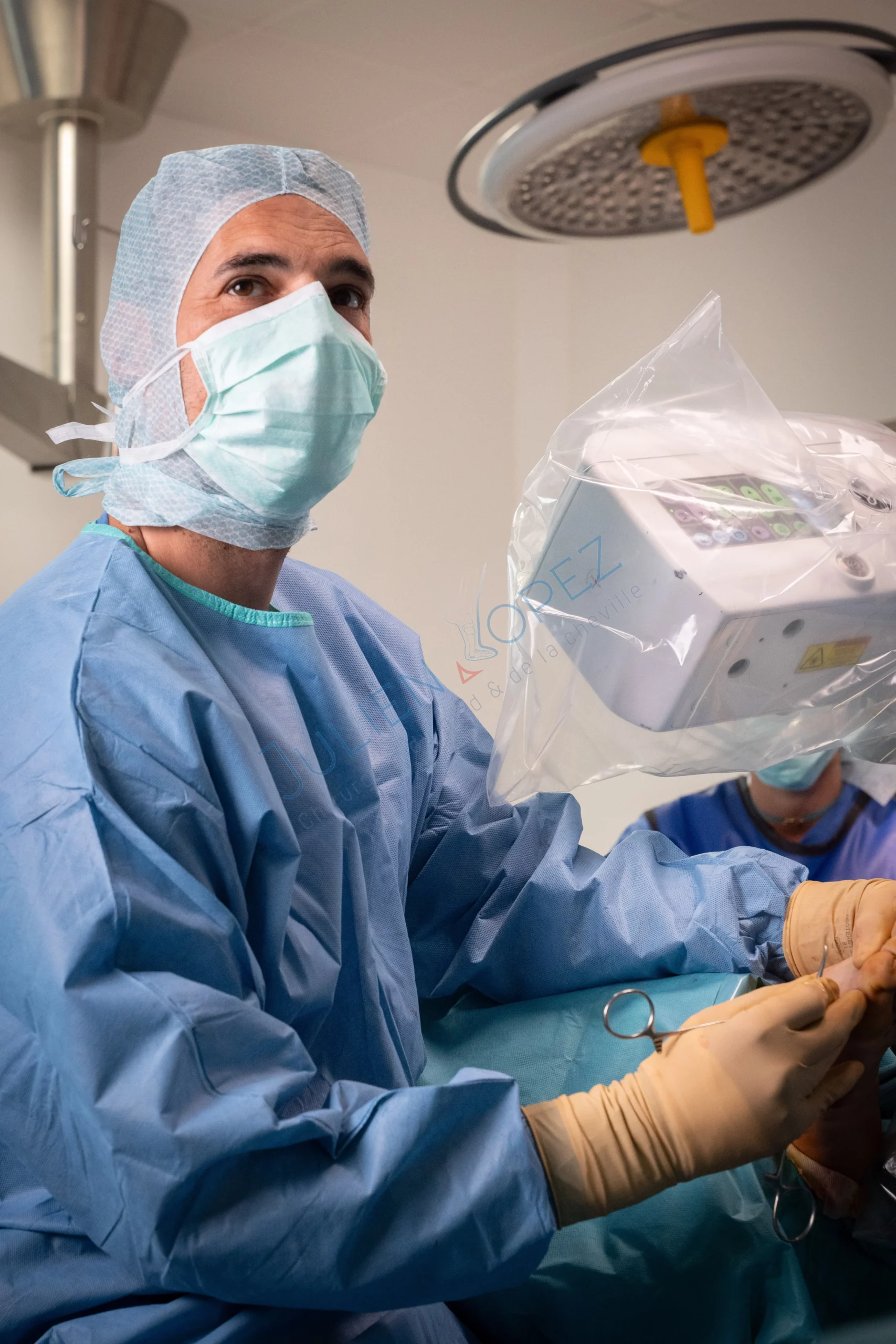
2nd and 3rd metatarsal osteotomy surgery: how the procedure works
2nd and 3rd metatarsal osteotomy surgery is personalised according to each patient’s condition, pathology, and the area affected.
Whenever the clinical situation allows, the surgeons at International Elite Care favour minimally invasive percutaneous techniques, valued for their precision and a more comfortable recovery.
There are several types of osteotomy of foot for the big toe and the forefoot. The choice of technique depends on:
- The type of deformity
- Joint mobility
- Whether or not dislocation is present
- Tendon contractures
- The patient’s functional expectations
The most commonly used techniques include:
- Percutaneous osteotomy of the lateral metatarsals (DMMO, DICMO)
- Weil osteotomy (a more traditional, open technique)
- Chevron osteotomy, particularly for hallux valgus
The DMMO, sometimes referred to as DOMMO or DICMO, is a minimally invasive technique particularly suited to the treatment of metatarsalgia when the metatarsophalangeal joints are not dislocated.
The feet specialist makes mini-incisions of approximately 2 millimetres on the lateral aspect of the metatarsal heads.
Using fine instruments, the soft tissues are gently released to prepare the surgical site.
A motorised percutaneous burr is used to cut through the metatarsal neck along an oblique plane.
The bone is then displaced a few millimetres backwards, which redistributes weight-bearing across the forefoot.
The bone fragments are generally not fixed with hardware: their adjustment occurs naturally when weight-bearing resumes, under the effect of ligament and tendon tension.
This technique provides effective correction with very discreet scars and optimal preservation of the joint structures.
If the joints are dislocated or a greater degree of bone recession is required, an open technique may be proposed, notably the 2nd metatarsal Weil osteotomy. This approach requires a larger incision but allows:
- Direct visualisation and control of the joint
- Correction of dislocations
- Stabilisation through internal fixation
This technique is generally avoided where possible due to the risk of post-operative stiffness.
Metatarsal osteotomy recovery: what to expect after surgery
Metatarsal osteotomy recovery following a percutaneous procedure is usually straightforward and well tolerated, thanks to the advantages of the minimally invasive approach.
After the procedure
Patients can generally resume weight-bearing quickly, often on the same day or the day after surgery, with the help of a specially designed post-operative shoe.
Moderate pain is possible during the first few days but is well managed with a pre-planned analgesic protocol.
Swelling of the forefoot is common. It subsides gradually with rest, keeping the foot elevated, and following post-operative instructions.
Scars are very discreet and heal easily.
The hospital stay is short, most often as a day case or with one night of observation depending on the medical context and the facility.
Osteotomy foot recovery time and return to activities
Osteotomy foot recovery time varies from patient to patient, but rehabilitation is progressive. It is possible to walk after a foot osteotomy with the help of a suitable post-operative shoe. The shoe is typically worn for several weeks, depending on the technique used.
The return to standard footwear happens gradually, in line with the reduction of swelling.
Day-to-day activities can be resumed on an adapted basis, while sporting activities are considered once bone healing is complete, according to individual progress.
Regular medical follow-up, including clinical and sometimes radiological checks, ensures that bone consolidation is progressing well and that weight-bearing patterns are improving.
For patients travelling from abroad, International Elite Care provides structured and coordinated follow-up even after the return home. Remote check-up consultations can be arranged to ensure continuity of care, assess recovery, and answer the patient’s questions at every stage. Whether you are concerned about 1st metatarsal osteotomy recovery or osteotomy of metatarsal rehabilitation in general, you can count on a dedicated team throughout the process.
Expected results
A foot osteotomy aims to deliver lasting, functional outcomes:
- Significant reduction or complete resolution of forefoot pain
- Improved walking comfort and day-to-day quality of life
- Rebalanced plantar weight-bearing, reducing the risk of recurrent metatarsalgia
- Correction of associated deformities when several procedures are combined
- A discreet cosmetic result with barely visible scars
Results are optimised by selecting the right surgical technique and following post-operative recommendations closely.
Frequently asked questions about foot osteotomy
Am I a good candidate for a foot osteotomy?
Every patient is different. The decision to proceed with an osteotomy is based on a detailed analysis of your foot, your pain, your lifestyle, and your expectations. A specialist consultation, which can often be arranged remotely as a first step, will determine whether this surgery is appropriate for your situation and which technique would offer the best functional outcome.
Where should I have a lateral metatarsal osteotomy?
A lateral metatarsal osteotomy should be performed in a centre specialising in foot surgery, with appropriate technical facilities and recognised expertise in forefoot conditions. International Elite Care acts as an expert medical concierge: we identify the most suitable surgeon and facility for each patient, while ensuring rigorous coordination of the surgical pathway and post-operative follow-up.
How long should I plan to stay if I am travelling from abroad?
The length of stay is tailored to each patient. It depends on the type of procedure, your initial recovery, and your personal comfort. The International Elite Care team supports you in organising your medical trip so that it is smooth, stress-free, and compatible with your schedule.
Is 2nd and 3rd metatarsal osteotomy surgery recovery painful?
2nd and 3rd metatarsal osteotomy surgery recovery is generally well tolerated. Current techniques, particularly minimally invasive ones, allow effective management of post-operative pain. A personalised analgesic protocol is put in place to ensure your comfort from the very first days.
How am I followed up after returning to my country?
The follow-up provided by International Elite Care continues until your full recovery, even from abroad. Remote check-up consultations can be arranged to assess progress, answer your questions, and adjust recommendations if needed. Whether your procedure involved a 1st metatarsal osteotomy or a 2nd metatarsal osteotomy surgery, this continuity of care is a key part of the support offered by International Elite Care.
Surgeon performing the procedure


Full support
Take advantage of our all-in-one service: insurance, travel, post-operative follow-up, etc.
Ready to begin your care journey?
From your country of residence, benefit from a teleconsultation with an expert surgeon and coordinated care in France or Andorra, with every detail of your medical stay carefully organised.