
Foot Fracture Surgery
Foot fracture surgery allows the repair of one or more broken bones in the foot when non-surgical treatment is not sufficient.
At International Elite Care, every procedure is performed by a foot fracture specialist.
The foot is an exceptionally complex anatomical structure, composed of numerous bones, joints, ligaments and tendons. A poorly treated broken foot can lead to persistent pain, loss of mobility, weight-bearing problems or lasting functional consequences. The aim of surgery is to restore anatomical integrity, which is essential for optimal recovery.
The procedure involves realigning the bone fragments (fracture reduction) and then stabilising them firmly with appropriate surgical hardware (screws, plates, pins). This technique is known as open reduction internal fixation of the foot — or ORIF. This internal stabilisation promotes a faster and safer return to foot function.
With International Elite Care, the operation is carried out by an orthopaedic surgeon specialising in foot surgery. It forms part of a structured care pathway, with precise pre-operative assessment, personalised management and rigorous post-operative follow-up, which can be conducted remotely for international patients.
Is Surgery for a Foot Fracture always necessary?
Surgery for a foot fracture is not always mandatory. It depends on the type of fracture and its complexity. In some cases, medical treatment alone may be sufficient to allow the bone to heal.
Before any decision, the International Elite Care orthopaedic surgeon carries out a precise analysis of the fracture together with the patient’s profile and expectations (activity level, functional requirements, recovery timeline).
Surgery is indicated when the fracture is displaced or may compromise long-term foot function. Below are different scenarios and their associated management.
Jones Fracture (Base of the 5th Metatarsal)
The Jones fracture affects the bone on the outer border of the foot. It frequently occurs during sporting activities (running, jumping, dance) or following a direct trauma (impact, fall). When the accumulation of minor repetitive trauma eventually causes the fracture, this is known as a stress fracture.
Non-surgical treatment is possible when the fracture is undisplaced. It involves immobilising the foot until consolidation. However, conservative treatment carries a high risk of re-fracture during the first year. Surgery is recommended for professional athletes, as surgical stabilisation reduces the risk of recurrence and promotes an earlier return to sport.
Surgery is indicated when:
- the fracture is displaced or unstable,
- there is delayed or failed healing,
- the patient is sporty or highly active (elevated recurrence risk).
To simplify the return to movement and reduce the risk of recurrence, the International Elite Care surgeons are skilled in percutaneous surgery. This technique preserves tissue and facilitates recovery.
Calcaneal Fracture (Heel Bone)
A calcaneal fracture is often caused by a fall from height or a violent impact on the heel. It can produce significant pain, marked swelling and sometimes foot deformity.
A CT scan is essential for precise analysis of the fracture.
Depending on the case, treatment may be functional, conservative or surgical. Surgery is indicated for:
- displaced fractures,
- joint involvement,
- unstable or complex fractures,
- certain open fractures.
In well-selected cases, minimally invasive or percutaneous surgery may be offered.
Lisfranc Fracture (Midfoot Joint)
A Lisfranc fracture affects a key joint that provides stability and shock absorption during walking. It is often caused by violent twisting, crushing or hyperflexion of the foot.
Surgery becomes necessary for unstable fractures, fractures combined with dislocation, or misalignment of the midfoot bones. In certain situations, emergency percutaneous surgery is required to restore alignment and prevent lasting functional damage.
Metatarsal and Toe Fractures
These fractures are common, and their severity varies. If the surgeon identifies displacement, alignment problems or marked instability affecting weight-bearing or walking, surgical treatment is necessary.
When indicated, percutaneous or micro-invasive surgery can be performed within 10 to 12 days of the injury.
At International Elite Care, every indication is discussed on a personalised basis to propose the safest and most appropriate treatment strategy.
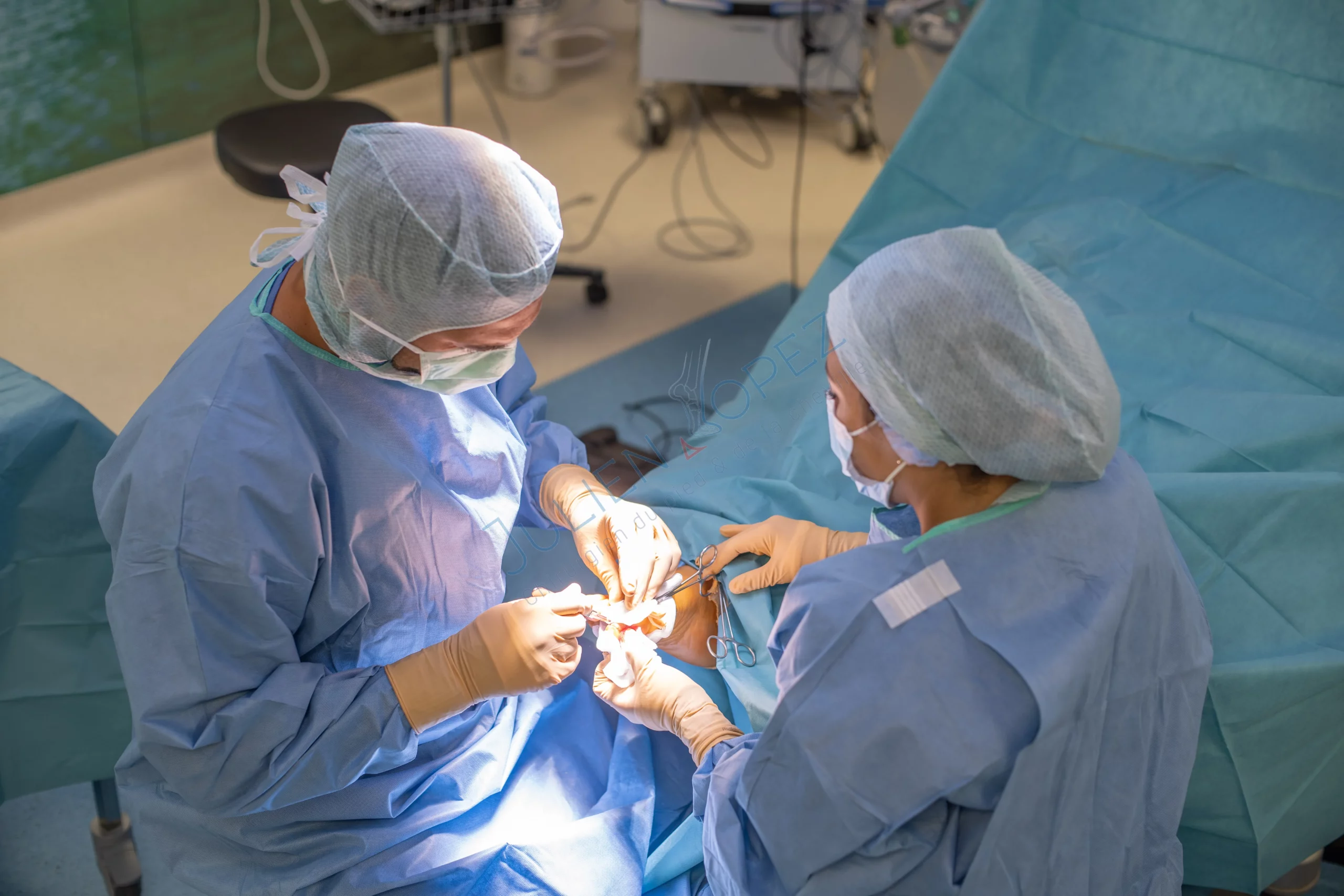
ORIF Foot Surgery: A Controlled Procedure by Our Specialist Surgeons
ORIF Foot Surgery follows a precise protocol to restore bony alignment, ensure proper consolidation and preserve surrounding tissue. When possible, minimally invasive or percutaneous techniques are preferred for their advantages (limited incisions, more comfortable recovery).
Before the ORIF foot procedure, the patient undergoes a full clinical and radiological workup:
- X-rays,
- CT scan,
- analysis of fracture stability and displacement.
A pre-operative consultation, often available remotely by video call, explains the surgical strategy, the type of anaesthesia and the expected post-operative course.
The procedure is performed under regional or general anaesthesia, depending on the fracture type and the patient’s profile.
Once the patient is positioned, the surgeon begins by precisely realigning the bone fragments to restore the natural anatomy of the foot. This step is essential for achieving stable weight-bearing, good mobility and minimising the risk of delayed pain.
Once the fracture is correctly repositioned, it is stabilised using appropriate surgical hardware: screws, plates or pins, depending on the bone involved and the fracture pattern. This is the internal fixation component of the ORIF foot procedure.
During surgery, radiographic imaging confirms the correct positioning of bone and hardware. The procedure concludes with careful wound closure, followed by the fitting of a protective boot or a specialised dressing.
Operating time varies according to fracture complexity, typically ranging from 30 minutes to 1 hour 30 minutes.
After the procedure, the patient is monitored in the recovery room, then returned to their room. A personalised programme is promptly established, including:
- pain management,
- weight-bearing instructions,
- medical follow-up organisation,
- preparation of the rehabilitation protocol.
At International Elite Care, this follow-up can be maintained remotely after the patient returns home, ensuring perfect continuity of care.
Foot Fracture Surgery Recovery Time: What to Expect
Foot Fracture Surgery Recovery Time depends on the fracture type, the stability achieved during surgery and the patient’s activity level. Here is an overview of what to expect.
Before the operation, the patient receives a personalised preparation protocol from the surgeon:
- pre-operative medical instructions,
- pre-anaesthetic consultation,
- specific recommendations (for example, stopping smoking before the procedure and until skin healing is complete, to improve bone and tissue regeneration).
In the majority of cases, the procedure is carried out on a day-case basis, allowing the patient to return home shortly after surgery.
Convalescence and Return to Activities
Fractured foot surgery recovery time is progressive and personalised. The surgeon provides a precise convalescence protocol, including weight-bearing instructions, walking resumption timelines and recommendations for everyday tasks.
For physically demanding occupations, time off work of up to 6 months may be necessary, depending on fracture complexity and job requirements.
Foot Fracture Surgery Recovery Time
Following the procedure, physiotherapy sessions are needed to:
- restore joint mobility,
- strengthen the muscles of the foot and ankle,
- regain smooth, stable walking.
This rehabilitation protocol is defined on a bespoke basis with the International Elite Care surgeon. It may include supervised sessions with a physiotherapist and exercises that can be performed independently at home, including after the patient’s return to their home country.
The expected long-term outcomes are:
- high-quality bone consolidation,
- a stable, functional and pain-free foot,
- progressive recovery of mobility,
- a safe return to everyday, professional and sporting activities.
Your Foot Fracture Doctor: Questions Answered
What do doctors do for a fractured foot?
When a foot fracture is diagnosed, the specialist first determines whether the bone can heal with conservative treatment (immobilisation, protective boot) or whether surgery is needed. If surgery is indicated, the surgeon realigns the bone fragments and stabilises them with screws, plates or pins, a procedure known as ORIF. The choice of approach depends on the fracture type, its location and the patient’s functional needs.
When should surgery be performed after a foot fracture?
When an operation is necessary, it is generally scheduled within the days following the fracture, most often between one and two weeks, to intervene at the optimal moment: after swelling has subsided but before the bone consolidates in an incorrect position.
Is there post-operative pain after foot fracture surgery?
Pain management is an integral part of the care protocol. Thanks to the percutaneous and minimally invasive techniques mastered by the International Elite Care surgeons, post-operative pain is generally moderate and well controlled with appropriate medication. The medical team systematically anticipates this phase to ensure optimal comfort from the very first hours.
Is open reduction internal fixation of the foot painful during recovery?
Some discomfort is expected following any open reduction internal fixation foot procedure, but modern anaesthesia protocols and tailored pain relief ensure this is well managed. Most patients describe the pain as moderate and steadily improving. If discomfort persists beyond the expected timeline, a follow-up assessment allows the surgeon to investigate and adjust the management plan.
How long must I stay after the procedure if I am coming from abroad?
In the majority of cases, foot fracture surgery is performed on a day-case basis, allowing a return to accommodation the same day. The length of the on-site stay then depends on the fracture type, the patient’s independence and the organisation of the return journey. The International Elite Care team supports you in planning a safe, tailored medical stay.
Can follow-up be organised after I return to my country?
Yes. Post-operative follow-up can be partly conducted remotely, through video consultations and secure exchange of reports and imaging. This ensures rigorous continuity of care while limiting travel, a feature particularly valued by international patients.
Why choose International Elite Care for this type of procedure?
International Elite Care offers a structured, smooth and premium care pathway, from referral to the most qualified surgeon through to the practical organisation of your treatment. You benefit from personalised support, recognised surgical expertise and medical coordination designed to meet the expectations of international patients.
Surgeon performing the procedure


Full support
Take advantage of our all-in-one service: insurance, travel, post-operative follow-up, etc.
Ready to begin your care pathway?
From your country of residence, benefit from a teleconsultation with an expert surgeon and coordinated care in France or Andorra, with every detail of your medical stay carefully organised.