
Total hip replacement: indications, surgery and recovery
Total hip replacement can relieve pain and restore mobility. Learn about indications, surgery, recovery and expected outcomes.
A total hip replacement involves replacing all or part of the hip joint with an implant.
The natural hip joint, located between the pelvis and the femur, plays an essential role in mobility, stability and everyday quality of life. When the cartilage becomes damaged, whether due to osteoarthritis, trauma or joint disease, movement can become painful and restricted.
A hip replacement is designed to reproduce the anatomy and function of the natural joint as closely as possible. It is made from biocompatible materials recognised for their durability and excellent tolerance by the body.
Recovery after a total hip replacement surgery can be followed week by week, with gradual improvements in mobility, comfort and the ability to return to everyday activities.
Thanks to modern hip surgery techniques and the personalised care provided by International Elite Care, hip replacement surgery is now a well-established, reliable and proven procedure, with highly satisfactory long-term functional outcomes.
A hip replacement operation typically takes between 1 and 2 hours, making it a well-established procedure that can be performed safely.
Indications for total hip replacement operation
A total hip replacement operation is indicated when the joint has become permanently damaged and medical treatments no longer provide sufficient relief.
It is generally considered when pain, stiffness or loss of mobility significantly affects quality of life, walking and everyday activities. The main indications include:
- Hip osteoarthritis (coxarthrosis)
- Persistent pain
- Significant hip stiffness
- Joint damage caused by trauma
- Inflammatory or degenerative conditions
- Joint deformity or poor alignment
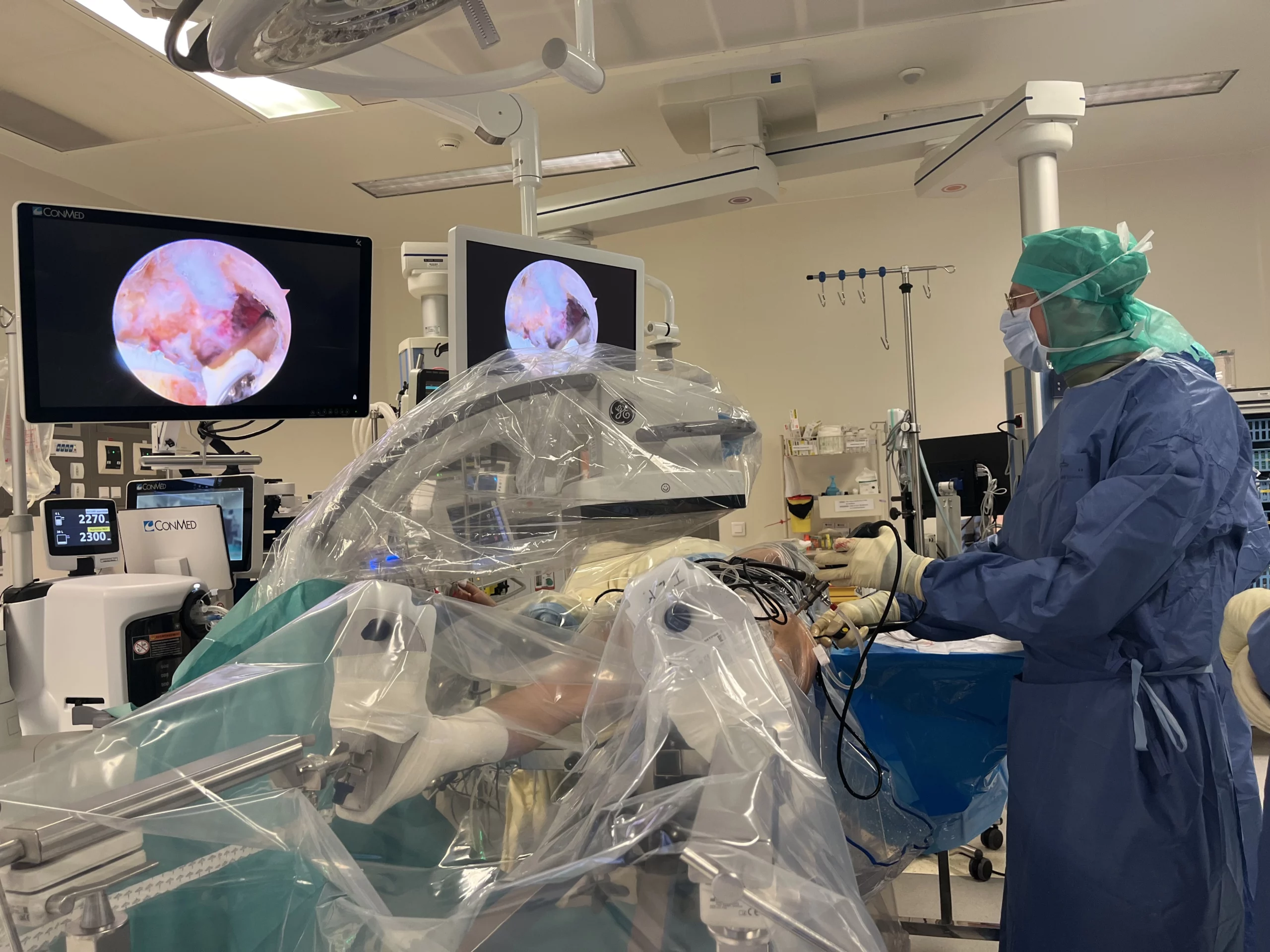
The decision to undergo hip replacement surgery is always based on an individual assessment. With International Elite Care [Lien vers la = Homepage], each indication is assessed by a surgeon specialising in hip replacement, with the aim of recommending the most appropriate solution and optimal conditions of care.
Total hip joint replacement: safe surgery with expert surgeons
Before total hip joint replacement surgery, a comprehensive assessment is carried out, including a specialist consultation (often available by video consultation), imaging tests, planning, medical and anaesthetic assessment. This stage confirms the indication, determines the most suitable type of implant and prepares a personalised care pathway.
A replacement of the total hip is performed under general or spinal anaesthesia (which numbs the lower part of the body), depending on the patient’s profile and the medical team’s recommendations.
The surgeon specialising in hip treatment accesses the hip joint through a carefully minimally invasive incision, using a surgical technique adapted to the patient’s anatomy. Current approaches aim to preserve muscles and soft tissues as much as possible, helping to support recovery.
The damaged joint surfaces are removed and replaced with a hip implant made from biocompatible materials and designed to replicate the natural movement of the joint. The implant is positioned with a high degree of precision to provide stability, mobility and long-term durability for the new joint.
Once the implant is correctly positioned, the incision is closed. The patient is then transferred to the recovery room for close medical monitoring.
The total hip replacement operation takes an average of 1 to 2 hours, depending on the complexity of the case.
Total hip replacement: recovery week by week
After a total hip replacement, the recovery week by week is now well managed thanks to modern surgical techniques and comprehensive, personalised care.
Mobilisation generally begins on the day of surgery or, at the latest, the following day, under the supervision of the medical and physiotherapy teams. Walking is gradually resumed, usually with temporary technical support such as walking sticks or crutches to ensure safe movement.
Pain following hip replacement surgery is usually moderate and well controlled with appropriate pain relief. It gradually decreases over the following days.
Following a total hip replacement, the length of hospitalisation varies according to the patient’s profile and the type of care provided but is generally 1 to 3 days. Total hip replacement rehab protocol begins promptly and aims to:
- Restore hip mobility
- Strengthen the muscles
- Improve balance and walking
- Support a gradual return to independence
- Everyday activities: gradually resumed over a period of several weeks.
- Driving: generally possible after medical clearance, after 2 to 3 weeks.
- Physical activities: certain activities may be resumed under supervision, depending on progress and the recommendations of the hip replacement surgeon.
Regular follow-up is provided to monitor wound healing, implant stability and functional recovery from a total hip replacement. With International Elite Care, follow-up appointments can be coordinated remotely to ensure continuity of care and peace of mind after returning home, including for patients living abroad.
Expected results with a new-generation hip replacement
A new-generation hip replacement provides particularly satisfactory results in the vast majority of cases, with a significant and lasting improvement in quality of life. Modern hip implants are designed to provide excellent longevity, with stable performance over the long term. The benefits develop progressively and are fully appreciated after the recovery phase, including:
- Long-lasting reduction or even elimination of pain
- Improved mobility in everyday life
- Regained independence
- Return to normal activities
Depending on the patient’s profile and medical recommendations, certain low-impact sports, such as (swimming and cycling), may be considered.
Total hip replacement recovery: our answers to your questions
Am I a good candidate for a total hip replacement?
Many patients who seek advice for persistent hip pain are unsure whether surgery is actually necessary. A hip replacement is never recommended by default. It is considered when pain and functional limitations have a lasting impact on quality of life and non-surgical treatments are no longer sufficient. During a specialist consultation, the surgeon carefully assesses your situation to determine whether surgery is appropriate, taking your expectations and lifestyle into account.
Do I need to travel before making a decision?
In many cases, an initial assessment can be carried out by video consultation. This allows you to speak with an expert surgeon, review your medical imaging and ask questions before travelling. This approach is particularly suitable for international patients, as it simplifies the care pathway and makes it possible to organise the medical stay efficiently and with peace of mind.
Is hip replacement a reliable procedure?
A total hip replacement procedure is one of the most performed and well-established orthopaedic procedures today. When carried out by an experienced surgeon in a high-quality medical environment, it offers a high level of safety and generally predictable, satisfactory outcomes. The total hip replacement operation is also relatively short, typically lasting between 1 and 2 hours. Current techniques and the quality of the implants used support gradual, well-supervised recovery.
Will I be able to return to a normal life after surgery?
The main aim of surgery is to help you return to a comfortable daily life, with improved mobility and lasting pain relief. Most patients resume their usual activities, travel and leisure pursuits under good conditions.
How long should I stay if I am travelling from abroad?
As a general guide, a stay ranging from a few days to around ten days allows time for the procedure, initial post-operative care and a medical check-up before returning home. The International Elite Care team helps you plan a tailored, smooth and high-end medical stay.
Can I travel with a companion?
It is entirely possible, and often recommended, to travel with a relative or companion. Having someone with you can provide valuable support throughout your stay. Accommodation, transfers and reception arrangements can be tailored by International Elite Care to provide comfort and peace of mind for both the patient and their companion.
How is follow-up managed after I return to my country?
With International Elite Care, follow-up consultations can be arranged remotely, while communication with the medical team is maintained to ensure continuity of care. This arrangement allows the team to answer your questions, monitor your recovery and support your gradual return to activities, wherever you are.
How do I choose the right surgeon for my hip replacement?
Choosing the right surgeon is a crucial step. International Elite Care selects surgeons specialising in hip replacement and total hip replacement surgery, recognised for their experience, surgical volume and quality of outcomes. The team directs you towards the practitioner best suited to your situation, taking your condition and individual requirements into account.
Surgeon performing the procedure


Full support
Take advantage of our all-in-one service: insurance, travel, post-operative follow-up, etc.
Ready to begin your journey?
Contact our team to explore your options and receive expert guidance tailored to your needs.