
Hallux Valgus or Bunion Surgery by Our Expert Team
Bunion surgery corrects the deformity of the big toe and forefoot, relieving pain and helping you return to comfortable daily activities. Its purpose is to realign the big toe, adjust the position of the first metatarsal and remove the bony prominence responsible for discomfort and pain.
The surgeons at International Elite Care favour a minimally invasive approach. This modern technique limits tissue trauma, reduces post-operative pain and promotes faster recovery.
This surgery does far more than simply remove the visible “bump”. Bunion removal surgery addresses the underlying bone and joint imbalances that caused the deformity, restoring a more natural alignment of the foot and harmonious weight-bearing during walking.
The procedure is today considered the only treatment that can correct the deformity permanently when it becomes painful, progressive or disabling.
If both feet are affected, it is possible to operate on both at the same time, although this is generally not recommended. Operating in two stages, with a gap of one to three weeks between the two feet, is usually safer and does not slow the overall return to normal life. The approach is decided on a bespoke basis according to the patient’s situation.
Types of Bunion Surgery: When Is an Operation Indicated?
Several types of bunion surgery exist, and the choice of technique depends on the severity of the deformity, associated forefoot problems and the patient’s functional needs.
The decision is made after a comprehensive medical evaluation by an expert foot specialist. This analysis takes into account the symptoms, disease progression and the patient’s expectations.
Surgery is most commonly indicated in the following situations:
- Pain when wearing shoes or walking,
- Complications affecting the lateral toes (second-ray syndrome, metatarsalgia, claw toes, etc.),
- Persistent discomfort despite conservative treatment,
- Increasing difficulty with footwear, even adapted shoes,
- Progressive deformity.
A progressive deformity may justify surgery even when pain is still moderate, because a mildly painful hallux valgus can continue to worsen and trigger secondary problems such as claw toes, weight-bearing disorders or forefoot pain.
Associated complication (repeated bursitis, local inflammation, significant calluses or deformities of the other toes) reinforce the surgical indication, as they reflect a broader forefoot imbalance.
Among the types of bunion operations available, the surgeon selects the most appropriate technique for each patient: percutaneous (micro-incision), minimally invasive or, where the deformity requires it, a more traditional open approach. The indication is always individualised.
Bunion Operation: How the Procedure Works
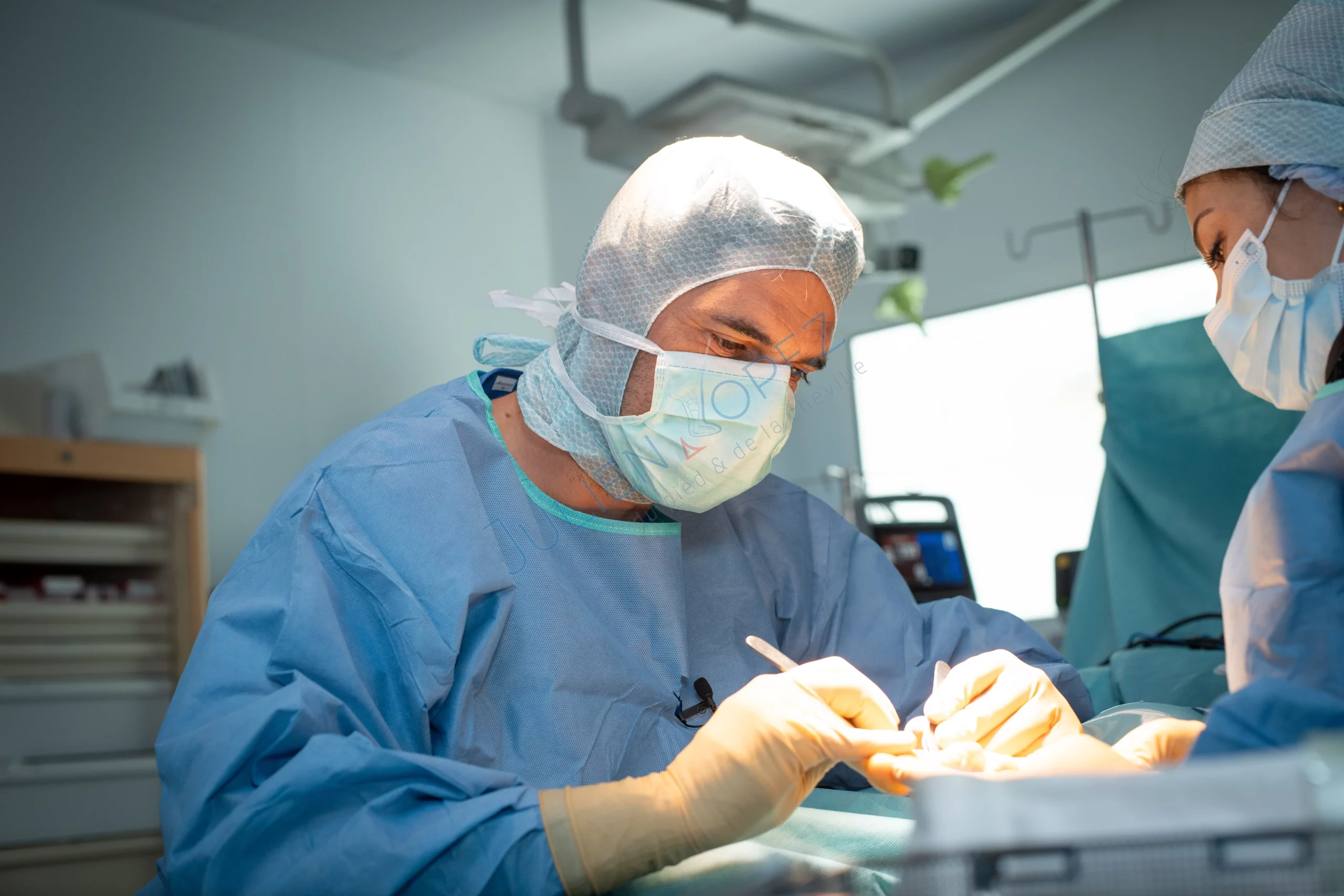
The bunion operation follows a precise protocol, adapted to the foot’s morphology and the degree of deformity.
A full pre-operative workup is carried out, including clinical analysis of the foot, review of weight-bearing X-rays and an in-depth discussion with the surgeon to define the most appropriate technique.
At International Elite Care, private bunion surgery is performed within premium clinics in France or Andorra.
An anaesthetic consultation is also arranged to ensure optimal safety conditions.
The procedure is carried out under regional or general anaesthesia. The surgeon corrects the bony deformity by realigning the big toe and the first metatarsal, addressing the imbalances at the root of the hallux valgus.
When indicated, the surgery is performed using a minimally invasive percutaneous technique through very small incisions. This leaves a discreet scar, limits tissue disruption, reduces post-operative pain and promotes a faster recovery.
The foot is protected with an appropriate dressing and a specific post-operative shoe. Walking can generally resume within the first days, following the surgeon’s instructions. At International Elite Care, medical supervision ensures pain control and smooth post-operative progress.
In the majority of cases, the procedure is performed on a day-case basis. An overnight stay may sometimes be offered depending on the medical situation.
Bunion Surgery Recovery Time: What to Expect
The bunion operation recovery timeline is well established and follows a predictable course, allowing an efficient protocol to be deployed.
Post-operative pain is generally moderate and well controlled with tailored pain relief (including a home infusion pump for the first 3 days). Swelling is common during the first two months, a normal reaction that subsides progressively with rest, foot elevation and adherence to medical advice.
Hallux valgus post-surgery medical follow-up as well as local wound care help to monitor healing and the progress of the correction. Simple everyday activities can usually be resumed after 2 to 4 weeks, while more demanding activities are reintroduced gradually over 6 to 9 weeks.
An Overview of Bunion Surgery Recovery Week by Week
- Weeks 1–2: Walking in a post-operative shoe; regular dressings; managed pain and swelling; rest and foot elevation recommended.
- Weeks 3–4: Gradual return to light daily activities; continued wound care; swelling begins to subside.
- Weeks 5–6: Transition towards standard footwear; gentle mobilisation of the toe.
- Weeks 7–12: Progressive return to more sustained activities; swelling continues to diminish.
- Months 3–6: Full recovery; definitive result appreciated as the foot regains suppleness and function.
Exercises After Hallux Valgus Surgery
Rehabilitation exercises play a key role in optimising outcomes. Your surgeon and physiotherapist will guide you through toe mobilisation drills, gentle stretching of the forefoot and progressive strengthening. Starting early and remaining consistent accelerates the return to comfortable, stable walking.
Hallux Valgus Surgery: Expected Outcomes
After Hallux Valgus surgery, most patients notice a clear improvement in comfort, a significant reduction in pain and the ability to wear shoes comfortably again. Walking becomes smoother and forefoot weight-bearing more harmonious.
The definitive result is appreciated over several months as the tissues soften and the foot fully regains its function.
When performed with a well-established indication and rigorous follow-up, recovery after a bunion operation yields reliable and lasting results, with a high satisfaction rate. The use of modern minimally invasive and percutaneous techniques simplifies this process.
Structured medical support before and after the procedure is essential to optimise recovery and safeguard the long-term result. International Elite Care provides comprehensive follow-up until full recovery, including for patients abroad.
FAQ – Bunion and Hallux Valgus Deformity Surgery
The International Elite Care team provides you with all the answer to the most frequent questions regarding bunion/Hallux Valgus deformity surgery.
Is bunion surgery worth it?
For most patients with persistent pain or a progressive deformity, the answer is yes. Surgery is the only way to correct the underlying bone misalignment permanently.
When conservative measures no longer suffice, the procedure delivers lasting relief, improved mobility and a return to comfortable footwear. A specialist opinion helps you weigh up the benefits in your specific situation.
How bad do bunions have to be before surgery?
Bunions warrant surgery when conservative treatments like wide shoes, orthotics or padding fail to relieve persistent pain that disrupts daily activities, walking or shoe-wearing.
Key indicators include progressive deformity (e.g., hallux valgus angle >40°), joint inflammation, arthritis or significant mobility limits (not just cosmetics). Consult a podiatrist for X-rays to assess severity and personalise options.
What is the new treatment for bunions?
Percutaneous (minimally invasive) bunion surgery is a newer treatment using 2-5 mm incisions to correct the big toe deformity without large cuts or bone slicing, guided by X-ray fluoroscopy.
It realigns the bone by rasping excess, releasing tight tissues and repositioning the toe, often under local anaesthesia as an outpatient procedure lasting 30-90 minutes. Benefits include less pain, scarring and faster recovery (walking in days) compared to traditional open surgery.
How long does bunion surgery recovery take?
Bunion surgery recovery is progressive. Walking resumes immediately with a post-operative shoe. Simple daily activities can generally be resumed after 4 to 6 weeks, while more demanding activities are reintroduced progressively between 6 and 12 weeks. The definitive result is appreciated over several months as the foot fully regains its suppleness and function.
What does bunion operation recovery involve?
Bunion operation recovery involves regular wound care, progressive weight-bearing, guided rehabilitation exercises and medical follow-up appointments. For international patients, International Elite Care organises structured remote follow-up to ensure continuity of care after returning home.
Is bunion surgery painful?
Thanks to modern surgical techniques, including minimally invasive approaches where indicated, post-operative pain is now better managed. It is generally moderate and well controlled, with most patients describing a favourable progression in the days and weeks following surgery.
Is it hard to walk after bunion surgery?
Walking after bunion surgery is often uncomfortable initially due to swelling, pain and stiffness, requiring a surgical boot or shoe and sometimes crutches for 2-6 weeks.
With minimally invasive techniques, many patients walk the same day, though gradually increasing distance; traditional open surgery may limit weight-bearing longer.
Pain eases over weeks with elevation, ice, and medication, but full normal walking typically resumes by 6-12 weeks.
Can I have the procedure if I am coming from abroad?
Yes. International Elite Care supports international patients at every stage, from pre-operative assessment through to post-operative follow-up after returning home. The medical stay, care coordination and continuity of follow-up are all designed to offer a smooth, safe experience.
How am I matched with the right surgeon for my hallux valgus?
The International Elite Care team reviews your medical records and considers your expectations to direct you to the most qualified and available surgeon for your situation. This personalised approach ensures you can approach the procedure with clarity, confidence and peace of mind.
Surgeon performing the procedure


Full support
Take advantage of our all-in-one service: insurance, travel, post-operative follow-up, etc.
Ready to begin your care pathway?
From your country of residence, benefit from a teleconsultation with an expert surgeon and coordinated care in France or Andorra, with every detail of your medical stay carefully organised.