
Haglund’s Deformity Treatment through Surgery
Haglund’s deformity treatment through surgery corrects the heel bone responsible for painful rubbing at the back of the foot.
The treatment of Haglund’s deformity through surgery removes the heel bone responsible for painful friction at the back of the foot. Haglund treatment by surgical operation represents one of the most effective approaches for patients who have not benefited from conservative methods.
The operation involves removing excess bone that has appeared at the level of the calcaneus in order to eliminate the mechanical conflict between the bone, the shoe, and the Achilles tendon. When necessary, the surgeon can also treat associated lesions of the Achilles tendon or neighbouring inflammatory tissues. Haglund’s deformity bursitis treatment is designed to address both the structural problem and any related inflammation.
Are you looking for a reputable surgeon for your Haglund treatment? International Elite Care surgeons specialise in orthopaedic foot and ankle surgery, with specific expertise in Haglund disease treatment. Their experience has been built on high surgical volume, mastery of modern techniques, notably minimally invasive approaches, and rigorous evaluation of indications.
Each intervention of our feet specialists is personalised based on the patient’s anatomy and the condition of the Achilles tendon, in facilities meeting the most demanding medical standards. You also benefit from a coordinated and secure journey from the initial consultation through post-operative follow-up.
Indications for Haglund’s Deformity Surgery
Haglund’s deformity surgery is considered when non-surgical treatments fail, or when the bone deformation significantly affects the patient’s daily life.
- Persistent pain
- Failure of medical treatment (shoe adaptation, orthotics, physiotherapy…)
- Walking difficulties that limit activities (mobility, sports)
- Development of limping
- Difficult or impossible shoe fitting
- Chronic inflammation of the Achilles tendon
The indication is based on a specialised and personalised evaluation that takes into account the intensity of pain, the impact on quality of life, and the condition of the Achilles tendon.
Haglund’s treatment through surgery may be indicated in the following situations:
Surgery may also be discussed in cases of marked bone deformation (exostosis), confirmed on imaging and responsible for permanent mechanical conflict. In this case, Haglund surgery with exostosis requires specific work that can be guaranteed by the specialist surgeon treating foot conditions.
The surgical decision is always made after failure of medical management and thorough discussion between patient and surgeon, to ensure that Haglund operation is the most appropriate solution.
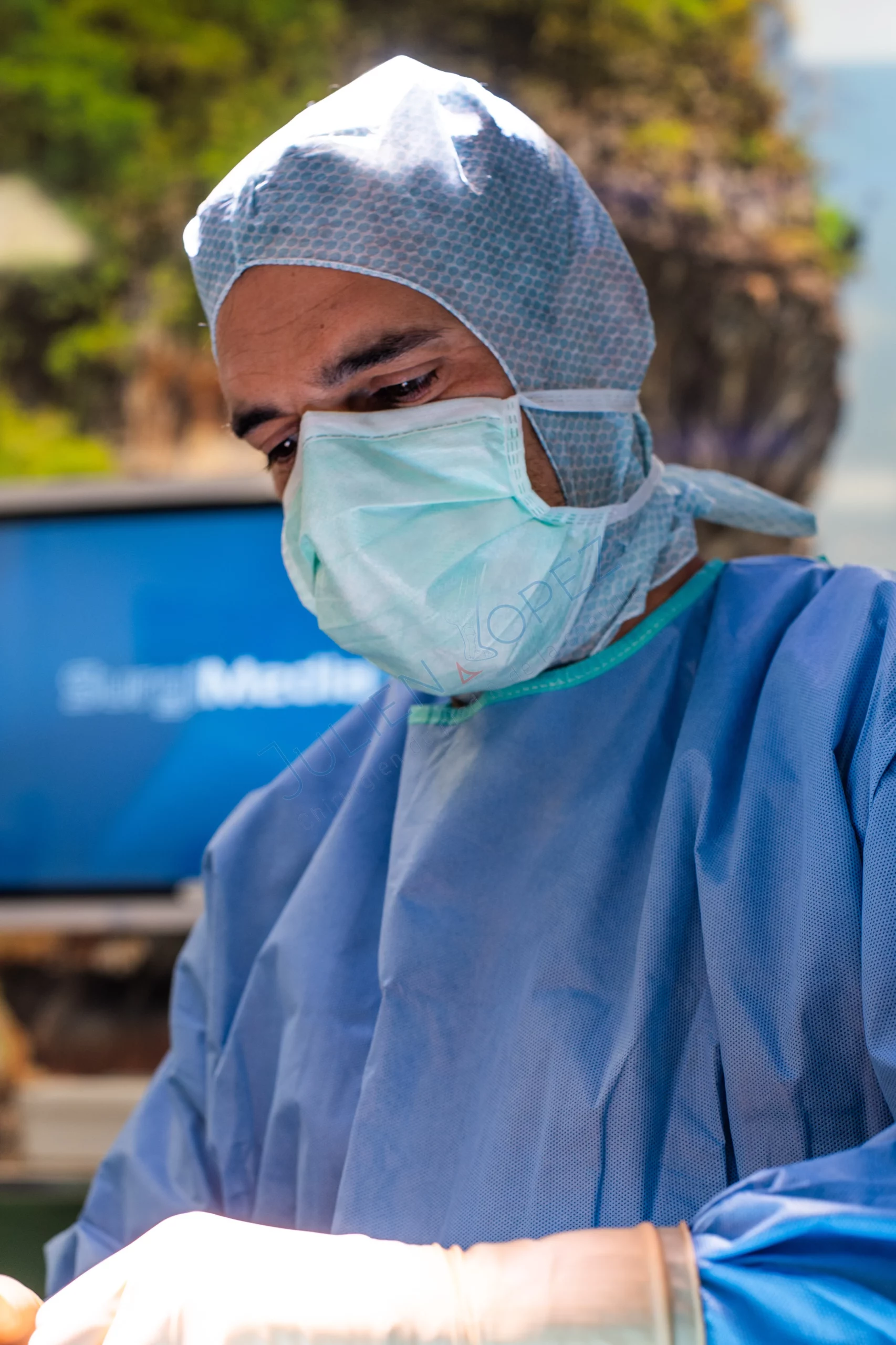
Haglund Surgery: A Protocol Mastered by Our Experts
The Haglund surgery treatment through surgical operation is mastered by specialist surgeons at International Elite Care. The intervention is planned in advance, following complete analysis of your medical record and imaging examinations. Every procedure is adapted to your anatomy and the condition of your Achilles tendon. Understanding what to expect after Haglund’s deformity surgery helps patients prepare for their recovery.
In advance, a specialised consultation confirms the surgical indication, explains the technique to be used, and answers all your questions. A pre-anaesthetic assessment is also performed to ensure optimal safety conditions.
The Haglund operation is most often scheduled on an outpatient basis, meaning you can return to your accommodation the same day.
Haglund surgery is performed under general or local anaesthesia, depending on your medical profile and the strategy chosen with the anaesthesiologist. The goal is to ensure optimal comfort during and after the procedure. Many patients wonder “is Haglund’s deformity surgery painful,” and the answer is that modern anaesthetic techniques minimise discomfort.
The operation lasts approximately 30 minutes and consists of:
- removing the excess bone responsible for friction
- eliminating the mechanical conflict with the shoe
- treating inflammatory tissues if necessary
- performing additional work on the Achilles tendon in case of associated damage
When possible, a minimally invasive arthroscopic technique is preferred. Minimally invasive Haglund surgery uses a small camera introduced through mini-incisions, allowing great precision while limiting tissue trauma. It reduces post-operative pain and simplifies recovery. The Haglund’s deformity surgery scar is typically minimal with this approach.
In certain specific cases, an open technique or additional bone work may be necessary to achieve optimal correction. This depends on the indication established beforehand by the Haglund deformity surgeon.
After a period of monitoring in the recovery room, you return to your room before discharge the same day. You receive instructions regarding weight bearing, possible foot immobilisation, and pain management.
Structured post-operative follow-up is then organised to support each stage of your Haglund’s deformity surgery recovery.
What to Expect After Haglund Treatment by Surgery
The Haglund treatment recovery timeline after surgery is progressive and carefully managed by the surgeons at International Elite Care. The exact procedures depend on the technique used and the condition of the Achilles tendon at the time of intervention. Understanding the Haglund deformity surgery recovery time helps patients plan their return to normal activities.
Weight bearing is often immediately authorised in full or partial form with a walking boot, but it may be delayed depending on the surgical procedure performed. In most cases, a walking boot is prescribed to keep the foot in a neutral position, corresponding to its natural position, to optimise healing.
Prevention of the risk of thrombosis (blood clot formation) may be implemented if weight bearing is restricted. Dressings are changed regularly until complete healing.
Physiotherapy and Return to Activities
Physiotherapy begins according to the protocol defined by the surgeon. It allows you to gradually regain ankle mobility, loosen the Achilles tendon, and safely resume activities. This phase is essential to optimise the desired result. Walking after Haglund’s surgery should progress gradually under professional guidance.
Return to work depends on your professional activity. It can occur within a few weeks. Return to sports is gradual and supervised, generally between one and three months.
After Haglund’s deformity surgery recovery, regular follow-up is provided to monitor progress, adjust physiotherapy, and answer any questions during the healing process.
Expected Results and Haglund’s Deformity Surgery Success Rate
After Haglund’s deformity surgery, success rate depends on proper post-operative care, patient compliance with recovery protocols, and the surgical technique used. Many patients search for Haglund’s deformity surgery before and after results to understand the expected transformation. The before and after surgery Haglund’s deformity comparison typically shows significant improvement in both pain levels and function.
By removing the bone protrusion at the back of the heel, the intervention allows you to:
- reduce or eliminate pain
- improve shoe comfort
- enable smooth and natural walking
- facilitate return to daily and sporting activities
Rigorous pre-operative evaluation and structured follow-up facilitate obtaining a lasting and satisfactory result. In the vast majority of cases, patients notice significant improvement in their quality of life after complete recovery.
This is why International Elite Care offers complete support, including remote follow-up for international patients. It is thus possible to undergo Haglund treatment while coming from abroad, with complete safety.
Common Questions About Haglund’s Disease Treatment and Surgery Costs
Find comprehensive answers to the most frequently asked questions about Haglund’s disease treatment options, surgery costs, recovery expectations, and whether haglund’s deformity surgery is the right choice for your specific situation.
Is Haglund’s deformity surgery worth it?
Yes. Haglund surgery is worth considering, especially when conservative treatments have failed. The long-term benefits of improved mobility, pain relief, and quality of life make it a valuable investment in your health. International Elite Care surgeons have extensive experience with Haglund’s deformity treatment options and can help you understand the benefits for your specific situation.
What about Haglund’s deformity surgery cost?
The Haglund’s deformity surgery cost varies depending on the complexity of your case, the technique used, and your geographic location. During your initial consultation, our team will provide you with detailed information about Haglund treatment expenses and available options.
Will I experience pain after the Haglund’s bump treatment?
Pain after Haglund operation is well anticipated and controlled through modern anaesthetic techniques and appropriate management. Most patients describe gradual and manageable discomfort rather than intense pain. The question “is Haglund’s deformity surgery painful” often concerns patients, but post-operative discomfort is typically minimal and temporary.
Can Haglund deformity come back after surgery?
The recurrence of Haglund deformity after surgery is rare when the procedure is performed correctly by an experienced surgeon. However, proper post-operative care, including adherence to physiotherapy protocols and the Haglund deformity surgery recovery timeline, is essential to prevent any complications.
How long is the Haglund deformity surgery recovery timeline?
The Haglund’s deformity surgery recovery timeline typically spans several weeks to a few months, depending on the surgical technique and your individual healing capacity. Walking after Haglund’s surgery should progress gradually, usually beginning within days but returning to full activity over several months.
How much time should I plan to spend on-site if I come from abroad?
The length of stay depends on the protocol chosen and your personal situation. Generally, a few days on-site allow us to provide complete Haglund treatment through surgery, as well as the first post-operative check-up. The International Elite Care team organises an optimised schedule to minimise unnecessary travel while ensuring rigorous follow-up.
How am I followed after returning to my country?
Structured follow-up is implemented after Haglund disease treatment. Check-up consultations can be conducted remotely if necessary, with secure transmission of medical documents. The objective is to maintain direct contact with the surgical team and support you through complete Haglund’s deformity surgery recovery.
How do I know if surgery is appropriate for my case?
To determine the best Haglund treatment approach for you, choosing your surgeon is important. Consulting with a specialist physician provides valuable insight to determine whether your situation requires surgical intervention. With International Elite Care, a teleconsultation can be organised to analyse your symptoms, your imaging tests, and your expectations. Following this consultation, you will receive clear, transparent, and personalised advice about Haglund surgery options, allowing you to make your decision with complete confidence.
Surgeon performing the procedure


Full support
Take advantage of our all-in-one service: insurance, travel, post-operative follow-up, etc.
Ready to begin your Haglund treatment journey?
From your country of residence, benefit from a teleconsultation with an expert surgeon and coordinated care in France or Andorra, with every detail of your medical stay carefully organised.