
Ledderhose surgery
Ledderhose surgery involves removing painful fibrous nodules from the sole of the foot. Discover how our specialist surgeons can help you at IEC. Also known as partial aponeurectomy or plantar fasciectomy, the procedure consists of removing part or all of the thickened plantar fascia – the fibrous membrane located beneath the foot – in order to eliminate the diseased tissue while preserving healthy surrounding structures.
Ledderhose disease surgery is recommended when discomfort becomes significant and begins to affect day-to-day quality of life. The procedure is carried out by a foot surgery specialist following a thorough assessment of whether an operation is appropriate.
At International Elite Care, Ledderhose’s disease treatment is designed to address the mechanical cause of pain and help patients regain comfortable weight-bearing. The procedure is supported by a carefully coordinated care pathway at every stage, ensuring peace of mind and the highest standards of safety.
When to consider surgery: doctors who treat Ledderhose disease explain the indications
Our doctors who treat Ledderhose disease confirm that several criteria must be met before surgery is considered. The condition needs to have reached a genuinely debilitating stage, and non-surgical treatments are always explored first wherever possible.
Indications that favour surgical intervention include:
- Persistent pain caused by one or more nodules
- Symptoms that persist despite the use of adapted insoles
- Failure of conservative treatment for Ledderhose disease
- Daily discomfort when standing or walking
- Large nodules causing inflammation
- Increasing difficulty wearing shoes comfortably
Surgery may also be indicated when there is significant functional impairment, particularly when a patient alters their gait to avoid the painful area, limits their movements, or gives up certain professional or sporting activities.
In every case, the decision to operate is based on a personalised assessment that takes into account the severity of symptoms, their impact on quality of life, the patient’s general health, and their functional expectations.
At International Elite Care, this assessment is carried out by a specialist foot surgeon, ensuring that the proposed solution is both appropriate and safe.
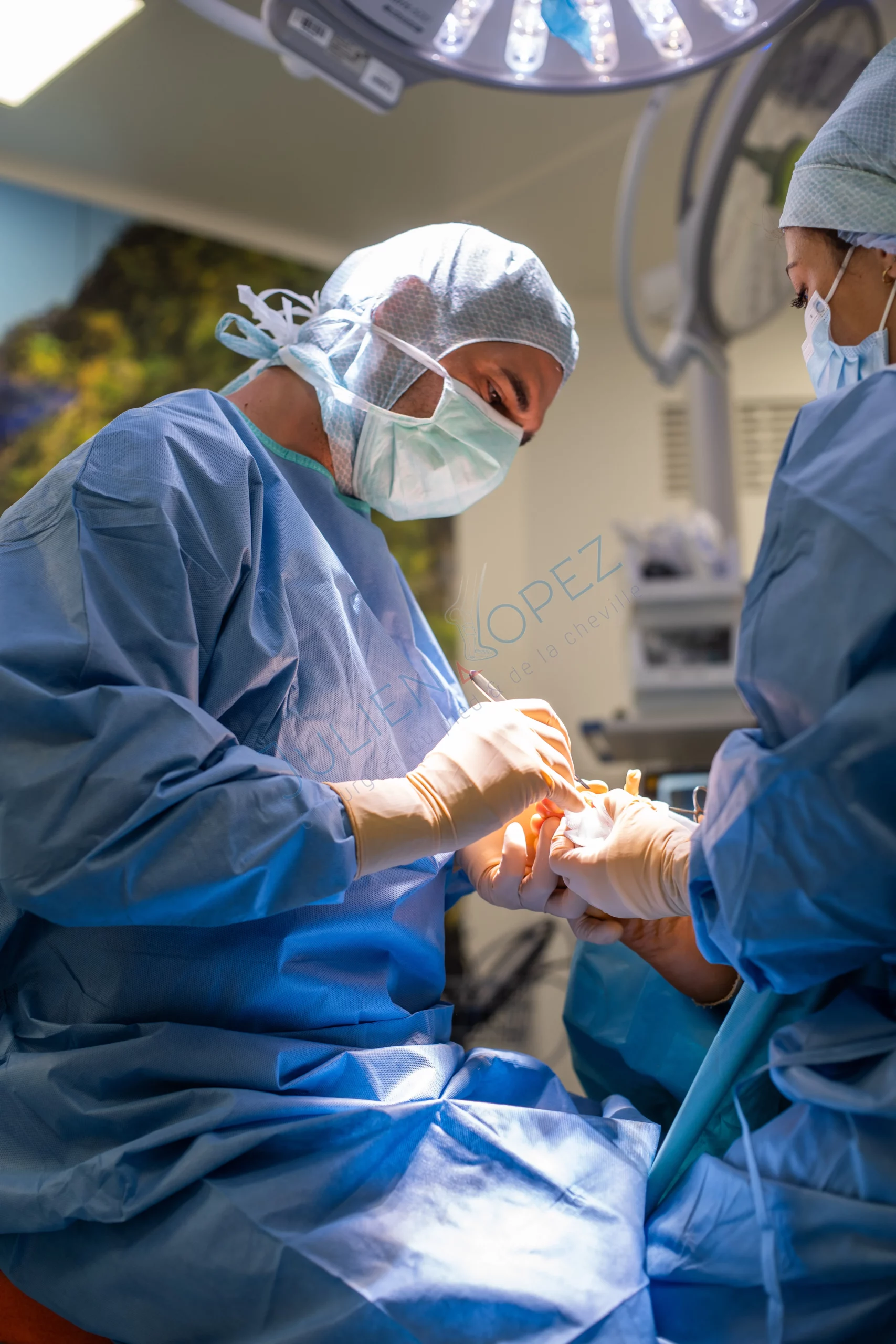
Ledderhose disease treatment: procedure and how the operation works
Ledderhose disease treatment through surgery is a targeted intervention that is carefully planned in advance. Before the operation, a specialist consultation confirms whether surgery is appropriate, analyses the location and extent of the nodules, and explains exactly what the surgical procedure will involve.
With International Elite Care, a pre-operative teleconsultation can be arranged, particularly for international patients. This allows the medical stay to be prepared under the best possible conditions.
The day of surgery
The operation to remove a Ledderhose nodule is most commonly performed under local anaesthesia, sometimes combined with light sedation for greater comfort. This approach supports a faster recovery and simplifies the return to the hotel or home.
The surgery itself consists of an aponeurectomy (or plantar fasciectomy). The surgeon:
- Makes an incision over the arch of the foot, at the level of the nodules
- Removes the fibrous nodules
- Sends the tissue for laboratory analysis (histopathology)
- Excises the thickened section of plantar fascia according to the extent of the fibromatosis
- Preserves the surrounding nerve and vascular structures
The choice between a limited or more extensive resection depends on the number, size, and spread of the nodules.
After the procedure
Once the lesions have been removed, the wound is carefully closed. A compression dressing is applied to minimise the risk of haematoma and promote optimal healing.
The procedure is generally short, lasting between 30 and 60 minutes. Depending on the clinical context and organisation, it can be carried out as day surgery, allowing the patient to return to their accommodation on the same day.
At International Elite Care, the operation is performed by a foot surgery specialist in a medical facility that meets the highest Western standards.
Ledderhose disease surgery recovery: post-operative care and expected results
After Ledderhose disease surgery recovery is generally straightforward provided the post-operative instructions are followed. The aim is to ensure optimal healing while allowing a gradual return to weight-bearing.
In the days following the operation, patients typically experience moderate discomfort around the plantar scar. This is usually well managed with appropriate pain relief and tends to settle within the first few days.
Returning to daily activities
After the operation, walking is possible with care, as some weight is placed on the operated area. Extra caution is recommended until healing is complete, which takes around three weeks on average.
Strenuous activities should be avoided for approximately three to four weeks, and activities that place significant stress on the foot (such as sport or prolonged walking) are restricted for around six weeks. This gradual approach protects the scar and optimises functional recovery.
Regular medical follow-up appointments are arranged to monitor healing, adjust weight-bearing if necessary, and support the return to normal activities. For international patients, remote follow-up can be organised once they have returned to their home country. This allows International Elite Care’s surgeons to provide ongoing support until full recovery, even from abroad.
Expected long-term results
The primary aim of Ledderhose nodule surgery is to relieve mechanical discomfort and improve comfort when walking. When the indication is well established, the majority of patients experience a significant reduction in pain and a more natural gait in their daily lives.
It is worth noting that Ledderhose disease is a fibromatosis (an abnormal thickening of fibrous tissue), which means there is a small risk of recurrence, though this is not inevitable. This possibility is always discussed with the patient beforehand, so that expectations are clear from the outset.
Your questions answered by our Ledderhose disease specialists
Is the operation painful?
Our Ledderhose disease specialists perform the procedure under local anaesthesia, which means the foot is completely numb throughout. After the operation, some moderate discomfort may occur, but it is generally well controlled with appropriate pain relief. The goal is to ensure optimal comfort at every stage, with clear post-operative guidance and thorough follow-up.
How long should I plan to stay if I am travelling from abroad?
For international patients, a short stay is generally sufficient. A pre-operative consultation can be arranged by teleconsultation in advance, making the most of your trip. After the procedure, a few days on site allow us to ensure that recovery is progressing well before you travel home. The International Elite Care team coordinates the entire stay to ensure everything runs smoothly and safely.
Is there a risk of recurrence after the operation?
As with any fibromatosis, Ledderhose disease can recur, even after a well-performed procedure. However, when the indication has been carefully assessed and the operation carried out by an experienced specialist, the benefit in terms of walking comfort is typically significant.
When can I return to normal activities after a Ledderhose operation?
After a Ledderhose operation, daily activities can be resumed immediately with a post-operative shoe. The aim is to regain a comfortable and stable gait under the best conditions. Gentle exercise (pilates, yoga, cycling, swimming) is usually permitted from three weeks, while more intense sport can be resumed from six to eight weeks. International Elite Care’s personalised support allows recommendations to be tailored to your recovery pace and personal or professional commitments.
How do I know if I am a good candidate for Ledderhose treatment?
The best way to get a clear, personalised answer about Ledderhose treatment is to arrange a specialist assessment. A discussion with the International Elite Care team allows us to review your situation, your imaging and your symptoms, and then refer you promptly to the most qualified and available surgeon.
Surgeon performing the procedure


Full support
Take advantage of our all-in-one service: insurance, travel, post-operative follow-up, etc.
Ready to start your care journey?
From your country of residence, benefit from a teleconsultation with an expert surgeon and coordinated care in France or Andorra, with every detail of your medical stay carefully organised.