
Ankle replacement surgery
Ankle replacement surgery is a procedure designed to treat severe, painful ankle arthritis when conservative treatments are no longer effective.
Ankle arthritis causes progressive cartilage wear, leading to persistent pain, joint stiffness and difficulty walking. The procedure involves replacing the damaged joint with an artificial implant, engineered to replicate the natural function of the ankle as closely as possible.
An ankle prosthesis provides lasting pain relief, restores smoother joint movement and improves day-to-day quality of life and independence.
Fitting an ankle prosthesis requires a specialist ankle injury surgeon. The indication is always established after a thorough assessment, so the recommended solution is suited to the patient’s profile, lifestyle and expectations.
Indications for an ankle replacement operation
An ankle replacement operation is indicated in cases of advanced ankle arthritis, where pain and loss of mobility significantly affect quality of life and non-surgical treatments (medication, injections, orthoses, physiotherapy) are no longer effective.
An ankle prosthesis may be considered in several clinical settings, including:
- Previous trauma (ankle fractures or repeated sprains)
- Inflammatory conditions (such as rheumatoid arthritis)
- Foot or ankle deformities
The indication for a total ankle replacement surgery (or partial replacement) is always established after a personalised specialist assessment. It takes into account the patient’s age, activity level, foot alignment and functional expectations. The goal is to offer a reliable surgical solution that restores more comfortable everyday mobility.
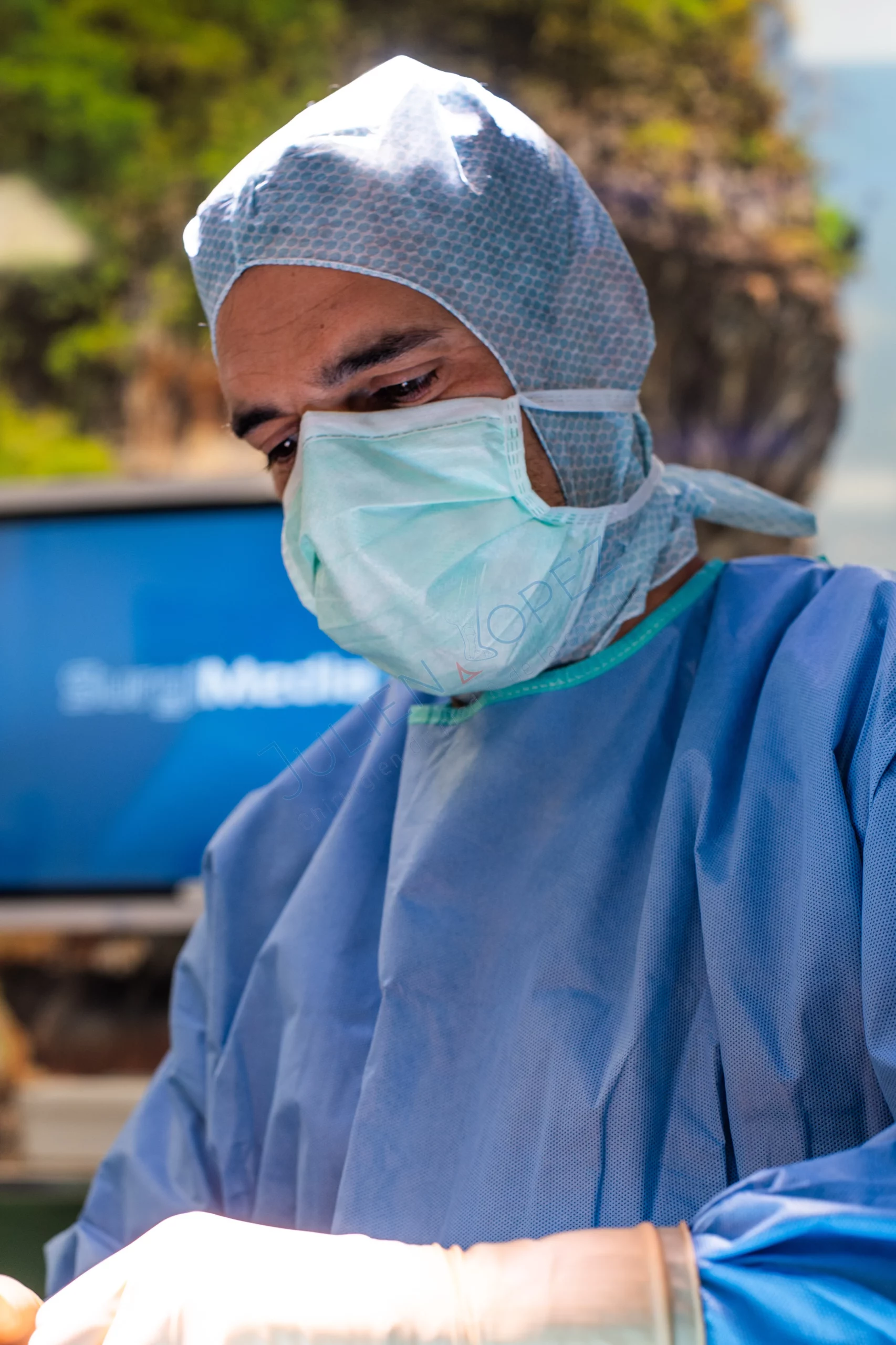
How ankle prosthesis surgery is performed
Ankle prosthesis surgery involves replacing the worn joint with an artificial implant.
The operation is carried out through an incision at the front of the ankle. This approach provides precise access to the joint while preserving the surrounding structures (tendons, nerves, blood vessels).
Every step performed by the ankle joint replacement surgery team is carried out with great precision to protect the natural tissues as much as possible.
The implants are typically fixed without cement, press-fitted into the bone, much like a nail driven securely into a wall.
Over time, bone grows onto the surface of the prosthesis, which promotes:
- Excellent stability
- Progressive, long-lasting integration
- A return to weight-bearing, guided by the post-operative protocol
The procedure concludes with the placement of a temporary drain to prevent haematoma formation. It is removed shortly after the operation.
The duration of replacement ankle surgery typically ranges from 1.5 to 2 hours.
Ankle replacement surgery recovery time and expected results
Understanding the ankle replacement surgery recovery time helps patients prepare for each stage of healing. Once the prosthesis is in place, recovery follows a gradual, supervised pathway. The aim is to protect the ankle while encouraging an early return to mobility.
After ankle replacement, the ankle replacement surgery recovery timeline spans several weeks and follows distinct phases.
Initially, the ankle is placed in a removable boot for approximately 15 days to protect the ankle replacement surgery scar and allow the joint to rest. Dressings are changed regularly to ensure proper healing. Weight-bearing is permitted early on, provided the boot is worn.
Crutches are recommended for the first two weeks.
From around day 15, most patients can resume normal walking, depending on clinical progress. Tailored physiotherapy supports this phase, helping patients gradually regain comfort and confidence on their feet.
A before and after ankle replacement surgery comparison typically shows significant improvements. In most cases, the procedure achieves:
- A marked reduction in pain
- Improved mobility
- Greater everyday comfort, especially when walking
The specialist surgeons at International Elite Care often recommend a return to gentle sporting activities, such as swimming or cycling, from the third month after the procedure.
With current techniques, outcomes are encouraging: around 90% of patients retain a fully functional prosthesis 10 years after surgery. In rarer cases, revision surgery may be needed, involving either prosthesis replacement or ankle fusion (arthrodesis).
Your questions answered: finding the best ankle replacement surgeon
International Elite Care is here to help you find the best ankle replacement surgeon and book your appointment with ease.
Is ankle replacement a reliable long-term solution?
Yes. Today’s ankle prostheses deliver robust, lasting results. When fitted by an experienced surgeon in a well-selected patient, an ankle replacement provides a sustained improvement in quality of life. Regular medical follow-up helps maintain good results over time.
Will my ankle feel “normal” after the procedure?
The aim of ankle replacement is not to replicate a perfectly healthy ankle, but to restore a functional, mobile joint with significantly less pain. Most patients are able to walk more comfortably, resume daily activities and regain satisfactory mobility.
Can you get ankle replacement surgery if you are active or sporty?
After an ankle replacement, sport can be resumed gradually under medical guidance. Low-impact activities such as swimming, cycling and walking are usually permitted once the recovery phase is complete. Your surgeon will tailor their recommendations to your profile, your previous activity level and how your recovery is progressing.
Is the procedure painful?
Pain is well managed today thanks to modern anaesthetic techniques and analgesic protocols. Post-operative discomfort is usually temporary and diminishes steadily. Your surgeon will adjust the treatment plan to ensure optimal comfort throughout your recovery.
What is the cost of ankle replacement surgery?
The ankle replacement surgery cost depends on several factors, including the complexity of the case, the type of prosthesis used, the treatment facility, the length of hospital stay and associated services. A personalised quote is always provided after an initial medical assessment. This approach ensures a clear, transparent solution tailored to your situation, with no obligation.
Can I travel from abroad and be accompanied?
Absolutely. The care pathway is fully compatible with international travel. You are welcome to come with a companion, and the entire stay (consultations, hospital admission, accommodation, transport, follow-up) can be coordinated to offer a smooth and stress-free experience before, during and after the procedure. International Elite Care helps you connect with the best ankle replacement surgeon in France or Andorra, in line with your requirements.
How long after ankle replacement surgery can you walk?
Protected weight-bearing with a boot is usually allowed within the first few days. Most patients return to normal walking around two weeks after surgery, once the boot is removed. Your surgeon will confirm the timeline based on your individual healing.
How long after ankle replacement surgery can you drive?
Driving is typically possible around six to eight weeks after surgery, once you have regained sufficient strength, control and comfort in the ankle. Your surgeon will advise you on the right time to get back behind the wheel.
How long to recover from ankle replacement surgery?
Initial recovery takes around six to twelve weeks. Most patients resume daily activities within two to three months. Full recovery, including a return to sport, may take up to six months. Every case is different, and your medical team will guide you through each stage.
How do I know if I am a good candidate for ankle replacement?
Only a specialist assessment can answer this question precisely. An initial consultation, often available remotely, allows your situation, imaging and expectations to be reviewed. You are then referred to the most suitable surgeon for your case, without delay.
Surgeon performing the procedure


Full support
Take advantage of our all-in-one service: insurance, travel, post-operative follow-up, etc.
Ready to start your journey?
From your country of residence, benefit from a teleconsultation with an expert surgeon and coordinated care in France or Andorra, with every detail of your medical stay carefully organised.