
Revision knee replacement
Revision knee replacement, also known as revision surgery, involves replacing all or part of a previously implanted knee prosthesis.
This surgery is recommended when the original prosthesis develops a problem that causes persistent pain, instability, reduced range of motion or significant functional impairment affecting the patient’s quality of life.
A revision of knee replacement is a specialised orthopaedic procedure, technically more demanding than a primary knee replacement. It requires advanced surgical expertise, a thorough clinical and radiological assessment and a personalised treatment plan designed to restore a stable, mobile and pain-free knee.
At International Elite Care, this procedure is carried out by highly experienced surgeons who specialise in knee revision surgery. They operate in leading medical facilities across Europe, and patients benefit from comprehensive support before, during and after the procedure. The entire care pathway is tailored to international patients, with digital follow-up available even after returning home.
Knee replacement revision: when is it needed?
Knee replacement revision may be indicated in the following situations:
- Loosening (aseptic or mechanical) of the prosthesis
- Wear of the prosthetic components
- Knee instability
- Significant joint stiffness
- Infection of the prosthesis
- Periprosthetic fracture (fracture around the implant)
These are among the most common reasons for revision knee replacement. The decision to proceed with revision surgery, whether total or partial, always relies on a thorough evaluation combining clinical examination, medical imaging and additional tests where necessary.
At International Elite Care, each case is discussed on an individual basis so the patient can be referred to the most experienced surgeon and the most suitable surgical strategy, all within a premium and secure setting.
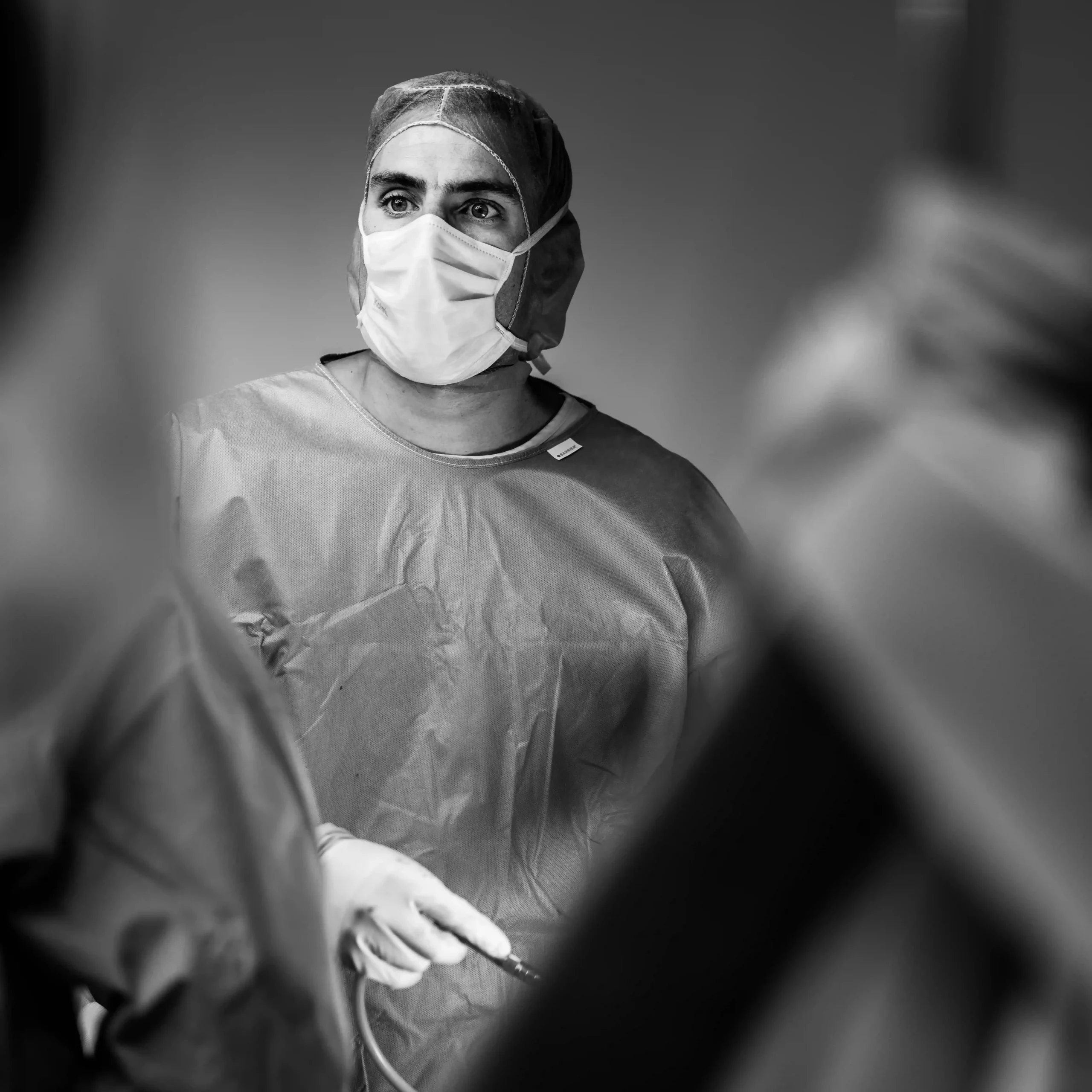
Revision of total knee replacement: how the procedure works
Revision of total knee replacement is a specialised orthopaedic procedure that follows a rigorous protocol, designed to ensure patient safety and deliver lasting functional outcomes.
Before surgery, the patient undergoes a comprehensive and personalised assessment, which includes:
- A detailed clinical examination
- Imaging studies (X-rays, CT scan, sometimes MRI)
- Blood tests, particularly if infection is suspected
This stage allows the surgical team to identify precisely why the original knee replacement failed and to determine the most appropriate revision approach.
Anaesthesia and patient positioning
Anaesthesia for a revision total knee replacement may be general or regional, depending on the patient’s profile and the complexity of the procedure. At International Elite Care, the patient is positioned in optimal conditions within a fully equipped operating theatre.
The surgeon proceeds to remove part or all of the existing prosthesis with extreme precision, preserving as much bone and surrounding tissue as possible. If infection is present, a meticulous debridement of the tissues is performed.
Reconstruction and placement of the new prosthesis
Depending on the situation, the surgeon may also address bone loss and restore the alignment and stability of the knee during the same procedure. Each component of the new prosthesis is carefully selected to ensure optimal and long-lasting joint function.
Once the revision prosthesis is perfectly positioned, the knee is carefully closed. Stability, range of motion and alignment are systematically checked before the end of the operation.
The length of the procedure varies depending on the complexity of the revision (partial or total, presence of infection, bone quality). It is generally longer than a primary knee replacement and may take up to two hours.
At International Elite Care, this procedure is performed by surgeons with extensive experience in knee operations, with personalised support throughout the care pathway.
Knee replacement revision and surgery recovery: what to expect
Knee replacement revision surgery recovery requires careful and structured follow-up. Close monitoring after surgery is essential to optimise functional recovery and ensure a lasting outcome.
After the procedure, the patient is cared for in a safe and comfortable medical environment. The hospital stay typically ranges from two to five days, depending on the complexity of the surgery and the patient’s overall condition.
Pain is anticipated and managed through modern protocols combining tailored medication and regional anaesthesia techniques where appropriate. The goal is to allow early and comfortable mobilisation of the knee.
Mobilisation usually begins within the first few days after surgery, under the supervision of specialist physiotherapists. Rehabilitation aims to:
- Gradually restore knee mobility
- Strengthen the thigh muscles
- Regain a stable and secure walking pattern
A personalised programme is drawn up for each patient. It can be started on-site and continued in the patient’s home country, with coordination with local physiotherapists if needed. The recovery time for knee replacement revision varies from patient to patient, but walking is typically allowed early on, often with a walking aid (crutch or walker) that is gradually phased out as progress allows.
Local wound care is provided daily. Stitches or staples are usually removed between the 10th and 15th day after surgery.
Depending on how the medical stay is organised, the patient may return to their hotel or medicalised accommodation, go home, or travel back to their home country with coordinated remote medical follow-up.
In every case, International Elite Care provides thorough follow-up after the patient’s return, using digital tools. This approach ensures ongoing support and peace of mind, even from a distance.
Knee replacement revision success rate and expected outcomes
The knee replacement revision success rate depends on several factors, but the primary goal of revision surgery is always to restore joint function, reduce pain and achieve a lasting improvement in the patient’s quality of life.
Results vary according to the reason for revision, the condition of the bone and muscle tissue and the quality of rehabilitation. The most commonly observed improvements include:
- Significant reduction or complete resolution of pain
- Improved stability and range of motion
- Gradual return to daily activities
- Long-lasting results over time
- Return to a more active and comfortable life
It is important to note that goals and expected outcomes are discussed individually during the preoperative consultation. At International Elite Care, patients receive clear and transparent information so they can approach the procedure with realistic and confident expectations.
Frequently asked questions about revision surgery knee replacement
What is knee replacement revision and is it more risky than a primary knee replacement?
Revision surgery is a procedure to replace all or part of a knee prosthesis that is no longer functioning properly. It is technically more complex than a first knee replacement, due to factors such as bone loss, scar tissue and ligament balancing. However, when performed by a knee replacement revision specialist, the risks are carefully assessed and managed with precision.
Will I get a knee that feels “as good as new” after surgery?
The main objective of revision knee replacement surgery is to relieve pain, improve stability and restore reliable joint function for everyday life. While the knee may not feel exactly like a natural joint, the functional improvement is usually significant and allows patients to return to their daily routine with far greater comfort.
How many times can a knee replacement revision be done?
There is no strict limit on the number of revisions, but each subsequent procedure becomes more technically challenging due to progressive bone loss and soft tissue changes. In practice, a second or even third revision can be performed when clinically justified. The decision is always based on a detailed assessment of the patient’s anatomy, bone quality and overall health. At International Elite Care, our surgeons evaluate every case individually to determine the best course of action.
How long should I plan to stay before I can go home?
The length of stay depends on the type of procedure performed and the quality of the bone, but a stay of several weeks is generally recommended to ensure the initial post-operative phase is secure. International Elite Care supports the patient with the full organisation of the stay and prepares the return home with a structured medical follow-up plan.
Can a family member or companion stay with me during the medical trip?
Absolutely. It is perfectly possible to travel with a companion. International Elite Care can also arrange accommodation and logistics for the accompanying person, so that the entire stay runs as smoothly as possible.
How do I know if I am a good candidate for revision knee replacement surgery?
The only way to find out with certainty is to book a specialist consultation. International Elite Care offers an initial contact via teleconsultation, allowing us to review your situation, your medical records and your symptoms.
This first step enables us to refer you to the most qualified and available surgeon and to offer you a fully personalised care plan.
Surgeon performing the procedure


Full support
Take advantage of our all-in-one service: insurance, travel, post-operative follow-up, etc.
Ready to start your journey?
From your country of residence, benefit from a teleconsultation with an expert surgeon and coordinated care in France or Andorra, with every detail of your medical stay carefully organised.