
Safe and effective flat foot treatment with our specialist surgeons
Flat foot treatment corrects an abnormal collapse of the arch when it causes pain, worsens over time or limits daily life.
This condition causes a reduction, or even a complete loss, of the inner arch of the foot. The heel tilts outward and the forefoot can gradually deform. These changes lead to pain around the ankle or the sole of the foot.
When the discomfort affects walking, sport or overall quality of life, surgery restores the alignment of the foot, rebalances weight-bearing and provides lasting pain relief.
At International Elite Care, this procedure is carried out by orthopaedic surgeons who specialise in foot and ankle conditions. Their practice is built on a high surgical volume, advanced expertise in modern correction techniques (osteotomies, tendon reconstructions, targeted arthrodesis) and a rigorous selection of indications. Every case is assessed individually so that the most appropriate strategy can be proposed.
Indications for flat feet surgery
Flat feet surgery is recommended when the deformity becomes painful, progressive and resistant to conservative treatment for flat feet, and when it significantly affects the patient’s quality of life. The main situations in which surgery may be considered include:
- Persistent pain despite treatment (orthotic insoles, physiotherapy, etc.)
- Chronic inability to carry out everyday activities properly (sport, walking)
- Posterior tibial tendon dysfunction (on the inner side of the ankle)
- Progressive deformity with hindfoot malalignment
- Rigid flat foot or flat foot with arthritis
- Significant cosmetic concern experienced as disabling
The decision to operate is based on a thorough clinical examination, weight-bearing radiographs and a precise analysis of the patient’s expectations. In some cases, an MRI is required to assess the tendons, as determined by the flat feet specialist surgeon.
In adults, for example, flat feet surgery pros and cons must be carefully weighed. Adult cases often require an in-depth assessment and a personalised reconstructive strategy to optimise treatment outcomes.
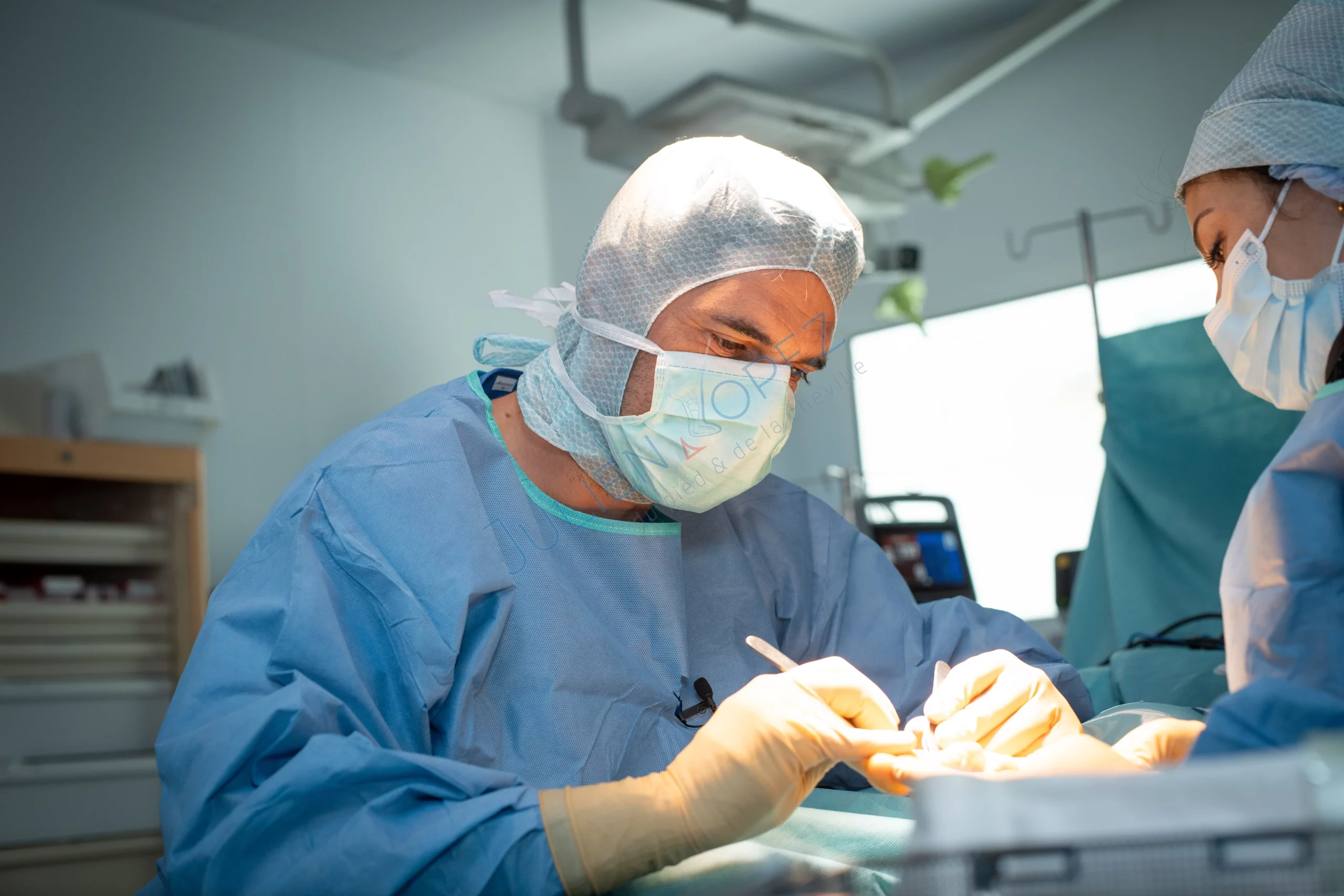
Steps of flat foot surgery: from preparation to the operating theatre
Flat foot surgery is tailored to the type of deformity, its stage of progression and the patient’s profile. The goal is to restore foot alignment, reconstruct the plantar arch and deliver lasting pain relief.
Before the procedure, thorough preparation is carried out, including:
- A detailed clinical examination
- Weight-bearing radiographs (including Meary’s angle views), MRI and ultrasound
- An anaesthetic consultation
- Organisation of travel and the medical stay (particularly for international patients)
A pre-operative teleconsultation allows the surgical plan to be explained in detail and the patient’s questions to be answered.
On the day of surgery
The procedure takes place in a specialised clinic, under regional anaesthesia (lower limb block) or general anaesthesia depending on the case. The average duration ranges from 1.5 to 3 hours, depending on the associated procedures.
Depending on the type of flat foot, several techniques may be combined:
- Medialising calcaneal osteotomy (cutting and repositioning the heel bone)
- Lateral column lengthening (Evans procedure)
- Tendon repair or transfer
- Achilles tendon lengthening if it contributes to the deformity
- Targeted arthrodesis (fusing a joint to eliminate pain)
- Forefoot supination correction: first metatarsal lowering procedures (Cotton osteotomy)
After the procedure
Following flat foot operation surgery, a dressing is applied and immobilisation may be required in the form of a boot or cast, depending on the technique used.
The hospital stay is generally short, most often as a day case or with one to two nights on site.
Recovery and expected results after flat feet treatment
Flat feet treatment through surgery is a reconstructive procedure. It provides long-term pain relief and ensures a harmonious restoration of weight-bearing and foot alignment. Understanding the timeline helps patients plan ahead with confidence.
The first few days
After a flat foot operation, recovery is gradual. Initially, the foot is immobilised (boot, splint or cast depending on the procedure) and must be kept elevated to limit swelling. A personalised pain management protocol is prescribed to control post-operative discomfort.
The hospital stay is typically short (day surgery or 1 to 2 nights). Post-operative pain is managed with modern regional anaesthesia and analgesia protocols.
The non-weight-bearing period
In most cases, no weight-bearing is allowed for 3 to 6 weeks. During this period, patients move with the help of crutches, and regular follow-up appointments are organised with the flat feet doctor.
This phase is essential to allow bone healing and soft tissue repair.
Gradual return to weight-bearing
Once cleared clinically and radiologically, weight-bearing can resume. It begins partially, then fully, and a walking boot eases the transition. Functional rehabilitation can then start, aiming to:
- Restore mobility
- Strengthen the muscles of the foot and ankle
- Improve balance and walking
Recovery timescales vary depending on the extent of the correction:
- Comfortable daily walking: 1 to 3 months
- Return to dynamic or sporting activities: 4 to 6 months
- Stabilised functional result: 6 to 12 months
Some mild swelling may persist for several months, which is perfectly normal for this type of flat foot reconstruction surgery.
Your questions about flat feet operation answered
Will I really get a ‘normal’ foot back after the operation?
The primary objective of a flat foot operation is functional: to relieve pain, restore a balanced axis and allow stable, comfortable walking. When the deformity is long-standing or arthritic, the main aim is to eliminate pain and stabilise the foot. Your surgeon will explain the expected outcome transparently, based on your individual situation.
Is the procedure painful?
Modern pain management techniques now ensure well-controlled post-operative comfort. Regional anaesthesia significantly reduces immediate pain, and a personalised analgesic protocol is systematically put in place. Some discomfort and swelling may occur in the first few weeks, but these are temporary and medically supervised. The International Elite Care team adjusts the treatment as needed, including after your return home.
Can flat feet be corrected?
Yes. With the right surgical approach, flat feet can be corrected effectively. The type and extent of correction depend on the severity of the deformity and the patient’s goals. Your surgeon will outline how to correct flat feet in your particular case, explaining which combination of techniques will deliver the best functional outcome.
How much does flat foot surgery cost?
The cost of surgery for flat feet depends on several factors: the complexity of the deformity, the technical procedures required, the type of hospital stay and the country in which the surgery is performed.
At International Elite Care, every patient receives a personalised quote. This estimate transparently includes surgical fees, clinic charges, anaesthesia and post-operative follow-up. For international patients, it can also cover the organisation of the medical stay (coordination, accommodation, transfers and personalised activities on site).
How long should I plan to stay if I am travelling from abroad?
For an international patient, a stay of approximately 10 to 14 days is generally recommended, depending on the technique performed and initial progress. This timeframe allows for post-operative checks, wound monitoring and a safe return journey. Our team coordinates the entire pathway: pre-operative teleconsultation, stay planning, accommodation, transport and remote follow-up after your departure.
Can flat feet be corrected in adults?
Absolutely. Flat feet can be corrected in adults through carefully planned reconstructive surgery. As with any procedure, it carries certain risks, including infection, blood clots and wound healing issues. However, these complications are uncommon when the surgery is performed by specialist flat feet doctors in high-end medical facilities. A pre-operative assessment is conducted to minimise these risks, and rigorous follow-up is provided throughout recovery.
Can surgery fix flat feet, and how do I know if I am a good candidate?
Yes, surgery can fix flat feet when conservative measures have not brought sufficient relief. The best way to get a personalised answer is to arrange an initial assessment. During this consultation, your imaging is reviewed, your symptoms are studied and your expectations discussed in detail. If a surgical indication is confirmed, you are referred to the most qualified flat feet specialist for your situation, with an optimised timeline. This first contact is entirely without obligation.
Surgeon performing the procedure


Full support
Take advantage of our all-in-one service: insurance, travel, post-operative follow-up, etc.
Ready to start your journey?
From your country of residence, benefit from a teleconsultation with an expert surgeon and coordinated care in France or Andorra, with every detail of your medical stay carefully organised.