
Morton’s Neuroma Surgery by Our Expert Team
Morton’s neuroma surgery aims to provide lasting relief from forefoot nerve pain, most commonly between the third and fourth toes.
Morton’s neuroma (also called Morton’s syndrome) is an abnormal thickening of an interdigital nerve caused by repeated micro-compression. This produces pain that can be intense (described as burning, electric shocks or the sensation of walking on a pebble) making walking uncomfortable or even difficult.
When conservative treatments (orthotic insoles, injections, footwear adaptation) no longer relieve symptoms effectively, surgery becomes a relevant option.
Surgery for Morton’s neuroma involves releasing the compressed nerve or removing the damaged nerve segment, thereby eliminating the source of pain.
Performed by a specialist foot and ankle surgeon at International Elite Care, the procedure follows a well-established protocol and delivers excellent functional outcomes, allowing the patient to regain comfort, mobility and quality of life.
Indications for Morton Surgery
The indications for Morton surgery concern patients whose quality of life is impaired by symptoms that have become disabling.
Surgery may be considered in the following situations:
- Persistent forefoot pain,
- Electric shock-like sensations,
- A feeling of a foreign body or pebble beneath the foot,
- Symptoms worsened by walking or wearing shoes,
- Failure of conservative treatments (orthotic insoles, injections, etc.),
- Recurrence of symptoms after temporary relief,
- Functional impairment limiting everyday, leisure or sporting activities.
When the diagnosis is confirmed by clinical examination and imaging (ultrasound or MRI) and conservative treatment has been given a fair trial, a surgical approach is considered. This decision is always made after a personalised assessment.
At International Elite Care, this decision is discussed with an expert feet specialist, and can be arranged via a pre-operative video consultation to propose the most appropriate solution within a safe, premium care setting.
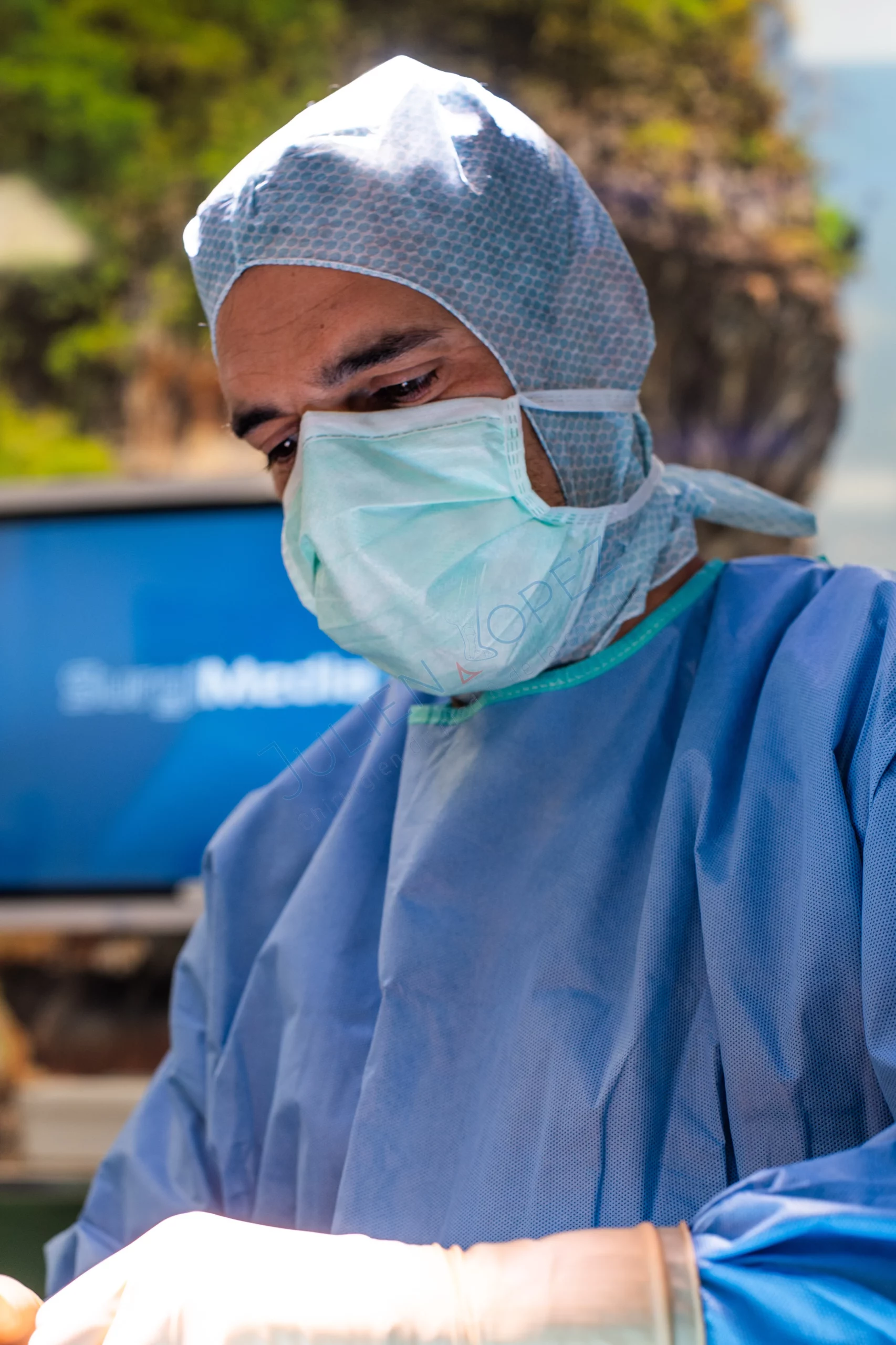
Morton’s Neuroma Operation and Recovery: How the Procedure Works
Morton’s Neuroma operation aims to eliminate the nerve compression responsible for pain while preserving the structures of the foot as far as possible.
A specialist consultation (available remotely) allows the team to confirm the diagnosis, review imaging, explain the surgical strategy in detail and answer the patient’s questions. A pre-operative workup is also arranged to ensure a fully personalised approach.
Whether addressing a classic interdigital neuroma or a less common presentation such as Morton’s toe surgery for an associated forefoot imbalance, the procedure is most often carried out on a day-case basis without prolonged hospitalisation. It is performed under local or regional anaesthesia, sometimes with light sedation for comfort.
Operating time is generally short, around 20 to 30 minutes. The surgeon makes a small incision, either on the top of the foot or in the space between the toes, depending on the most suitable technique.
Two approaches are possible:
- Nerve release (decompression): widening the interdigital space,
- Removal of Morton’s neuroma by surgery: when the nerve segment is too damaged to be preserved.
The choice of technique depends on the size of the neuroma, the severity of symptoms and the history of treatments already tried.
A compressive dressing is applied. Walking after Morton’s neuroma surgery is generally possible the same day, with an appropriate post-operative shoe. The return to accommodation is organised comfortably and securely.
At International Elite Care, Morton’s neuroma treatment is integrated into a smooth care pathway, with medical coordination, logistical support and attentive follow-up to deliver a calm, premium experience.
Recovery From Morton’s Neuroma Surgery: Post-Operative Course
Recovery from Morton’s neuroma surgery is most often straightforward and well tolerated, allowing a progressive return to activities under good conditions.
Walking is permitted from the day of the procedure, with an optional post-operative shoe (for 2 to 3 weeks). Moderate post-operative pain may occur but is generally well controlled with pre-planned pain relief.
The patient may also notice localised sensitivity at the operated site and some swelling, but these are temporary and resolve over the following weeks. A post-operative sensation of walking on a lump is normal and lasts approximately 6 to 8 weeks.
Regular dressings are needed during the first days. Sutures are removed after about 15 days (or dissolve on their own).
Weight-bearing is permitted progressively, following the surgeon’s recommendations. A return to standard footwear is generally possible after a few weeks.
The recovery time for Morton’s neuroma surgery before resuming sport is typically 3 to 6 weeks, provided activity is supervised and adapted. Respecting comfort levels and healing stages is essential for a good outcome.
For international patients, International Elite Care provides structured post-operative follow-up that can be conducted remotely, ensuring comprehensive support even after returning home.
Morton’s Neuroma Surgery Success Rate and Expected Outcomes
The Morton’s neuroma surgery success rate is generally very high. The primary goal is the elimination or marked reduction of the nerve pain caused by compression.
The outcomes are typically very satisfactory:
- Lasting relief from painful symptoms,
- Significant improvement in walking comfort,
- Recovery of mobility and quality of life,
- Progressive return to everyday and leisure activities.
Where nerve excision is performed, an area of numbness between the affected toes may persist. This is usually well tolerated and does not impair foot function.
The quality of outcomes depends on several factors:
- how long symptoms have been present,
- the size of the neuroma,
- adherence to post-operative instructions,
- the expertise of the surgeon.
Morton Neuroma Surgery Side Effects
While outcomes are excellent in the vast majority of cases, patients should be aware of potential side effects, which remain uncommon when the procedure is carried out by an experienced specialist:
- Localised numbness between the toes (expected and well tolerated after nerve excision),
- Temporary swelling and sensitivity at the surgical site,
- Rare: wound infection, delayed healing or scar sensitivity,
- Very rare: complex regional pain syndrome.
These risks are minimised through precise surgical technique, meticulous post-operative care and rigorous follow-up, all of which are hallmarks of the International Elite Care approach.
Your Morton’s Neuroma Surgery Questions Answered
Is surgery for Morton’s neuroma successful?
Yes, in most cases, patients experience a significant and lasting reduction in pain, with a return to comfortable walking and everyday activities. Success depends on accurate diagnosis, appropriate surgical indication and expert execution, all of which International Elite Care is designed to provide.
Can Morton’s neuroma come back after surgery?
Recurrence is possible but uncommon, particularly after complete excision of the neuroma. In the rare event of a recurrence, a specialist reassessment determines the most appropriate next step. Adherence to post-operative advice and appropriate footwear choices help to minimise this risk.
How do I know if Morton’s neuroma surgery is right for me?
Every case is different. Surgery is only proposed when non-surgical treatments no longer provide sufficient relief. A personalised evaluation examines your symptoms, imaging and lifestyle to confirm whether surgery is the most suitable solution. The goal is always to propose a measured, coherent approach aligned with your expectations.
Is there an alternative to surgery for Morton’s neuroma?
Yes, non-surgical alternatives for Morton’s neuroma include custom orthotics, corticosteroid or alcohol sclerosing injections, physical therapy, wider shoes and advanced options like cryotherapy or radiofrequency ablation.
These often relieve pain effectively, especially in early stages. Consult a podiatrist for personalised advice.
Is the Morton’s neuroma surgery painful or risky?
Post-operative pain is usually moderate and well controlled with appropriate medication. As with any procedure, risks exist but remain rare when the operation is performed by an experienced foot and ankle surgeon under optimal conditions.
How long is the recovery from Morton’s neuroma surgery?
Recovery from Morton’s neuroma surgery typically spans 4-6 weeks for basic weight-bearing and daily activities, with full recovery (including return to sports) taking 3-6 months depending on the procedure (neurectomy vs. decompression) and individual factors.
Patients often wear a post-op shoe initially, with follow-ups at 2, 6, and 12 weeks to monitor healing, and mild swelling or numbness may persist longer. Consult your surgeon for a personalised timeline.
Can I walk after Morton neuroma surgery?
Yes, you can walk after Morton’s neuroma surgery, but initially with restrictions like heel-walking or using a post-op shoe and crutches to protect the incision site.
Full weight-bearing typically resumes gradually over 2-6 weeks, depending on the procedure and healing progress. Always follow your surgeon’s specific instructions to avoid complications.
How long must I stay if I am coming from abroad?
Most international patients can arrange a relatively short stay. The procedure is generally day-case, and a period of a few days on site is usually sufficient for initial care, wound checks and organising the return journey. The International Elite Care team assists with the stay, accommodation and medical follow-up.
Can I be followed up after returning to my country?
Yes. Structured post-operative follow-up is provided, including remote consultations where needed. This ensures continuity of care, allows questions to be answered and enables recovery to be monitored, even after the patient has returned home.
Why contact International Elite Care?
International Elite Care supports you at every stage: referral to the most qualified and available surgeon, consultation organisation, medical coordination, logistical help and post-operative follow-up. The aim is to offer a smooth, reassuring and premium pathway so you can move forward with confidence.
Surgeon performing the procedure


Full support
Take advantage of our all-in-one service: insurance, travel, post-operative follow-up, etc.
Ready to begin your care pathway?
From your country of residence, benefit from a teleconsultation with an expert surgeon and coordinated care in France or Andorra, with every detail of your medical stay carefully organised.