
Robotic knee surgery: advanced precision, expert hands
Robotic knee surgery combines the surgeon’s expertise with the precision of advanced robotic technology for a fully personalised approach.
Robotic assistance now makes it possible to offer a more personalised, more precise procedure that is perfectly tailored to each patient’s unique anatomy. Every step of the operation is planned and guided with the help of advanced imaging and real-time data, so the implant fits your knee rather than a standard template.
Contrary to a common misconception, the robot does not operate on its own. It is an assistance system controlled at all times by the surgeon. The technology acts as an extremely precise extension of the human hand, enhancing accuracy without ever replacing clinical judgement.
Advantages of robotic knee surgery: why it makes a difference
The advantages of robotic knee surgery are clear: highly precise planning, more reproducible movements, and results that are finely adjusted to each individual patient.
- Detailed analysis of the knee’s anatomy and alignment
- Virtual simulation of the surgery
- Determination of the optimal implant position
- Anticipation of any adjustments needed
- Millimetre-level precision for bone cuts and implant placement
- More reliable restoration of the limb’s mechanical axis
- Better preservation of the soft tissues surrounding the joint
- Immediate adjustments whenever necessary
The result is a more personalised procedure, driven by the surgeon’s expertise and supported by a consistently high standard of precision at every stage.
Robotic-assisted knee surgery: who is it for?
Robotic-assisted knee surgery is not a standalone procedure. It is an assistance technology used during certain knee operations, primarily for joint replacement.
It is recommended when pain, functional limitation and loss of mobility become significant and no longer respond to conservative treatments such as medication, injections, physiotherapy or braces. Common indications include:
- Knee osteoarthritis (gonarthrosis)
- Replacement of an existing prosthesis (revision surgery)
- Patients seeking a highly personalised, precision-driven procedure
Knee replacement surgery using robotics is particularly suited to:
- Active patients who want optimal alignment and a natural-feeling knee
- Patients with unusual anatomy or a complex surgical history
The decision to use robotic assistance is made after a thorough clinical examination, imaging studies (X-rays) and an individualised assessment of the patient’s situation. Every indication is determined on a case-by-case basis by the specialist knee surgeon, following a rigorous and transparent approach.
Robotic knee replacement surgery: how the procedure works
Robotic knee replacement surgery follows a rigorous protocol that combines personalised planning, high-precision technology and surgical expertise. The goal is to optimise the implant’s position while preserving as much healthy tissue as possible.
A full imaging assessment is carried out beforehand, including specialised X-rays and sometimes a CT scan. This data is loaded into the robotic system, which allows the surgical team to:
- Carry out a detailed analysis of the patient’s anatomy
- Create a three-dimensional model of the knee
- Simulate the precise positioning of the implant
- Fine-tune alignment and joint balance
The operation is performed under anaesthesia (regional or general, depending on the patient’s profile). The surgeon places dedicated sensors that allow the robotic system to recognise the knee’s anatomy in real time. These reference points ensure a perfect match between the pre-operative plan and what is found during surgery.
Throughout the procedure, the surgeon remains in full control of every movement. The robotic platform:
- Guides bone cuts with millimetre-level accuracy
- Provides real-time feedback and data
- Allows immediate corrections if needed
For partial knee surgery with robot assistance, this level of precision is especially valuable. Systematic use of robotics in these procedures helps optimise joint balance and implant positioning while preserving as much of the knee’s natural structure as possible.
Once the bone surfaces have been prepared with robotic assistance:
- Ligament balance is checked
- Overall limb alignment is verified
The system confirms that the surgical result matches the initial plan. Operating time is comparable to that of a conventional procedure, with some additional time devoted to planning and precision checks.
Recovery after knee replacement surgery by robots
Recovery after knee replacement surgery by robots is comparable to that following a standard joint replacement. The objectives are the same: swift recovery, restored mobility and effective pain management.
In most cases, patients are able to stand on the day of surgery or the following morning. Weight-bearing is usually permitted immediately, depending on the type of prosthesis fitted.
Walking begins promptly with the support of a physiotherapist. Rehabilitation starts as early as possible in order to restore range of motion and rebuild muscle strength.
Some post-operative discomfort is to be expected, but it is generally well controlled through a multimodal analgesia protocol, ensuring optimal patient comfort.
The benefits of robotic knee replacement surgery extend into the recovery phase. The precision of the surgical technique, particularly in preserving surrounding tissues, helps to:
- Limit post-operative inflammation
- Encourage a progressive, structured recovery
- Reduce the risk of joint imbalance
At International Elite Care, every patient receives personalised follow-up care, including detailed recommendations for the return home or to their country of origin.
For international patients, the stay is planned well in advance. Discharge can be considered once medical clearance has been given, and a remote follow-up protocol is put in place to ensure continuity of care until full recovery.
Knee replacement robotic surgery cost and expected results
The question of knee replacement robotic surgery cost is one that many patients raise, and rightly so. At International Elite Care, transparency is a priority: you will receive a detailed, personalised quote before any commitment. The investment reflects the advanced technology, the expertise of our surgeons and the comprehensive care package provided to every patient.
Beyond cost, the results speak for themselves. The precision and reproducibility of the robotic-assisted approach deliver tangible clinical benefits.
Even a small deviation in implant positioning can affect mobility, stability and the longevity of the prosthesis. Robotic assistance allows the surgeon to carry out a bespoke procedure with millimetre-level accuracy and consistent execution from beginning to end.
The system helps the surgeon maintain a high technical standard throughout every operation, regardless of external variables. This consistency contributes to more reliable outcomes and a dependable level of quality.
The main goals of the procedure are:
- Relief from arthritic pain
- Improved walking ability
- Gradual return to everyday activities and leisure pursuits
Full recovery typically takes several weeks to a few months, depending on the patient’s profile, pre-operative muscle condition and commitment to rehabilitation.
Your questions about robotic surgery knee procedures, answered
Find the answers from our expert surgeons on robotic surgery knee procedures.
Is robotic knee replacement surgery better than conventional surgery?
The safety of any operation depends first and foremost on the expertise of the surgeon and the quality of the facility where it is performed. Robotic assistance reinforces that safety by providing an additional layer of control and consistent precision throughout the procedure. The system makes it possible to anticipate, verify and adjust certain technical parameters in real time, within a rigorous, closely monitored protocol. So while no technique is inherently “better” in every scenario, robotic-assisted knee surgery does add measurable precision and control that support better outcomes.
Does the robot operate instead of the surgeon?
No. The robot never acts independently. It is an assistance system controlled at all times by the surgeon, who retains full authority over the entire procedure. The technology serves as an extension of the surgeon’s hand, providing precise reference points and safety boundaries. The experience and medical decision-making remain entirely human. Robotics primarily enhances the finesse of execution.
How long does a robotic knee replacement surgery take?
Operating time for knee replacement surgery robotic vs manual approaches is broadly comparable. A robotic-assisted procedure may involve a little extra time for the planning and calibration steps, but the overall duration remains similar to a conventional operation. The additional minutes are invested in precision, which contributes to better implant positioning and, ultimately, a smoother recovery.
Will I recover more quickly thanks to robotics?
Recovery depends on several factors: pre-operative muscle condition, age, commitment to rehabilitation and the quality of the implant placement. The precision of implant positioning and the optimisation of joint balance help create favourable conditions for a smooth recovery. Because every patient is different, the pace of recovery will vary from one person to another.
How much does robotic knee surgery cost?
The cost of robotic knee surgery varies depending on the type of prosthesis, the complexity of the case and the length of stay. At International Elite Care, we provide a fully transparent, itemised quote tailored to your specific situation. Our team is available to discuss pricing in detail and to explain exactly what is included, so you can make an informed decision with complete peace of mind.
How do I know if I am a good candidate for knee robotic surgery?
The only reliable way to determine whether knee robotic surgery is right for you is to undergo a specialist assessment with an International Elite Care surgeon. This process can begin with a teleconsultation, during which your imaging studies and medical records are reviewed. Following this initial step, you are referred to the most qualified and available surgeon for your situation. This tailored approach ensures you receive a clear, transparent and personalised expert opinion.
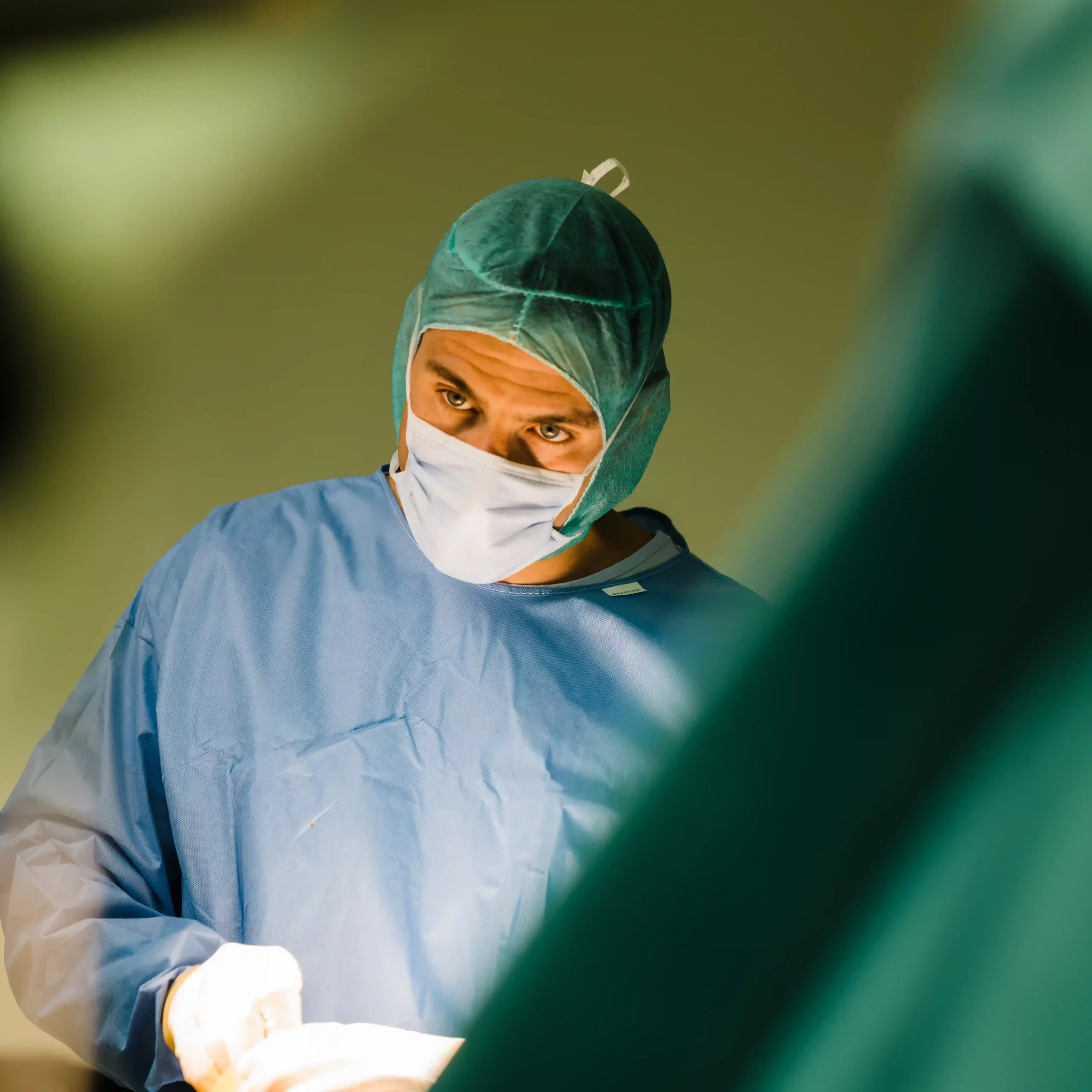
Surgeon performing the procedure


Full support
Take advantage of our all-in-one service: insurance, travel, post-operative follow-up, etc.
Ready to start your journey?
From your country of residence, benefit from a teleconsultation with an expert surgeon and coordinated care in France or Andorra, with every detail of your medical stay carefully organised.