
Ankle fusion surgery: specialist care for lasting relief
Ankle fusion surgery is the permanent fusion of the bones within the ankle joint to eliminate painful movement. The goal of the surgery is to provide lasting pain relief, stabilise the joint, and allow the patient to walk again in good conditions, when conservative treatments are no longer enough.
This surgery is most commonly recommended for advanced ankle arthritis, fracture sequelae, significant deformities, or severe chronic pain that affects day-to-day quality of life.
By removing the damaged joint surfaces, ankle arthrodesis produces a stable, pain-free and functional ankle, at the cost of reduced joint mobility. The loss of movement following an ankle foot fusion surgery is generally well compensated by the neighbouring joints of the foot.
Ankle fusion operation: a reliable procedure in expert hands
Ankle fusion operation is an effective procedure to permanently eliminate pain arising from the ankle joint.
How long does an ankle fusion operation take and what does it involve?
The operation is performed under general or regional anaesthesia. It typically takes between 90 minutes and two hours, depending on the complexity of the case.
During the ankle fusion operation, the surgeon removes the worn cartilage and the areas of bone responsible for the pain. The ankle bones are then repositioned to ensure proper alignment of the foot and as natural a gait as possible.
Once this is done, the ankle is stabilised using screws, plates or specialised nails to hold the bones immobile throughout the healing phase.
Over time, the bones fuse naturally together: this is the principle behind ankle arthrodesis, a surgical fusion of a painful joint. It eliminates pain at the cost of losing movement in the operated joint.
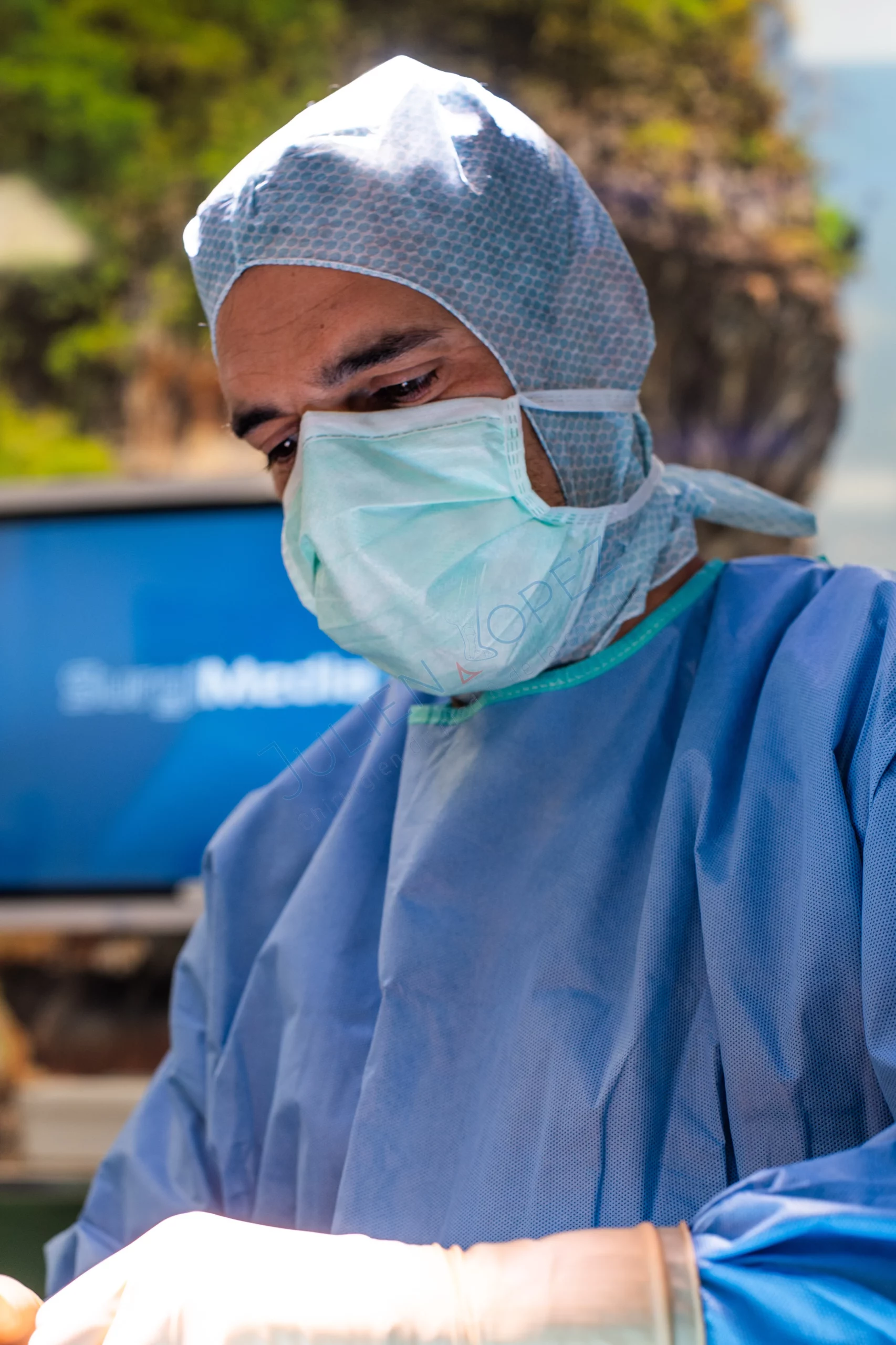
Types of ankle arthrodesis: the arthroscopic approach
Different types of ankle arthrodesis exist. An arthroscopic ankle arthrodesis is a surgical technique that fuses the bones of the ankle together (just like a conventional arthrodesis), but using a minimally invasive approach known as arthroscopy.
In practical terms, what does this change? Rather than making a standard incision, the surgeon carries out the fusion ankle operation through small incisions of just a few millimetres. This is what is known as minimally invasive surgery.
This method preserves the surrounding tissues and supports an optimal recovery. The scarring from the procedure is also more discreet.
Minimally invasive ankle fusion surgery procedure
A minimally invasive ankle fusion surgery procedure may be performed when certain conditions are met:
- the ankle shows little or moderate deformity,
- the indication is clearly defined (arthritis, localised chronic pain),
- the patient’s anatomy is suitable.
Our surgeons, who specialise in minimally invasive ankle arthrodesis techniques, will advise you on the approach best suited to your situation, ensuring a fully personalised care pathway.
After ankle arthrodesis: what to expect
After ankle arthrodesis, the joint is protected (using a boot or cast) to allow proper bone healing. Weight-bearing is not permitted straight away and is reintroduced gradually, under medical supervision. The specialist surgeon overseeing your ankle injury treatment puts in place a rigorous follow-up programme, with regular consultations and imaging.
Benefits and expected outcomes of ankle foot fusion surgery
Even though the ankle no longer moves as it once did, the majority of patients experience:
- complete resolution of chronic pain,
- a more stable and confident gait,
- a marked improvement in quality of life.
Walking after ankle fusion surgery is entirely possible, following appropriate rehabilitation and tailored medical support provided by our specialists.
Ankle fusion operation recovery: rehabilitation within a premium medical stay
Following an ankle fusion operation, rehabilitation is an integral part of the recovery process. It must take into account bone healing time while progressively preparing the patient to walk again.
The first weeks after ankle fusion surgery recovery
The ankle is protected by a boot or an appropriate immobilisation method. Weight-bearing on the operated foot is limited or temporarily prohibited, depending on the surgeon’s recommendations.
During this period, the patient receives support to maintain mobility in the other joints. The rehabilitation programme includes exercises designed to prevent stiffness and preserve good muscle tone. Understanding the full ankle fusion surgery recovery timeline helps patients set realistic expectations.
Driving after ankle fusion surgery and resuming daily activities
Walking is gradually resumed once bone consolidation begins and medical check-ups are satisfactory. Our partner physiotherapists can provide dedicated support for optimal rehabilitation after ankle fusion surgery. Many patients also ask about driving after ankle fusion surgery: this is typically possible once you can bear full weight comfortably and your surgeon gives the go-ahead, usually several weeks after the operation.
A care pathway tailored to international patients
For patients travelling from abroad, rehabilitation can begin on-site within a high-quality medical environment. This stay can be complemented by personalised experiences, including gastronomic discoveries and private guided visits.
Once the initial convalescence period is complete, rehabilitation can continue in the patient’s home country, following a protocol clearly defined by the surgeons at International Elite Care.
Remote follow-up is provided where needed. Everything is arranged to coordinate care and ensure complete support before, during and after your ankle fusion operation.
Your questions about ankle fusion surgery answered
Is ankle fusion a major surgery?
Yes, ankle fusion surgery is considered a significant procedure.
What is an ankle fusion surgery?
It is a well-established intervention that has been performed for many years to treat severe ankle pain when medical treatments are no longer effective. It is now a well-codified procedure, mastered by the specialist surgeons at International Elite Care.
Will I be able to walk normally after ankle fusion surgery?
In the vast majority of cases, yes. Although the joint does not regain its original range of motion, the pain disappears and allows the patient to enjoy a stable, smooth and confident gait. The other joints in the foot naturally compensate for the loss of ankle movement.
How long is recovery from ankle fusion surgery?
Recovery is gradual. You should generally expect several months to regain comfortable independence, and up to 6 to 12 months for the final result. The ankle fusion operation and recovery time varies from patient to patient, and each person progresses at their own pace under medical supervision.
Can I return to sport after ankle fusion surgery?
Yes, sport can be resumed provided activities are adapted. Once bone fusion is complete and rehabilitation is finished, many patients return to low-impact sports such as brisk walking, cycling, swimming or golf. High-impact activities such as running, football, basketball, tennis, padel, squash, handball, rugby, combat sports, alpine skiing and trail running are not recommended.
Is ankle fusion surgery painful after the operation?
Post-operative pain is managed rigorously by the medical team. It decreases progressively over the weeks. The primary benefit of the procedure is precisely the elimination of the chronic pain that was present before the operation. Understanding the ankle fusion surgery pros and cons is important: while you trade joint mobility for pain relief, most patients consider this a very worthwhile exchange.
Can I travel after ankle fusion surgery?
Yes, travelling is possible, provided it is planned in agreement with the medical team. International Elite Care supports international patients in organising their return home and ensuring continuity of care, with complete peace of mind.
Surgeon performing the procedure


Full support
Take advantage of our all-in-one service: insurance, travel, post-operative follow-up, etc.
Ready to begin your care journey?
From your country of residence, benefit from a teleconsultation with an expert surgeon and coordinated care in France or Andorra, with every detail of your medical stay carefully organised.