
Your plantar fascia surgery in complete peace of mind
Plantar fascia surgery is a procedure designed to treat chronic inflammation located under the foot.
The condition affects a thick ligament connecting the heel to the toes. When it persists despite medical treatment, surgery is considered in order to provide lasting relief from the symptoms.
Plantar fasciitis most often presents as a sharp pain under the heel, which is particularly marked during the first steps in the morning or after a period of inactivity. When this pain affects your quality of life or restricts your daily activities, it is advisable to seek specialist advice promptly.
At International Elite Care, surgical treatment for plantar fasciitis is built on recognised expertise in ankle and foot surgery. The procedure is carried out in premium healthcare facilities in France and Andorra. Every indication is validated with care, on the basis of a thorough assessment and a personalised analysis of the patient.
The consultants at International Elite Care favour modern techniques tailored to your anatomy in order to optimise the functional outcome.
Indications for plantar fascia treatment with surgery
Plantar fascia treatment with surgery is never considered as a first-line option. It is offered to patients experiencing persistent and disabling pain despite well-conducted medical care. The main indications for this foot surgery are as follows:
- Chronic pain (lasting more than 6 to 12 months)
- Failure of conservative treatments (rest, orthotic insoles, physiotherapy, etc.)
- Daily and sporting activities reduced or no longer possible
- Inability to remain standing for long periods
- Sleep disturbed by the pain
Before any surgical decision is made, a precise work-up is carried out, with MRI or ultrasound to confirm chronic inflammation of the fascia. Other possible causes are also assessed, such as a stress fracture, nerve involvement, inflammatory disease, or a symptomatic heel spur (a bony outgrowth under the heel).
Surgery for plantar fasciitis is only indicated when the diagnosis is clear and consistent with the symptoms. In addition, a full assessment is always carried out to ensure that:
- The patient is fit for anaesthesia
- Risk factors are well controlled
- Expectations are realistic and well understood
At International Elite Care, the patient is directed to the most qualified and rapidly available foot and ankle consultant, for a smooth, premium-standard pathway.
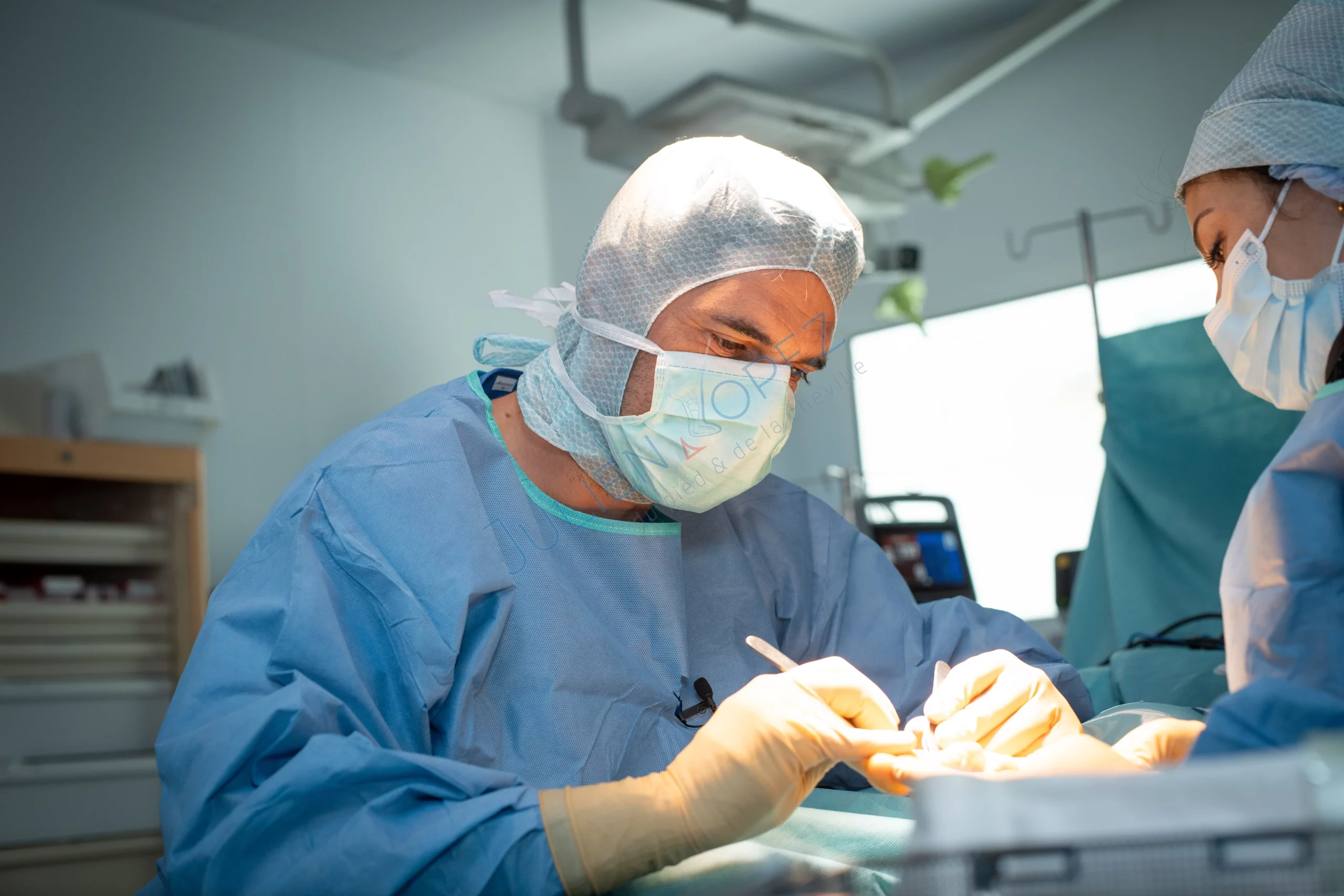
How the plantar fascia operation unfolds
With International Elite Care, the plantar fascia operation is carried out in a premium surgical setting. It is generally scheduled as a day case, with discharge the same day or the following day depending on the chosen protocol. Here are the different stages.
A full assessment is carried out beforehand:
- Detailed clinical examination
- Imaging (MRI or ultrasound) confirming involvement of the fascia
- Pre-operative anaesthetic consultation
For international patients, this first evaluation can begin by video consultation. This makes it possible to plan the medical stay in advance and to organise the full care pathway smoothly.
Surgical treatment of plantar fasciitis is most often carried out under regional anaesthesia (foot or ankle block), and occasionally under general anaesthesia depending on the patient’s profile and preferences.
The anaesthetist adapts the approach to ensure optimal comfort and safety.
The operation lasts on average 20 to 40 minutes. Two main techniques may be used: the minimally invasive technique (percutaneous or endoscopic), or open surgery.
Minimally invasive plantar fascia release surgery
During a plantar fascia release surgery using the minimally invasive approach, small incisions allow fine instruments and, if needed, a camera to be introduced. The surgeon then performs:
- A full release of the plantar fascia
- A controlled reduction of the tension responsible for the pain
- Where necessary, treatment of a symptomatic heel spur
Open surgery is used in rare cases. The gesture is precise and well controlled, but the post-operative recovery is longer.
The choice of method depends on the patient’s anatomy, how long the symptoms have been present, and the consultant’s expertise.
Recovery from plantar fascia surgery and expected results
Recovery from plantar fascia surgery is progressive. Step by step, the patient notices the pain disappear and is able to resume comfortable walking.
During the first few days, moderate pain may be felt, but it is easily managed with suitable analgesia. Local swelling around the foot may appear, but it is common and temporary.
Weight-bearing is permitted early in the majority of cases, with a post-operative shoe. Relative rest is advised, with the foot elevated during the first days to help limit inflammation.
Return to walking
After reconstructive surgery of the plantar fascia, the patient regains an increasingly natural gait week by week, generally within 1 month. Driving can usually resume after 2 to 3 weeks, depending on the operated side and the progress of recovery. Physiotherapy may also be prescribed to:
- Loosen the plantar arch
- Optimise healing
- Correct any mechanical factors
Return to activities
- Light daily activities: 2 to 3 weeks
- Sedentary work: quickly, on a case-by-case basis
- Activities requiring prolonged standing: 4 to 6 weeks on average
- Progressive return to sport: generally between 3 and 6 months
These timeframes vary depending on the patient’s profile, their level of activity and how long the pain has been present.
Expected results
The aim of surgical treatment for plantar fasciitis is the resolution or marked reduction of heel pain, in particular:
- Pain on the first steps in the morning
- Discomfort after a period of inactivity
- Pain on prolonged walking
In the vast majority of cases, the improvement is significant and lasting. After plantar fascia surgery, patients can recover their independence and enjoy comfortable walking. A return to sport is also an expected outcome. Nevertheless, it is important to keep in mind that improvement is progressive: full healing and softening of the tissues may take several months.
At International Elite Care, every patient benefits from personalised, reassuring and structured support, to ensure optimal recovery and a rapid return to activities.
Your questions about plantar fascia injury treatment answered
Our answers regarding plantar fascia injury treatment are provided below to help you prepare your pathway with complete peace of mind.
When should surgery be considered to treat plantar fasciitis?
Surgical treatment of plantar fasciitis is only considered after a thorough analysis of your situation. Many patients come in expecting to need surgery, when a well-targeted complementary treatment may sometimes be sufficient. Conversely, when pain has been present for a long time and genuinely limits your quality of life, surgery can provide lasting relief.
Which surgeon operates on plantar fasciitis?
This condition calls for specialised training, which is why you should turn to an orthopaedic consultant specialising in foot and ankle surgery.
Does a ruptured plantar fascia require surgery?
Not in every case. Plantar fascia rupture treatment usually begins with conservative measures such as immobilisation, graded weight-bearing and physiotherapy. Surgery is reserved for cases where symptoms remain chronic and disabling despite well-conducted medical care.
Does a torn plantar fascia require surgery?
In most cases, torn plantar fascia treatment starts with rest, anti-inflammatory medication, orthotic supports and physiotherapy. Surgery is considered only if these measures fail after several months, or if imaging confirms the fibres are unlikely to heal on their own.
How long should I plan to stay on site if I am travelling from abroad?
The duration of the stay depends on your personal situation and the country you choose (France or Andorra). In general, you should allow for a few days on site to have the procedure, attend the initial post-operative review and travel home in comfortable conditions. International Elite Care coordinates the full schedule in advance in order to optimise your time on site and ensure peace of mind. We also arrange accommodation, transfers and a personalised welcome according to your requirements.
Will I be able to travel home quickly after the procedure?
In most cases, returning home is possible a few days after the operation, subject to a satisfactory medical review. Clear recommendations are given regarding walking, the position of the foot during the journey and prevention of deep-vein thrombosis on long-haul flights. Each situation is assessed individually so that your return home takes place in the best possible conditions of comfort and safety.
Are there risks or complications with plantar fascia surgery?
As with any surgical procedure, there are risks, although complications remain uncommon. The main risks include persistent pain, slower healing or, more rarely, a change in the way the foot bears weight. A thorough assessment, a precise technique and structured follow-up help to limit these risks. The aim is always to keep care safe and to optimise the functional outcome.
How does follow-up work once I am back in my country?
Follow-up is an essential step of the care pathway. After your return, review consultations can be organised remotely by video call. You will receive clear instructions for physiotherapy and the progressive resumption of your activities. Our team remains available to answer your questions and, if needed, to coordinate care with a local healthcare professional. In this way, support continues until your full recovery.
Surgeon performing the procedure


Full support
Take advantage of our all-in-one service: insurance, travel, post-operative follow-up, etc.
Ready to start your patient journey?
From your country of residence, benefit from a teleconsultation with an expert surgeon and coordinated care in France or Andorra, with every detail of your medical stay carefully organised.