
Patellofemoral replacement by expert knee surgeons
Patellofemoral replacement treatment explains surgery steps, recovery time, rehabilitation and expected long-term knee function results.
Known as anterior knee pain, these symptoms are caused by isolated damage to the joint between the kneecap (patella) and the thighbone (femur). A patellofemoral prosthesis does not replace the kneecap itself but rather resurfaces the worn cartilage surfaces between the patella and the femur.
Patellofemoral replacement surgery, also called patellofemoral arthroplasty, involves replacing only the damaged patellofemoral compartment with a purpose-built implant while preserving the other compartments of the knee when they remain healthy.
Unlike a total knee replacement, which resurfaces the entire joint, a patellofemoral knee replacement targets only the affected area. It is a more conservative, more precise and anatomically respectful solution when the rest of the knee is unaffected.
Indications for partial knee replacement patellofemoral
A partial knee replacement patellofemoral prosthesis is recommended when pain is localised at the front of the knee and linked to isolated damage within the patellofemoral compartment. Before considering this procedure, several factors must be carefully assessed:
- The extent of cartilage damage
- The condition of the other kneecompartments
- Ligament stability
- The patient’s activity level
- The severity of symptoms and their impact on quality of life
A specialist assessment determines whether this targeted approach is suited to the patient’s situation. The most common indications include:
- Localised patellofemoral osteoarthritis, particularly in cases of trochlear dysplasia
- Chronic kneecap instability
- Post-traumatic damage with isolated deterioration of the patellofemoral cartilage
The essential condition is that the damage remains strictly limited to the joint between the kneecap and the femur. This is what allows a specialist surgeon to perform a partial patellofemoral replacement rather than a full knee replacement.
Patient selection criteria
Patellofemoral arthroplasty is guided by precise criteria. A thorough patient evaluation ensures that the tibiofemoral compartments are intact, that the ligaments are stable and that knee flexion exceeds 120° with no significant extension deficit (flexion contracture below 5°).
The typical candidate is an active patient, often under 65 years of age. However, age is not an absolute criterion: if the damage is localised and knee biomechanics are preserved, this surgery can also be appropriate for older patients.
In every case, the decision rests on an individualised analysis carried out by a knee specialist. The aim is to offer a precise, conservative solution tailored to the patient’s anatomy, providing lasting relief while preserving the healthy structures of the knee.
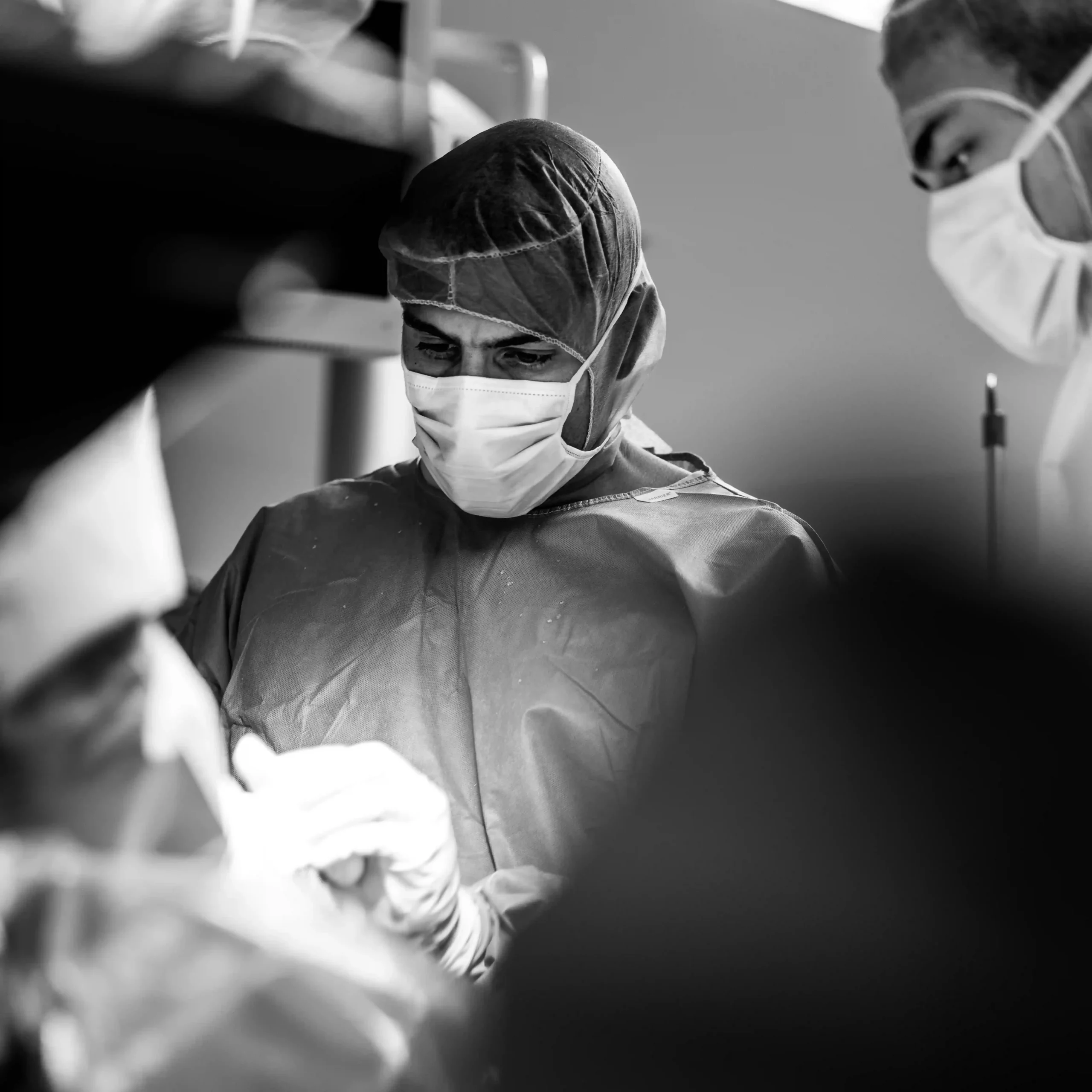
How patellofemoral surgery and replacement is performed
Patellofemoral surgery and replacement is a targeted procedure that resurfaces only the anterior compartment of the knee when it is the sole area affected. Before the operation, a comprehensive work-up is completed:
- A detailed clinical examination
- Specialist imaging (X-rays, MRI, sometimes CT scan)
- Precise analysis of knee alignment and biomechanics
This stage confirms the indication and allows accurate planning of implant positioning.
The operation is usually carried out under regional or general anaesthesia. The International Elite Care surgeon:
- Accesses the patellofemoral compartment through a controlled incision
- Removes the damaged cartilage surfaces
- Prepares the bone with millimetre-precise cuts
- Fits the femoral implant and the patellar component
The healthy tibiofemoral compartments are left intact, making the procedure more conservative than a total knee replacement. The operation typically takes between 45 minutes and one hour.
The hospital stay is generally short, particularly when a minimally invasive technique is used.
Patellofemoral knee replacement recovery and expected results
Patellofemoral knee replacement recovery benefits greatly from the latest generation of patellofemoral implants. Thanks to recent advances in materials and design, these prostheses now offer:
- Improved durability
- A more precise anatomical fit
- Optimal patellar tracking
The surgeons at International Elite Care use exclusively up-to-date implants to ensure stable, long-lasting results. Their surgical technique also limits bone resection, which makes any future revision surgery easier should it ever be needed.
Mobilisation begins early, often on the same day or the day after surgery. Post-operative care includes:
- Rigorous pain management
- Personalised post-operative monitoring
- Early physiotherapy support
Most patients resume light daily activities within a few weeks, provided they follow post-operative guidelines carefully. The success of the surgery depends largely on the quality of rehabilitation, which helps stabilise the knee after prosthetic patellofemoral replacement over the long term.
The patellofemoral replacement rehab protocol starts with early joint mobilisation and a gradual return to weight-bearing in order to manage pain, restore knee movement and reduce post-operative swelling.
It then progresses to targeted muscle strengthening, gait retraining and proprioceptive exercises, ensuring a safe functional return to everyday activities. La majorité des patients reprennent des activités quotidiennes légères en quelques semaines, à condition de bien respecter les consignes post-opératoires. En effet, la réussite de la chirurgie repose en grande partie sur la qualité de la rééducation, afin de stabiliser l’articulation fémoro-patellaire avec prothèse sur le long terme.
Low-impact activities such as walking, swimming and cycling are encouraged. Significant improvements are often seen within the first days and weeks following surgery. The functional benefits typically observed are:
- Marked reduction in anterior knee pain: 77%
- Improvement in stair climbing and descending: 65%
- Improvement in walking: 74%
Post-operative follow-up can be managed remotely using digital tools such as Orthense, allowing the rehabilitation programme to be adjusted as needed. At International Elite Care, this continuity of care is maintained even after the patient has returned home.
Possible complications and precautions
As with any surgery, patellofemoral replacement carries certain short- and long-term risks. The main concern is the progression of knee osteoarthritis into the other knee compartments, which may lead to conversion to a total knee replacement in 14 to 25% of cases at the ten-year mark.
Precise implant positioning is essential to avoid complications such as anterior pain, stiffness, infection or poor patellar tracking. With modern implants and current surgical techniques, these risks are now significantly reduced.
Our answers to your questions about patellofemoral replacement
How do I know if I am a good candidate for a patellofemoral replacement?
Only a specialist opinion can determine the most appropriate course of action. At International Elite Care, your case is reviewed based on your imaging, symptoms and activity level, with the option of a preliminary teleconsultation. Depending on the findings, a patellofemoral partial knee replacement may be sufficient, or a total knee replacement may be recommended.
Do I need to travel abroad for an extended period for this procedure?
No. The care pathway at International Elite Care is designed to make the most of your time on site. The pre-operative consultation can be carried out remotely. The hospital stay is short and early mobilisation means you will be walking again quickly.
What is the difference in sensation between a partial and a total knee replacement?
A patellofemoral prosthesis preserves the healthy compartments and the majority of the knee’s natural structures. This preservation often results in a more “natural” feel compared with a total replacement, provided the indication was correctly assessed. Movement remains smooth and the joint retains much of its original biomechanics.
How long does a patellofemoral replacement last?
With the latest generation of implants and precise surgical technique, a patellofemoral prosthesis can provide reliable function for many years. Studies show good survivorship at ten years and beyond, although individual longevity depends on factors such as activity level, body weight and the condition of the surrounding cartilage. Regular follow-up appointments help detect any changes early and plan ahead if needed.
If my condition changes in the future, will my options be limited?
No. If osteoarthritis progresses into the other compartments of the knee, conversion to a total knee replacement generally remains possible under good conditions. This possibility is discussed with the surgeon as part of the overall treatment strategy from the outset.
What is the patellofemoral replacement recovery time?
The patellofemoral replacement recovery time varies from one patient to another, but most people resume light daily activities within two to four weeks. Full recovery from patellofemoral replacement typically takes three to six months, depending on rehabilitation progress and individual healing. The patellofemoral replacement recovery timeline is discussed in detail with your surgeon so you know what to expect at every stage.
Why choose International Elite Care for this procedure?
The choice of surgeon and medical organisation makes all the difference. International Elite Care connects you with high-volume knee specialists who are experienced in modern techniques and robotic-assisted surgery. You benefit from a structured care pathway, from the initial review of your case through to follow-up after your return home.
Surgeon performing the procedure


Full support
Take advantage of our all-in-one service: insurance, travel, post-operative follow-up, etc.
Ready to start your care journey?