
Meniscal Lesions of the Knee
Meniscal lesions refer to damage affecting one or both menisci of the knee, disrupting their normal function. Meniscal lesions, by definition encompass any tear, degeneration or structural compromise of these vital shock absorbers within the knee joint.
The menisci are fibrocartilaginous structures — both flexible and resilient — situated between the femur and the tibia. They play an essential role in knee stability, load distribution, shock absorption and protection of the articular cartilage.
A meniscal lesion occurs when these structures tear. It may appear traumatically (accident, sudden twisting movement) or progressively (degenerative wear). The medial (inner) meniscus is the most commonly affected, as it is the least mobile part of the joint and bears the greatest load.
Depending on its location, shape and extent, a meniscal lesion may be well tolerated or, conversely, severely impair knee function, causing pain, mechanical catching and limitation of daily or sporting activities.
Related treatment(s)
-
Arthroplasty surgery of the knee
See the treatment in detail

Diagnosing Lesions Meniscal
The diagnosis of lesions meniscal aims to identify precisely the nature of the injury in order to propose personalised and appropriate management.
The surgeon specialising in knee conditions begins by analysing the context in which symptoms appeared, in order to distinguish between a traumatic and a degenerative lesion. The surgeon then assesses knee mobility, the presence and location of pain, and any suggestive mechanical signs such as locking or a sensation of a loose body within the joint.
When a lesion is suspected, supplementary investigations are requested — typically X-rays and MRI.
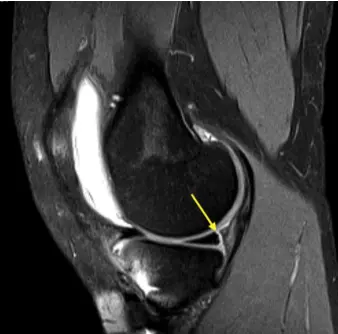
All of these findings are then analysed by the orthopaedic surgeon, who can confirm the diagnosis and propose an appropriate treatment plan based on the type of lesion and its position within the recognised classification of meniscal lesions.
At International Elite Care, this assessment can begin with a video consultation, enabling the international patient to obtain a specialist opinion promptly and to be directed towards the most suitable surgeon for their situation.
Meniscal Lesion: Symptoms and Clinical Presentation
The symptoms of a meniscal lesion of the knee must be carefully evaluated in terms of their impact on the patient’s function, in order to guide the most appropriate treatment.
Knee Pain
Knee pain is generally localised over the affected meniscus. It increases during walking and with rotational or prolonged flexion movements (rising from a chair, sitting down, squatting, using stairs, changing direction).
Abnormal Mechanical Sensations
A meniscal lesion can produce a range of mechanical disturbances within the knee:
- a catching sensation during movement,
- sudden locking of the knee, preventing full bending or straightening of the leg,
- a feeling that movement within the joint is not smooth,
- a sensation of a loose body inside the joint.
Knee Swelling
When caused by a traumatic meniscal lesion, swelling can appear rapidly. In degenerative forms, it tends to be more subtle and intermittent. In all cases, it may produce discomfort or a feeling of tightness within the knee.
Degenerative Meniscal Lesion: Expert Care by Specialist Surgeons
A degenerative meniscal lesion results from the gradual deterioration of the meniscus over time. It often appears without a specific traumatic event. This is why a bespoke approach is adopted to deliver the optimal treatment.
In the majority of cases, meniscal lesion treatment begins without surgery. It aims to reduce pain, improve knee mobility and preserve the joint. This may include:
- medical treatment to relieve pain and inflammation,
- targeted physiotherapy to strengthen the muscles around the knee and improve stability,
- an ultrasound-guided injection into the affected area for its fibrosing and anti-inflammatory effect.
This approach often achieves a significant and lasting improvement in everyday comfort.
When Should Surgery Be Considered?
Surgery is considered when the meniscal lesion produces marked and persistent symptoms despite well-managed conservative treatment.
In such cases, a knee arthroscopy may be proposed. This is a minimally invasive procedure, performed through small incisions that allow a precise intervention while respecting the joint.
Only the damaged portion of the meniscus is removed, in order to preserve as much of the knee’s structure as possible and to optimise recovery.
Traumatic Meniscal Lesion Treatment
Meniscal lesion treatment depends on several factors, including the type of tear, its location within the meniscus, and the patient’s age and activity level.
Unlike degenerative forms, a traumatic meniscal lesion is usually more clearly defined. It is frequently associated with a concurrent ligament injury.
Depending on the type of tear, two options may be considered for meniscal lesion treatment:
- Meniscal repair (suture) — when the lesion is recent and located in a zone favourable to healing. This option is preferred in younger or sporting patients in order to preserve meniscal integrity.
- Partial meniscectomy — when repair is not feasible. In this case, only the damaged portion is meticulously removed.
Meniscal Ramp Lesions: A Specific Pattern
Among traumatic injuries, meniscal ramp lesions deserve particular attention.
Meniscal ramp lesions can be difficult to detect on standard MRI and may only become apparent during arthroscopic surgery. When identified, they are typically treated by suture repair, as the peripheral location benefits from a good blood supply that supports healing.
What is a meniscal ramp lesion? A meniscal ramp lesion is a tear at the peripheral attachment of the posterior horn of the medial meniscus — the junction where the meniscus meets the joint capsule, at the so-called “ramp” zone. These lesions are frequently found in association with anterior cruciate ligament (ACL) injuries.
Recognising and repairing a meniscal ramp lesion is important because, left untreated, it can contribute to residual knee instability even after successful ACL reconstruction. The surgeons at International Elite Care have advanced expertise in diagnosing and treating this specific type of meniscal lesion, using the latest minimally invasive techniques.
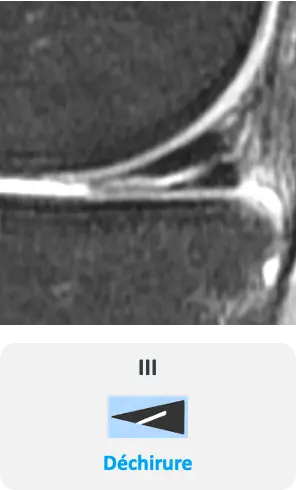
The International Elite Care surgeons have advanced expertise in these minimally invasive techniques and always favour the approach that is most respectful of the knee.
Your Meniscal Lesion Questions Answered
Does a meniscal lesion always require surgery?
No. Not all meniscal lesions require an operation. In many cases, particularly when the lesion is stable and produces few symptoms, non-surgical management can significantly improve pain and knee mobility. Surgery is only considered when symptoms persist, become disruptive to daily life or are accompanied by mechanical locking.
How long is the recovery after meniscal lesion treatment?
After surgical meniscal lesion treatment, recovery varies depending on the procedure performed. A partial meniscectomy generally allows a return to everyday activities within a few weeks, while a meniscal repair requires a longer recovery period — often several months — to respect the healing process. In all cases, recovery is carefully supervised to ensure a comfortable return to normal activities.
Can I walk or return to activity after meniscal surgery?
Yes. Walking is generally resumed quickly after minimally invasive meniscal surgery. Depending on the type of procedure, the patient may walk with or without assistance within days or weeks. Everyday activities are resumed progressively, while sporting activities require a longer timeframe and precise guidance.
Following meniscal lesion treatment, rehabilitation is always personalised and tailored to the individual.
What is a meniscal ramp lesion and why does it matter?
A meniscal ramp lesion is a specific tear occurring at the peripheral attachment of the posterior horn of the medial meniscus, often in conjunction with an ACL injury. Meniscal ramp lesions are significant because they can be missed on routine MRI and, if left unrepaired, may compromise the outcome of ACL reconstruction by allowing residual knee instability. At International Elite Care, our surgeons are experienced in identifying and treating this particular type of meniscal lesion.
Can I consult without travelling immediately?
Yes. For international patients, International Elite Care offers an initial remote assessment via video consultation. This step simplifies the organisation of the care pathway ahead of a potential visit.
Why choose International Elite Care for a meniscal lesion?
International Elite Care supports international patients throughout their entire pathway, from the first consultation to post-treatment follow-up. The team coordinates access to expert knee surgeons, recognised for their mastery of minimally invasive techniques, and offers personalised, smooth and reassuring care. Each patient benefits from clear, structured support tailored to their expectations — whether they are dealing with a degenerative meniscal lesion, a traumatic tear or a meniscal ramp lesion.
Surgeon performing the procedure

Full support
Take advantage of our all-in-one service: insurance, travel, post-operative follow-up, etc.
Ready to begin your care pathway?